Why Market Data Misleads Arbitrage Traders
 HETHA.IO3 min read·Just now
--
Most arbitrage strategies rely on visible market data. Spreads appear profitable, prices seem clear, and calculations suggest positive returns. At first glance, everything looks straightforward.
But there is a problem. The data traders rely on does not reflect how trades are actually executed.
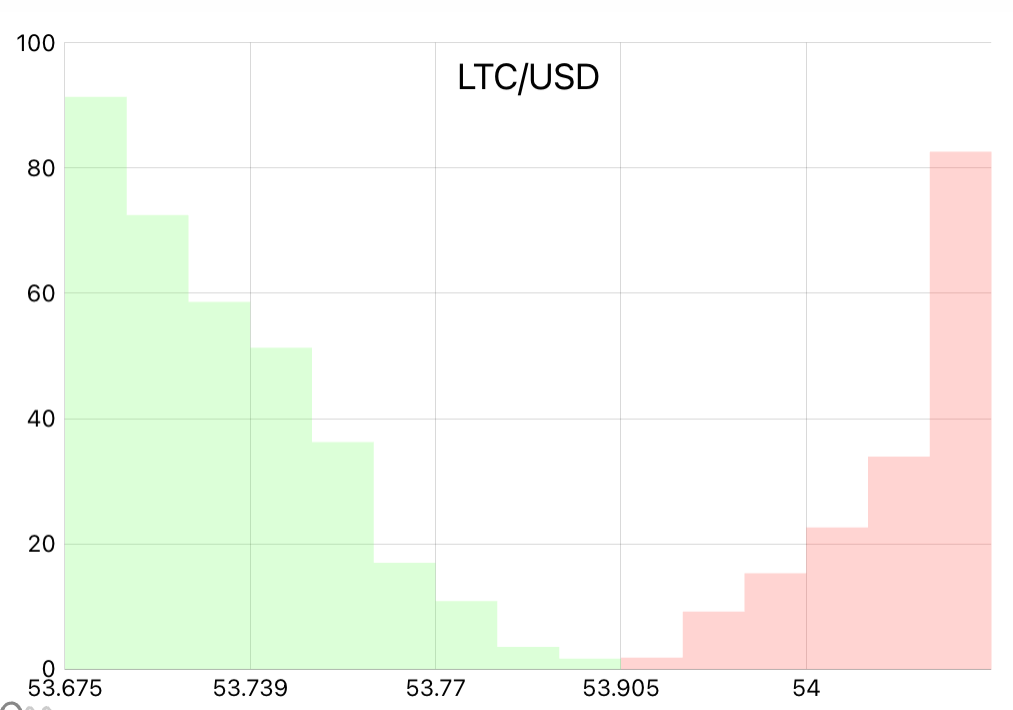
Top-of-book prices — the best bid and ask — are often treated as if they determine the outcome of a trade. In reality, they only represent the first available volume. Once a trade exceeds that volume, execution moves deeper into the orderbook, where prices begin to diverge. This creates a gap between what traders see and what they actually get.
A spread may appear profitable when calculated using top-of-book prices. But as soon as the trade interacts with real liquidity, the effective price begins to move. The larger the trade size, the more pronounced this effect becomes. This is not an anomaly, but a structural property of the market.
This effect is further amplified by trading costs and execution conditions. Even if a spread appears profitable after accounting for orderbook depth, exchange fees can completely eliminate the margin. In many cases, arbitrage opportunities exist within fractions of a percent, making fees a decisive factor rather than a secondary consideration.
At the same time, execution takes place under time pressure. Market conditions change continuously, and the prices used in calculations may no longer exist by the time orders reach the exchange. What was a valid opportunity milliseconds ago can disappear before it is executed. In addition, execution itself is not guaranteed: orders may be partially filled, delayed, or remain unfilled, introducing further deviation from the initial calculation.
This is why many arbitrage strategies appear stable in calculation but fail in execution. The issue is not that the strategy is wrong, but that the model does not reflect how the market behaves under real conditions.
Execution is not a single price point. It is a process that unfolds across multiple price levels, volumes, and time. Without accounting for how trades move through the orderbook, profitability remains theoretical — it exists in calculation, but not in practice.
Arbitrage systems are often evaluated by how well they identify price differences. In practice, this is only the first step. What matters is not whether a spread exists, but whether it can actually be executed under real market conditions — with real liquidity, real volumes, and constantly changing orderbooks.
This requires a different approach. Instead of relying on top-of-book prices, execution needs to be modeled across the orderbook. Instead of static calculations, it requires continuous recalculation as market data changes. Instead of theoretical profitability, it demands evaluation under execution conditions.
This is the idea behind how arbitrage is handled in HETHA.IO. The system does not treat prices as fixed inputs. It reconstructs arbitrage chains using live orderbook data and evaluates them based on how they would behave during execution — including depth, volume, and market dynamics.
As a result, the focus shifts from finding spreads to understanding whether they can actually be executed. Because in arbitrage, the difference between profit and loss is not in the price — but in the path to that price.