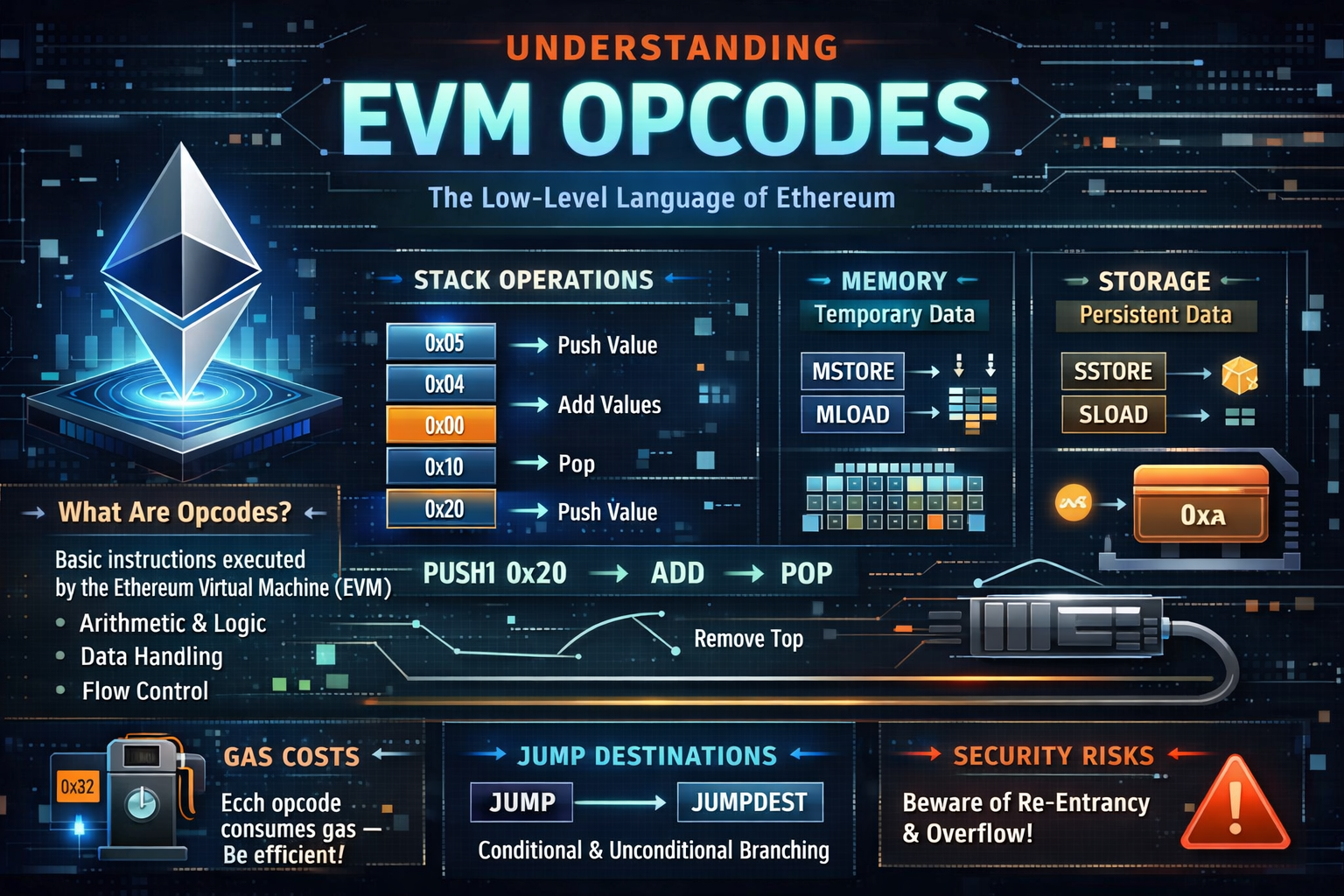
The Dencun Paradox: Ethereum’s Structural Divergence (2024–2026)
 Sungku Kim10 min read·Just now
--
1. Introduction: The Dencun Hard Fork and the Great Pivot of Ethereum’s Economic Model
The Dencun hard fork, executed in March 2024 with its core EIP-4844 (Proto-Danksharding), will be recorded as the most radical economic experiment in Ethereum’s history. This was more than a simple technical upgrade; it was a signal flare fundamentally shifting the network’s business model from a B2C (Business-to-Consumer) “Gas Sales” model to a B2B (Business-to-Business) “Data Availability (DA)” provision model for Layer 2s. As of February 2026, we are holding the midterm report card for this “Grand Experiment.”
The user’s inquiry touches on the specific magnitude of the decline in Ethereum L1 (Layer 1) revenue and its impact on valuation, as well as the compensation gained by the ecosystem in terms of scalability and market share. This report utilizes extensive on-chain data and financial analysis reports to quantify the reality of the “Revenue Cliff” faced by Ethereum, and deeply analyzes the severe blow this has dealt to valuation models and the strategic advantages the ecosystem has secured. In particular, focusing on the decoupling phenomenon of increased L2 profitability versus deteriorated L1 profitability, we will trace the process of Ethereum losing its “Ultra Sound Money” narrative and being re-evaluated as an “Infrastructure Utility.”
2. The Economic Shock: L1 Revenue Cliff and Valuation Divergence
The core of the Dencun upgrade was to dramatically lower the cost for L2 rollups to record data on the Ethereum mainnet. The introduction of ‘Blobs’ — a new data storage space — maximized cost efficiency by providing temporary data storage rather than permanent execution data. Technically, it was a massive success, but it had an immediate and destructive impact on L1’s financial statements.
2.1 Specific Estimates of Revenue Collapse
Ethereum’s protocol revenue consists of the Base Fee (which is burned) and Tips paid by users. Before Dencun, L2s recorded massive amounts of data on L1 in the form of expensive ‘calldata’, accounting for a significant portion of Ethereum’s revenue. However, after the introduction of Blobs, this revenue source effectively evaporated.
According to data, L2 Rent Revenue (Blob Fees) reached ~$544.37M (~720B KRW) in March 2024 (Pre-Dencun), but plummeted to ~$1.8M (~2.4B KRW) in September 2024, when the upgrade effects were fully reflected. This represents a staggering 99.7% decline from the peak. This is not a seasonal factor or a market downturn; a structural revenue collapse has occurred.
This revenue decline is not a temporary phenomenon. It is estimated that in 2025 alone, Ethereum L1 effectively sacrificed over $100M (~130B KRW) in guaranteed fee revenue it used to collect from L2s, in order to support L2 growth. This was an intended result of the Ethereum Foundation and developer community adopting an L2-centric roadmap, but the financial hit was far more severe than the market expected.
In 2024, the total revenue generated by L2 networks was approximately $277M, of which 41% ($113M) was paid to the Ethereum mainnet as security costs. However, in 2025, even though L2 revenue decreased to $129.17M due to user fee reductions, the cost paid to Ethereum L1 shrank to less than 10%, around $10M (~13B KRW). In other words, L2s maximized profit margins through cost structure innovation, while L1 lost its earning power as a platform provider.
2.2 The Collapse of Valuation Models: The Death of “Ultra Sound Money”
The core of the Ethereum investment thesis, the “Ultra Sound Money” narrative, was based on the mechanism that increased network activity leads to burn amounts exceeding issuance, creating deflation (supply reduction). However, the Dencun hard fork severed this link.
- Inflationary Flip: The burn mechanism (EIP-1559) was effectively paralyzed due to gas fees plummeting post-Dencun. As of 2025, Ethereum’s annual inflation rate rose to 0.35%, reverting to an inflationary asset.
- Supply Increase: Analyzing data for 30 days post-Dencun, the network issued approximately 78,000 ETH, but only 45,000 ETH was burned, resulting in a net supply increase of over 30,000 ETH.
- Burn Rate Collapse: Daily ETH burn volume decreased by an average of 84% compared to pre-Dencun levels.
This deterioration in fundamentals was directly reflected in price performance. While competing assets like Bitcoin and Solana broke new highs or showed strong uptrends in 2025, Ethereum fell 10% year-to-date, and the ETH/BTC ratio fell an additional 6%, reaching multi-year lows. The market can no longer value Ethereum using P/E (Price-to-Earnings) models like “Growing Tech Stocks.” According to revenue-based valuation models, a 99% revenue drop should imply a 99% market cap drop, but Ethereum’s market cap remaining above $300B suggests the market is pricing in other factors.
2.3 Mechanism Analysis of Value Leakage
Analyzing the change in value flow before and after Dencun clearly reveals where the value lost from L1 has gone. Previously, most of the high gas fees paid by users flowed to L1 validators and the burn mechanism. However, currently, most of that value is accruing to the operating profits of L2 Sequencers.
CategoryPre-DencunPost-DencunImplicationUser CostHigh ($2-$50 per tx)Very Low (<$0.01)Improved User Experience, Basis for Mass AdoptionL2 Cost to L1>41% of Revenue (CallData)<10% of Revenue (Blob)Radical Improvement in L2 Cost StructureValue AccrualEthereum L1 (Burn & Validators)L2 Sequencers (Coinbase, Arbitrum, etc.)Wealth Transfer from L1 Shareholders to L2 OperatorsETH Burn EffectStrong (Deflationary)Minimal (Inflationary Flip)Decline in Scarcity Value
This table shows that Ethereum L1 has transformed into a structure where it sacrifices its own profitability to support its “children” (L2s). L1 is now functioning less as a profit-seeking “platform” and more as a “Settlement Layer” with the characteristics of a public good.
3. The Rise of L2 and the Paradox of L1 Profitability: Specific Case Analysis
The deterioration of L1 profitability is perfectly matched by the explosion of L2 profitability. The Dencun upgrade gifted L2 operators with unprecedented profit margins.
3.1 Coinbase (Base): Privatizing Profit
Base, the L2 operated by Coinbase, is the biggest beneficiary of the Dencun upgrade. As of May 2025, Base captures over 80% of total L2 transaction fees, recording an annualized revenue pace of ~$70M (~93B KRW).
The surprising part is the margin. Base’s operating margin reached 98.3%. This means Base collected fees from users but paid only a tiny fraction (~1.7%) to Ethereum as ‘Blob’ usage fees, taking the remaining 98.3% entirely as profit. In the past, a significant portion of this revenue would have been spent on L1 gas fees contributing to ETH burn, but now it is being used to improve the financial statements of a for-profit corporation, Coinbase.
3.2 Unichain: The Second Shock
The launch of Uniswap’s own L2, Unichain, in late 2025 delivered a “Second Shock” to Ethereum L1. Uniswap was historically the application that consumed (burned) the most gas on the Ethereum mainnet. However, after the Unichain launch, 75% of Uniswap’s total volume migrated to Unichain.
Unichain also utilizes blobs, paying only negligible costs of ~2–3 ETH (~10M KRW) per day to L1. Despite processing billions of dollars in volume, its contribution to L1 has become extremely low. This acted as a bullish factor for UNI token holders due to fee revenue distribution, but as a bearish factor for ETH holders due to the departure of a key burn source.
3.3 Structural Change in Rollup Margins
According to Galaxy Research data, the average daily margin of Optimistic Rollups surged from ~22.6% pre-Dencun to 92.3% post-Dencun. ZK Rollups (Zero-Knowledge Rollups), despite the burden of proof generation costs, also saw margins more than double from 27.3% to 66.7%. This suggests that the L2 business model has been reorganized from a “Low Margin-High Cost” structure to a “Ultra-High Margin-Low Cost” structure.
4. The Reward: What Did the Ethereum Ecosystem Gain?
So, what did Ethereum gain by giving up over $100M in revenue and its status as a deflationary asset? As the user asked, the rewards gained by the ecosystem can be summarized as “Scalability,” “Market Share,” and “Institutional Trust.”
4.1 Massive Scalability and Transaction Processing Capacity
The clearest reward is the explosive increase in network capacity. Ethereum is no longer a slow and expensive blockchain.
- TPS Explosion: As of late 2025, the Ethereum L2 ecosystem processes an average of 5,600 TPS through rollups, handling a daily maximum of 1.74 million transactions. This is hundreds of times higher than the existing L1 processing limit (~15–30 TPS).
- Cost Democratization: L2 transaction fees have dropped below $0.01. This implies that the Ethereum ecosystem has established an environment capable of accommodating micropayments and mass-market applications (SocialFi, GameFi), rather than being the exclusive property of high-net-worth individuals.
4.2 Defending Market Dominance
Despite the rise of high-performance monolithic chains like Solana, Ethereum successfully defended the ecosystem’s value through its L2 strategy.
- TVL Retention: Ethereum L1 still secures $99B (~130T KRW) in Total Value Locked (TVL), corresponding to 85% of the entire ecosystem. Including L2 assets, Ethereum’s DeFi market share exceeds 70%.
- Internalizing Activity: L2s process over 85% of total Ethereum ecosystem transactions. If the Dencun update hadn’t happened, these transactions would likely have leaked to Solana or other cheaper L1s to avoid high fees. In other words, revenue was lost, but Users and Activity were successfully locked-in within the ecosystem.
4.3 Institutional Standard and Safe Asset Status
While retail users flocked to Solana for Memecoin trading, Ethereum solidified its position as a haven for institutional funds.
- Stablecoin Settlement: Ethereum processes $18.8 Trillion (~2.5 Quadrillion KRW) in stablecoin settlement volume annually, acting as the backbone of global digital dollar liquidity.
- Real World Asset (RWA) Tokenization: In the tokenized Treasury market and RWA sector, Ethereum L1 commands an 83% market share (~$6B). Giant institutions like BlackRock prefer Ethereum L1, where security and decentralization are certain, even if fees are slightly higher. This shows Ethereum has evolved from a simple computing platform to the “Trust Layer” of global finance.
- ETF Inflows: By early 2025, Ethereum Spot ETFs recorded over $7 Billion in net inflows. This proves its status as the second asset to firmly land in institutional finance following Bitcoin.
5. Valuation Paradigm Shift: From P/E to Monetary Premium
Ethereum’s valuation model is demanding fundamental revision post-Dencun. Past analysts valued ETH as “Digital Oil,” calculating value based on a Buyback model via gas burned in proportion to network usage. However, with the current revenue structure, this model does not hold.
5.1 New Valuation Model: Monetary Premium
Now, the market is re-rating Ethereum not as a “Tech Stock” but as a “Monetary Commodity.”
- ETH as Collateral: As the L2 economy grows, the amount of ETH locked up (Lock-up) on L1 to guarantee L2 security and perform bridging increases. In other words, ETH’s value comes not from transaction fees (Flow), but from the collateral value (Stock) that supports the Ethereum economic zone.
- VanEck’s 2030 Model Revision: Global asset manager VanEck revised its 2030 Ethereum valuation model, pinpointing “L2 Settlement” as the most important business line. They predicted the L2 settlement market would grow to $51B by 2030. Although revenue has currently plummeted, it is a long-term bet that as thousands of L2 chains compete for Ethereum blockspace (Perfect Competition), blob prices will rise and L1 revenue will recover.
5.2 Valuation Gap and Market Assessment
Nevertheless, a short-term ‘Valuation Gap’ exists. From a P/E ratio perspective, the current Ethereum price is hard to justify. Market participants believe Ethereum must somehow recover the revenue lost to L2s. Due to this, throughout 2025, Ethereum passed through a period where its price was undervalued relative to fundamentals (TVL, User count). Analysts like Tom Lee argue that ETH should exceed $5,000 in 2026 considering network fundamentals, but this is based on the premise that the L1 revenue model must be re-established.
6. Competitive Landscape: Total War with Solana (2025–2026)
Another cause of Ethereum’s valuation decline is the rise of a powerful competitor, Solana. While Ethereum fragmented into complex L2 structures, Solana absorbed users with the simplicity and speed of a single chain.
- Volume Flippening: In March 2025, Solana’s on-chain volume ($47.3B) overtook Ethereum’s, marking a ‘Flippening’. Notably, Solana surpassing Ethereum L1 in Decentralized Exchange (DEX) volume was a symbolic event.
- User Base Segmentation: Data shows the blockchain market has clearly bifurcated. Solana recorded 3.2 million daily active wallets, dominating ‘Retail/Speculative Demand’ such as memecoins and small-scale trading. Conversely, Ethereum retains ‘Asset Management/Financial Infrastructure’ demand centered on whales and institutional funds.
- Developer Leakage Risk: Ethereum still holds ~32,000 active developers, about 2x more than Solana (~17,000), but Solana’s growth rate is overwhelming at 83%. Particularly, the fact that ~40% of Ethereum core developers moved to other networks or L2 projects over the last year raises concerns about the weakening of its long-term technical moat.
7. Future Outlook: Revenue Recovery Scenarios Post-2026
The Ethereum community recognizes that the current “Growth without Revenue” is unsustainable. Upgrades scheduled for 2026 focus on recovering L1 profitability and re-strengthening economic links with L2s.
7.1 Pectra (Prague-Electra) and Future Upgrades
- Pectra (Scheduled Late 2025/Early 2026): This upgrade introduces MaxEB (Maximum Effective Balance) and improved validator operations, laying the technical groundwork for further scaling.
- Next Gen: Fusaka (Upcoming): Following Pectra, future upgrades like Fusaka aim to drastically raise the L1 Gas Limit from 60 million to 200 million. This is an attempt to triple L1’s own execution capacity, activating L1 native transactions independent of L2s and increasing burn amounts again.
7.2 EIP-7762: Blob Price Normalization
The most critical economic proposal is EIP-7762 (Increasing Min Blob Base Fee). Currently, blob prices are designed to converge to ‘0’ if demand is below supply, which is the main cause of L1 revenue collapse. EIP-7762 proposes increasing the minimum base fee to accelerate price discovery and enforce a Price Floor for blobs. Once introduced, no matter how efficient L2s are, the minimum “Tax” they must pay to Ethereum L1 increases, which is expected to play a decisive role in L1 revenue recovery.
8. Conclusion: The Report Card of the Great Trade-off
The two-year journey of Ethereum post-Dencun can be summarized as “Sacrificing Revenue to Buy Survival.”
The confirmed 99% decline in L2 Rent Revenue and the forfeiture of over $100M in guaranteed profits may look like a painful mistake for valuation in the short term. Because of this, Ethereum’s price underperformed compared to competing assets, and it lost the attractive investment narrative of ‘Ultra Sound Money’.
However, if Ethereum had stuck to high gas fees to defend ‘Profitability’, the 85% transaction dominance, $99B TVL, and $18T stablecoin settlement market the ecosystem currently enjoys would have all passed to competitors like Solana. Ethereum cut its own flesh (gave up L1 revenue) to build a massive dike called L2, and as a result, defended the position of the biggest pie in the blockchain market, ‘Financial Infrastructure’.
The recovery of Ethereum’s valuation in the future depends on whether it can recapture (Value Capture) a portion of L2’s massive profits back to L1 through mechanisms like EIP-7762. 2026 will be the watershed moment deciding whether Ethereum can be reborn from a ‘Benevolent Infrastructure’ into a ‘Profitable Platform’.