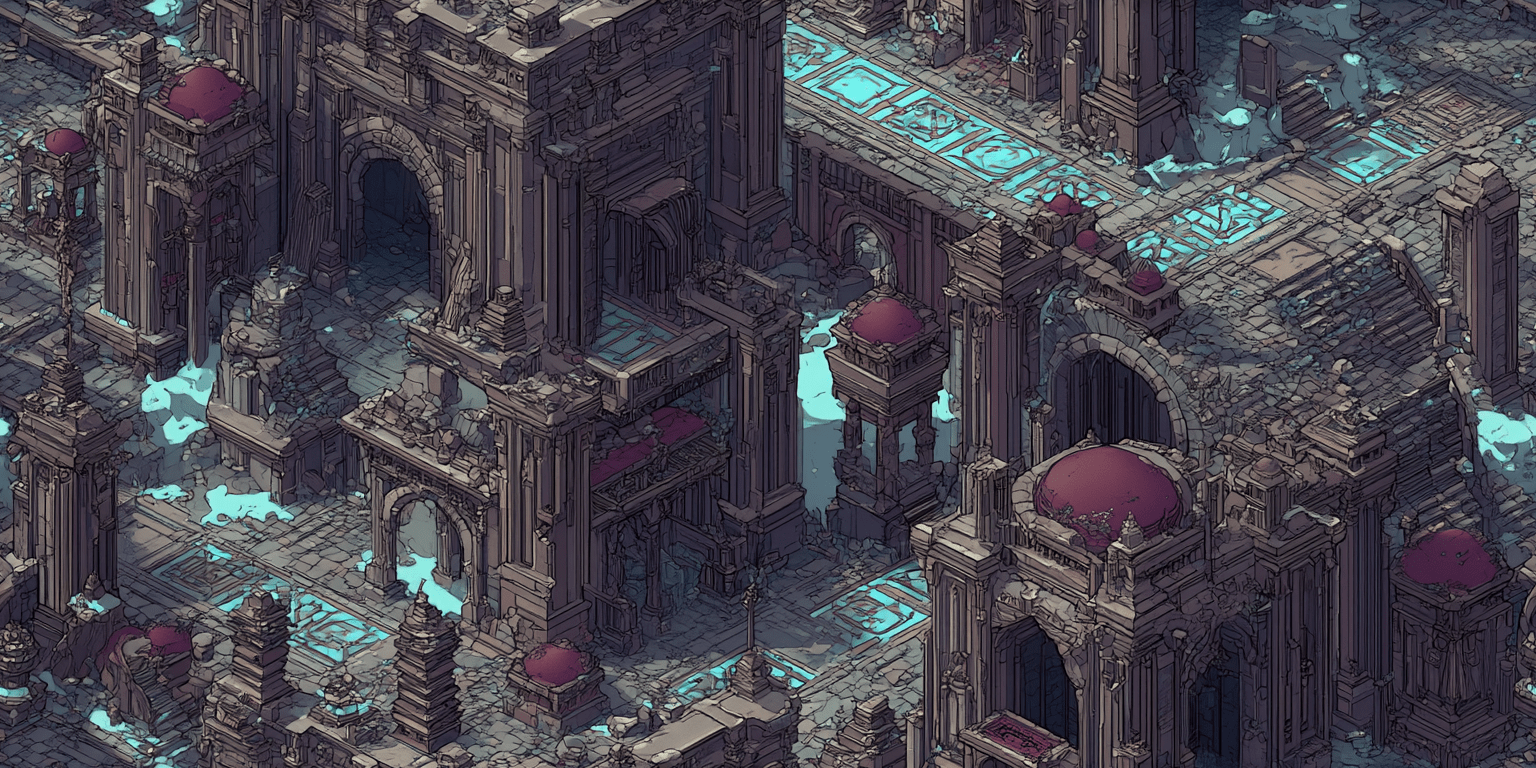
The Allure of Pixel Art in Tokenized Worlds
 Orion's Gate Studio3 min read·Just now
--
Nostalgia That Converts Players to Collectors
Psychologists call it “digital nostalgia”-the emotional pull of early console visuals that creates deep attachment and repeat engagement. Culture writers have linked the recent resurgence of blocky sprites directly to this longing for simpler digital times, a trend mirrored in Web3 titles where every sprite can double as a tradable NFT. [1]
Because sprites are tiny bitmap grids, they render quickly on low-power phones and browsers, widening the funnel for first-time crypto gamers worldwide. Community forums dedicated to pixel-based engines note that even 960 . 640 canvases feel rich when scaled crisply-yet they remain bandwidth-friendly on slow connections. [2] [3]
Pixel assets break cleanly into modular layers (hair, armor, backgrounds), making them ideal for token standards that pack multiple item IDs into one contract. The multi-token interface defined in ERC-1155 lets a single sprite sheet spawn dozens of in-game items while keeping blockchain calls lean.
Technical Advantages for On-Chain Economies
Storing art fully on chain is expensive, but pixel graphics slash byte size. Developers who migrated 20 k animated GIF NFTs to a gas-optimized encoding saved over 9 ETH in fees-a direct result of minimal pixel data. [4]
Community Q&A on smart-contract forums confirms that the less data you push in a mint transaction, the lower your gas cost, so shrinking art pays literal dividends. [5] [6]
A recent open-source experiment in fully on-chain world maps shows that low-resolution tiles enable procedural “gas-golfed” terrain without blowing up block limits. Pixel tiles are compressed directly into the contract, then decoded client-side at render time. [7]
Generative-set best-practice guides highlight that many pixel-based NFTs ship at just 24x24 px, then upscale for storefront previews-keeping metadata weight tiny while satisfying high-definition displays. [8] [9]
Game-dev threads note that limited palettes simplify recolors and rarity traits, letting artists spin dozens of “legendary” skins from one base sprite with minimal redraw. [10] Large composite images bloat texture pages and memory; smaller, reusable tiles let the engine batch-render efficiently and cut production time. [11]
Thousands of permissively-licensed sprite packs live on community asset sites, giving Web3 projects rapid prototyping fuel and encouraging modders to sell derivative skins in-game. [12] [13]
Open-source editors provide free alternatives to paid pixel suites, lowering the barrier for community artists who want to mint their own items. [14] [15]
Community & Marketplace Dynamics
A farming-themed pixel MMO recently demonstrated how dual-token economies thrive when every land tile and crop is a low-weight NFT; its daily active wallets surged once players could flip surplus produce on a peer-to-peer bazaar. [16]
Meanwhile, interoperability think-pieces argue that pixel proportions make it easier to port skins between games, because identical resolutions and palette limits reduce upscaling artifacts-paving the way for cross-game economies where a sword from one world can appear seamlessly in another. [17] [18]
For Web3 designers, pixel art offers the rare synergy of aesthetic charm, technical efficiency, and economic scalability. Small sprites mean cheaper mints, faster loads, and more flexible modularity-crucial advantages when every frame can be tokenized, traded, and even teleported between games. By embracing tight palettes, layer-driven workflows, and open-source asset pipelines, studios like Orion’s Gate can craft vibrant, gas-efficient worlds where every pixel pulls double duty as both art and asset.
References
- “Pokémon and the First Wave of Digital Nostalgia,” The New Yorker newyorker.com
- Community discussion on optimal pixel-art resolutions, GameMaker forum forum.gamemaker.io
- Unity-engine community thread on pixel art memory savings discussions.unity.com
- “ERC-1155: Multi-Token Standard,” Ethereum Improvement Proposal github.com
- “Pros & Cons of Pixel Art vs. Hand-Drawn,” r/gamedev reddit.com
- “How I Put an NFT Collection of 20 k Animated GIFs On-Chain and Saved 9 ETH,” CoinMonks blog
- StackExchange discussion on NFT file size and gas costs ethereum.stackexchange.com
- Reddit thread on gas fees vs. artwork size reddit.com
- “On-Chain Worlds With Terrain Generation,” technical blog
- “Top Game Assets Tagged Pixel Art,” itch.io catalog
- OpenGameArt asset repository overview opengameart.org
- “Cross-Game Economies and Interoperability,” Web3 design essay