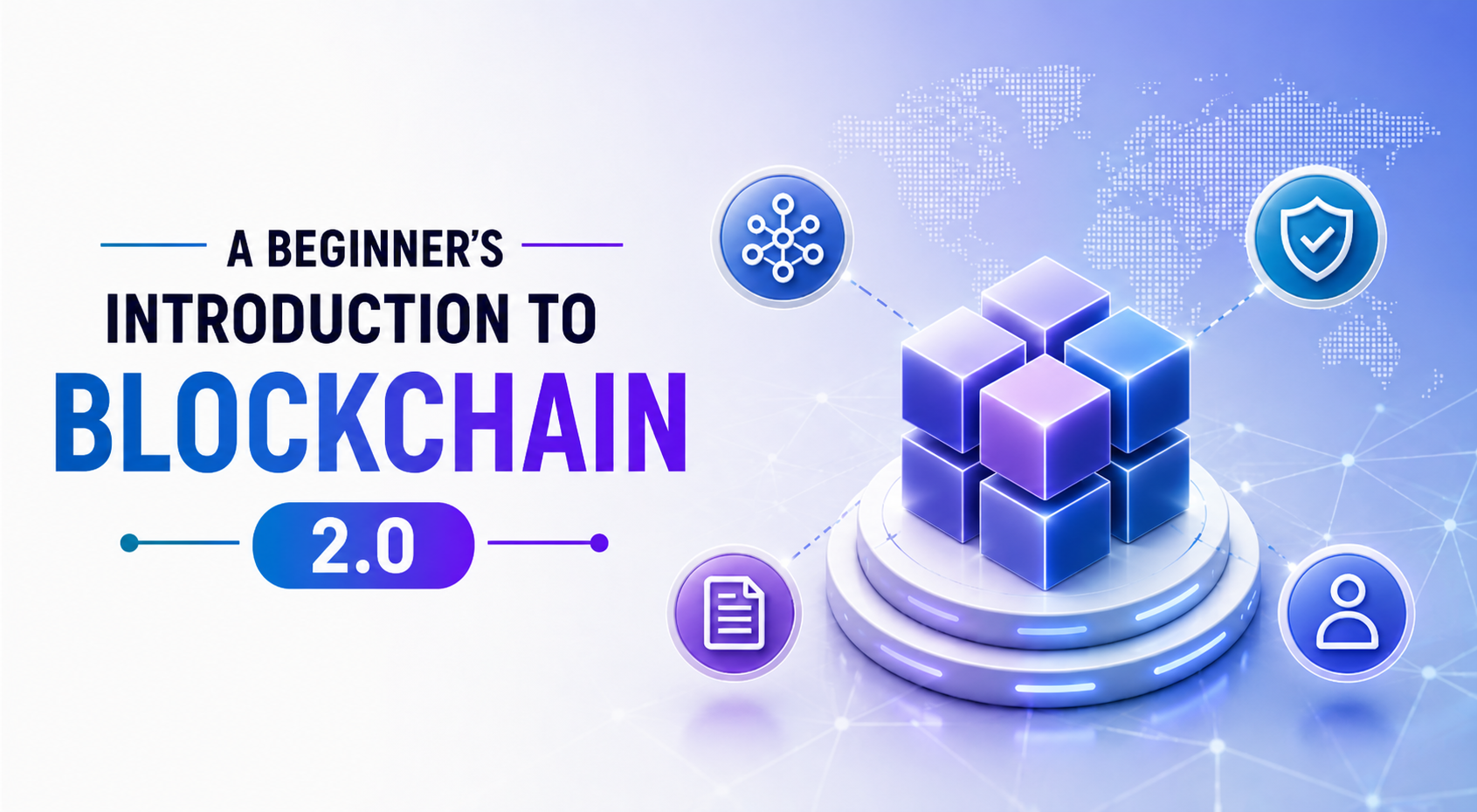
A Beginner’s Introduction to Blockchain 2.0
 Abcposting4 min read·Just now
--
Introduction
Blockchain technology has become one of the most talked-about innovations in the digital world. From cryptocurrencies like Bitcoin to decentralized finance, NFTs, and Web3 applications, blockchain is changing how people interact with technology, money, and digital ownership.
As blockchain technology continues to evolve, a new phase known as Blockchain 2.0 is gaining attention. This next generation of blockchain systems is designed to be faster, smarter, more scalable, and easier to use than earlier blockchain networks.
For beginners, Blockchain 2.0 may sound technical or complicated, but its core idea is simple — improving blockchain technology so it can support real-world applications more efficiently.
This guide provides a beginner-friendly introduction to Blockchain 2.0, how it works, why it matters, and how it could shape the future of the digital economy.
Understanding Blockchain Basics
Before learning about Blockchain 2.0, it is important to understand what blockchain actually is.
A blockchain is a decentralized digital ledger that records transactions securely across multiple computers. Instead of being controlled by a single organization or authority, blockchain networks are maintained by distributed participants.
This creates systems that are:
- Transparent
- Secure
- Decentralized
- Difficult to manipulate
Blockchain technology allows people to exchange value and information directly without relying on intermediaries such as banks or centralized platforms.
What Was Blockchain 1.0?
The first generation of blockchain technology is often called Blockchain 1.0.
Its main purpose was to support decentralized digital currencies like Bitcoin.
Blockchain 1.0 introduced:
- Peer-to-peer transactions
- Decentralized payment systems
- Secure digital record keeping
While revolutionary, early blockchain systems had limitations such as:
- Slow transaction speeds
- High energy usage
- Limited scalability
- Basic functionality
These challenges led to the development of more advanced blockchain systems.
What is Blockchain 2.0?
Blockchain 2.0 is the next evolution of blockchain technology.
It expands blockchain functionality beyond simple cryptocurrency transactions and allows developers to build decentralized applications and smart digital systems.
Blockchain 2.0 focuses on:
- Smart contracts
- Decentralized applications (dApps)
- Faster transactions
- Better scalability
- Improved security
- Cross-chain connectivity
- User-friendly systems
In simple terms, Blockchain 2.0 makes blockchain technology more useful for real-world applications.
What Are Smart Contracts?
One of the biggest innovations in Blockchain 2.0 is the introduction of smart contracts.
Smart contracts are self-executing digital agreements stored on the blockchain.
They automatically perform actions when certain conditions are met without needing intermediaries.
For example:
- Automatic payments
- Digital asset transfers
- Decentralized financial services
- Online agreements
Smart contracts help make blockchain systems more efficient and automated.
Key Features of Blockchain 2.0
Faster Transactions
Blockchain 2.0 systems are designed to process transactions more quickly compared to older blockchain networks.
This improves:
- Payment speed
- Trading efficiency
- User experience
Better Scalability
Scalability means a blockchain can support more users and transactions without slowing down.
Modern blockchain systems use advanced technologies to improve network performance and reduce congestion.
Lower Transaction Costs
Many Blockchain 2.0 ecosystems focus on reducing transaction fees, making decentralized services more affordable and accessible.
Enhanced Security
Blockchain 2.0 introduces stronger security systems such as:
- Smart contract auditing
- Advanced encryption
- Multi-layer protection mechanisms
These improvements help create safer decentralized platforms.
Cross-Chain Interoperability
Different blockchain networks can now communicate and share information more efficiently.
This allows:
- Asset transfers between networks
- Better liquidity access
- Connected decentralized ecosystems
Better User Experience
Blockchain 2.0 platforms are becoming easier to use through:
- Cleaner interfaces
- Simpler wallet integration
- Faster onboarding
- Mobile-friendly applications
This helps make blockchain technology more beginner-friendly.
Real-World Applications of Blockchain 2.0
Blockchain 2.0 is already being used across many industries.
Decentralized Finance (DeFi)
Blockchain powers financial services such as:
- Lending
- Borrowing
- Trading
- Staking
- Yield farming
without traditional banks.
NFTs and Digital Ownership
Blockchain helps users securely own and trade digital assets such as:
- Art
- Music
- Collectibles
- Gaming items
Gaming
Blockchain gaming allows players to own in-game assets and participate in digital economies.
Supply Chain Management
Businesses use blockchain to improve product tracking and transparency.
Healthcare
Blockchain can help secure medical records and improve data privacy.
Why Blockchain 2.0 Matters
Blockchain 2.0 is important because it solves many of the problems that limited earlier blockchain systems.
It helps create decentralized ecosystems that are:
- Faster
- More scalable
- More secure
- Easier to use
- More efficient
These improvements support mainstream adoption and real-world blockchain integration.
The Role of Blockchain 2.0 in Web3
Web3 refers to the decentralized future of the internet where users have more control over:
- Their data
- Digital assets
- Online identities
- Financial interactions
Blockchain 2.0 serves as the infrastructure powering many Web3 applications.
It enables:
- Decentralized social platforms
- NFT marketplaces
- Creator economies
- Blockchain gaming
- Decentralized finance ecosystems
Challenges Still Facing Blockchain 2.0
Although Blockchain 2.0 offers major improvements, some challenges still remain:
- Regulatory uncertainty
- Security risks in poorly built applications
- Market volatility
- User education
- Technical complexity for some advanced systems
The industry continues working on solutions to improve accessibility and reliability.
The Future of Blockchain 2.0
The future of Blockchain 2.0 may include:
- AI-powered decentralized systems
- Global digital finance ecosystems
- Tokenized real-world assets
- Fully interoperable blockchain networks
- Smarter decentralized applications
As innovation continues, blockchain technology could become a major part of everyday digital life.
Conclusion
Blockchain 2.0 represents the next stage in the evolution of decentralized technology.
By improving speed, scalability, security, and usability, it is helping blockchain move beyond simple cryptocurrency transactions into real-world applications across industries.
For beginners, understanding Blockchain 2.0 is an important step toward exploring the future of digital finance, Web3, decentralized applications, and modern internet technology.
As adoption continues growing worldwide, Blockchain 2.0 could play a major role in shaping the future of the global digital economy.
View on Explorer: https://explorer.advanceblockchain.io