Hyperliquid 101: Nonce or Invalid Signature on Hyperliquid? Root Causes and Fix Path
 Evan K. | Hyperliquid Notes4 min read·Just now
--
Nonce or Invalid Signature on Hyperliquid? Root Causes and Fix Path is best handled as a technical state-and-validation problem, not a narrative guess. This article uses a deterministic workflow focused on classification, input validation, and execution sequencing.
Most teams lose more time on reaction than on rejection. When a failure is treated as random, retry frequency usually goes up before the class is confirmed. That creates noisy timelines, weak evidence, and slow escalation because nobody can state which request state failed first.
In practice, this class usually comes from three deterministic causes: payload changed after signing, nonce generated too early or reused incorrectly, or signer context not matching the target action scope. If you classify from that frame at the start, troubleshooting becomes faster and retries become safer.
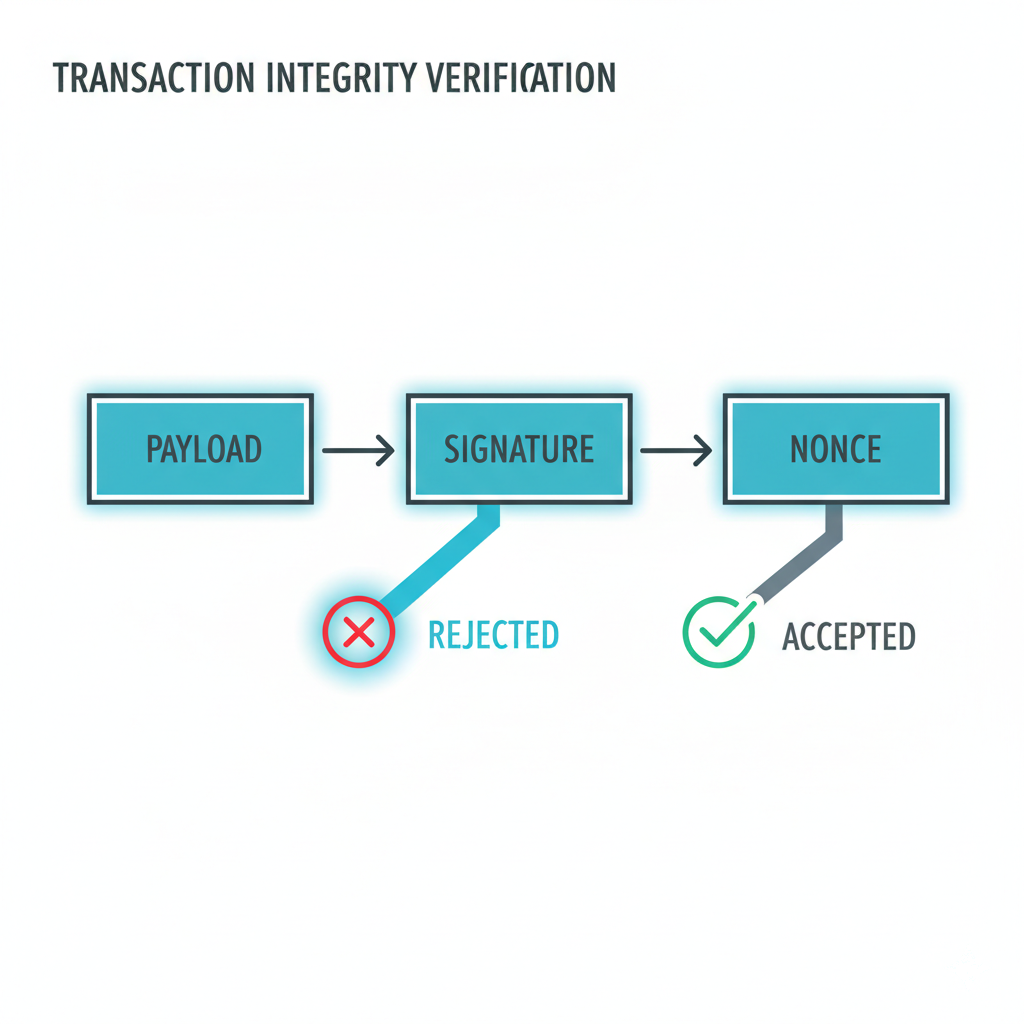
For write-capable actions, acceptance depends on three aligned checks: payload structure is valid, signature binds to the exact submitted payload, and nonce is valid for the account timeline.
Write acceptance

valid payload + valid signature + valid nonce = eligible for execution
When any one element breaks, rejection is expected behavior. This is why identical code can pass in one minute and fail in the next without protocol changes. The difference is often local sequencing: request built too early, signed too early, or submitted after a context shift.
A common timeline looks like this: payload created, payload signed, queue delay or local mutation occurs, old signature remains attached, request gets rejected. From outside this looks intermittent. From a validation perspective it is deterministic mismatch.
The first operational habit is to check context and state baseline before any retry. On Hyperliquid, that usually means verifying role and scope, then confirming order-state visibility through official Info routes such as userRole and openOrders. If these reads are healthy, the incident is usually in request construction, not broad platform availability.
curl -X POST "https://api.hyperliquid.xyz/info" \
  -H "Content-Type: application/json" \
  -d '{"type":"userRole","user":"0xYourAddress"}'


curl -X POST "https://api.hyperliquid.xyz/info" \
  -H "Content-Type: application/json" \
  -d '{"type":"openOrders","user":"0xYourAddress"}'
After baseline reads, rebuild payload, nonce, and signature in one short window. Do not reuse an old signed object after edits.
{
  "action": {
    "type": "order",
    "orders": [
      {
        "a": 0,
        "b": true,
        "p": "2400",
        "s": "0.02",
        "r": false,
        "t": {"limit": {"tif": "Gtc"}}
      }
    ]
  },
  "nonce": 1715000000000,
  "signature": {"r": "...", "s": "...", "v": 27}
}
The JSON above is a shape reference, not a hardcoded template. What matters is sequence discipline: build, freeze, nonce, sign, submit. Once payload is frozen, field edits are not allowed unless the pipeline is restarted.
In recovery scripts, five mistakes repeat frequently. First, mutating payload after signature generation. Second, generating nonce at queue-entry instead of submit-ready stage. Third, sharing one account across multiple writers without nonce coordination. Fourth, changing asset or size fields without rebuilding signature. Fifth, retrying unchanged payloads after deterministic rejection.
All five create avoidable reject loops. In reviews, people often call these loops bad luck or temporary endpoint behavior. The more reliable interpretation is pipeline drift: weak immutability rules, unclear nonce ownership, and missing stop conditions after class-stable failures.
A safer write path is short and explicit.
read baseline -> construct payload -> freeze payload -> generate nonce -> sign -> submit immediately -> record response classFor multi-writer accounts, nonce policy is mandatory. If two bots, tabs, or operators can write from one account, you need one nonce owner per write queue, explicit lock or reservation around the signing window, and local rejection of retries that reuse previously rejected nonce/signature pairs. Without this policy, so-called sporadic nonce errors are often just concurrent writers stepping on each other.
When local checks fail, escalate with structured evidence rather than narrative logs.
incident_id: inc-2026-08-08-001
class: nonce_or_signature_validation
context_check: passed
state_visibility: passed
payload_fingerprint: <hash>
nonce_timeline: generated_at, signed_at, submitted_at
attempts: 1
result: invalid_signature
request: verify signing assumptions for this action class
This is much more actionable than “API keeps rejecting.”
Nonce and signature errors are usually pipeline-quality problems, not mystery failures. If you keep context explicit, sign close to submit time, and block payload mutation after signing, this incident class becomes rarer and easier to resolve.
Notes and references used for this write-up:
- https://hyperliquid.gitbook.io/hyperliquid-docs/for-developers/api
- https://hyperliquid.gitbook.io/hyperliquid-docs/for-developers/api/info-endpoint
This article is for technical education only and does not constitute investment, legal, or compliance advice.
Written by Evan K. | Hyperliquid Notes