Why Most DeFi Yields Fade and What Actually Lasts
--
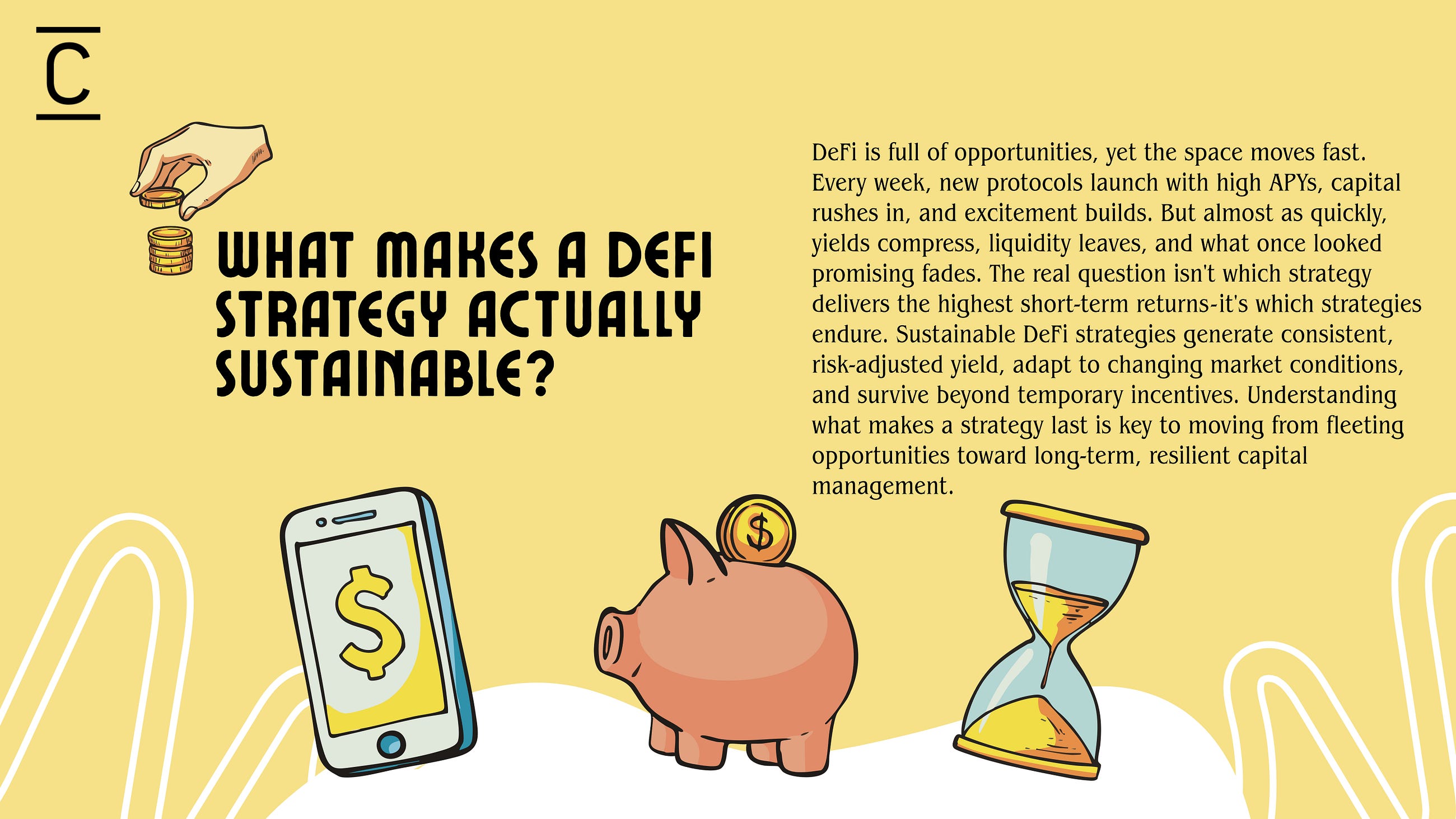
DeFi moves fast.
A new strategy appears.
APY looks high.
Capital flows in.
Returns drop.
Liquidity moves on.
This pattern has repeated so many times that it almost feels normal.
But it raises a simple question.
If everything looks profitable at the start, why does almost nothing last?
The Problem With Chasing Yield
Most strategies are built for attention, not longevity.
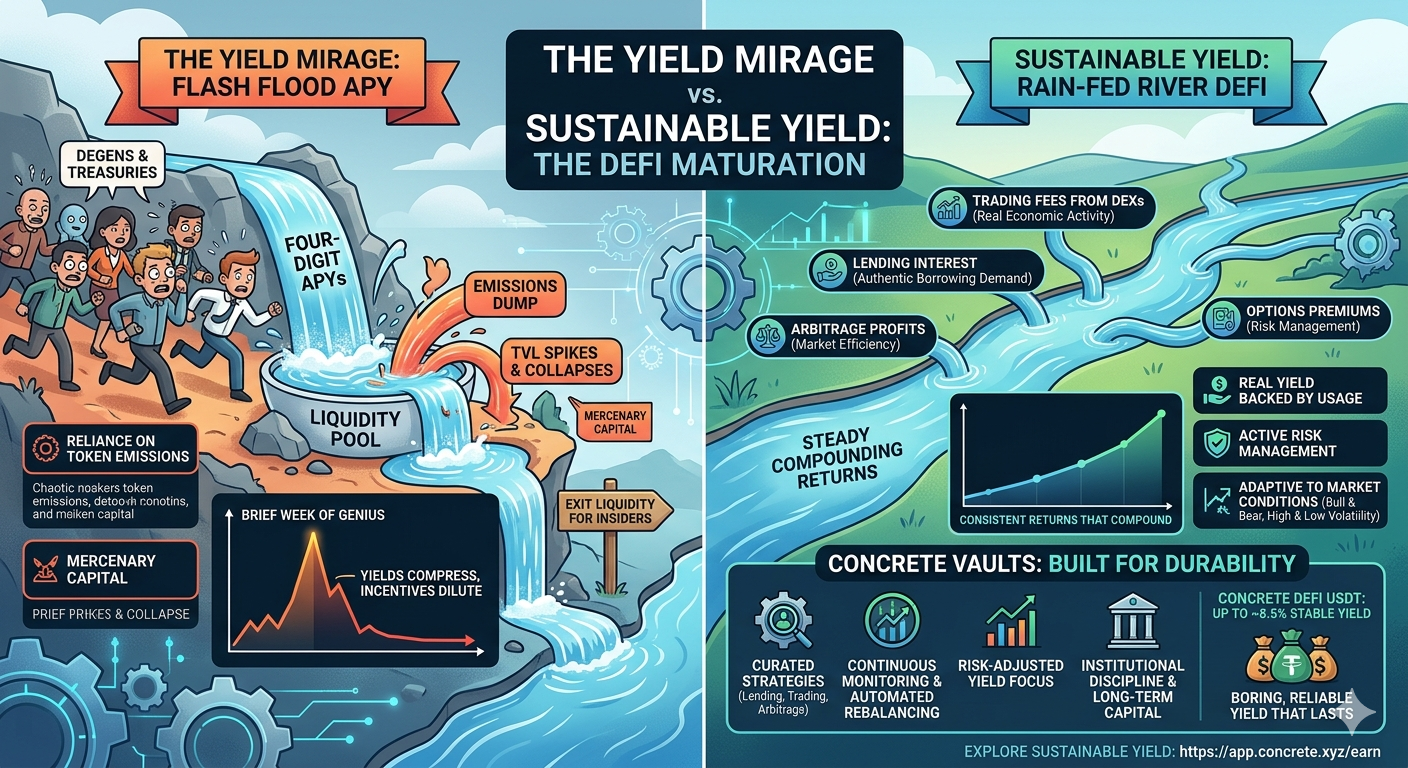
High APY attracts users. Incentives bring liquidity. Activity spikes quickly.
But these conditions are temporary.
As capital increases, rewards get diluted. When incentives slow down, the strategy loses momentum. Liquidity leaves just as fast as it arrived.
What looked like a strong opportunity turns out to be short-lived.
What Sustainability Really Looks Like
A sustainable DeFi strategy is not about being the best for a moment.
It is about staying relevant over time.
That means:
- delivering steady returns
- working without constant incentives
- adapting to changing markets
It is less about maximizing gains and more about maintaining performance.
Understanding Where Yield Comes From
The source of yield matters more than the number itself.
Some strategies generate returns from real usage:
- trading activity
- borrowing demand
- market inefficiencies
These are tied to actual behavior in the market.
Other strategies depend heavily on token emissions.
They can offer high returns early on, but those returns are not supported by real activity. Once rewards decrease, the entire structure weakens.
This is why many high-yield strategies disappear.
Liquidity Changes Everything
Liquidity is not just a number. It shapes how strategies perform.
Deep liquidity allows smoother execution.
Active users create consistent demand.
Volatility opens opportunities but also increases risk.
Some strategies only work when conditions are perfect.
Sustainable ones adjust when conditions are not.
The Reality of Costs and Risk
Headline APY rarely tells the full story.
Real performance is affected by:
- transaction costs
- slippage
- rebalancing frequency
- market shifts
These factors slowly reduce returns.
Over time, they make a big difference.
A strategy that looks strong initially may not hold up after these are considered.
How Strong Strategies Are Built
Sustainability comes from structure.
Not from luck.
Better strategies focus on:
- spreading capital across different opportunities
- adjusting positions regularly
- reducing unnecessary risk
- focusing on net returns
This approach creates stability instead of dependence on a single source.
Why Vaults Matter
Managing strategies manually is complex and time-consuming.
Vaults simplify this process.
They help by:
- allocating capital efficiently
- reacting to market changes
- focusing on consistent yield
- reducing exposure to short-term incentives
This allows users to benefit from structured strategies without constant intervention.
Stability Over Hype
Concrete DeFi USDT is an example of this approach.
With up to around 8.5 percent stable yield, it does not compete with extreme APY spikes.
But it offers something more important.
Consistency.
Stable returns tend to:
- reduce volatility in outcomes
- attract long-term users
- perform better across full market cycles
What seems modest in the short term can be stronger over time.
The Direction DeFi Is Moving
DeFi is changing.
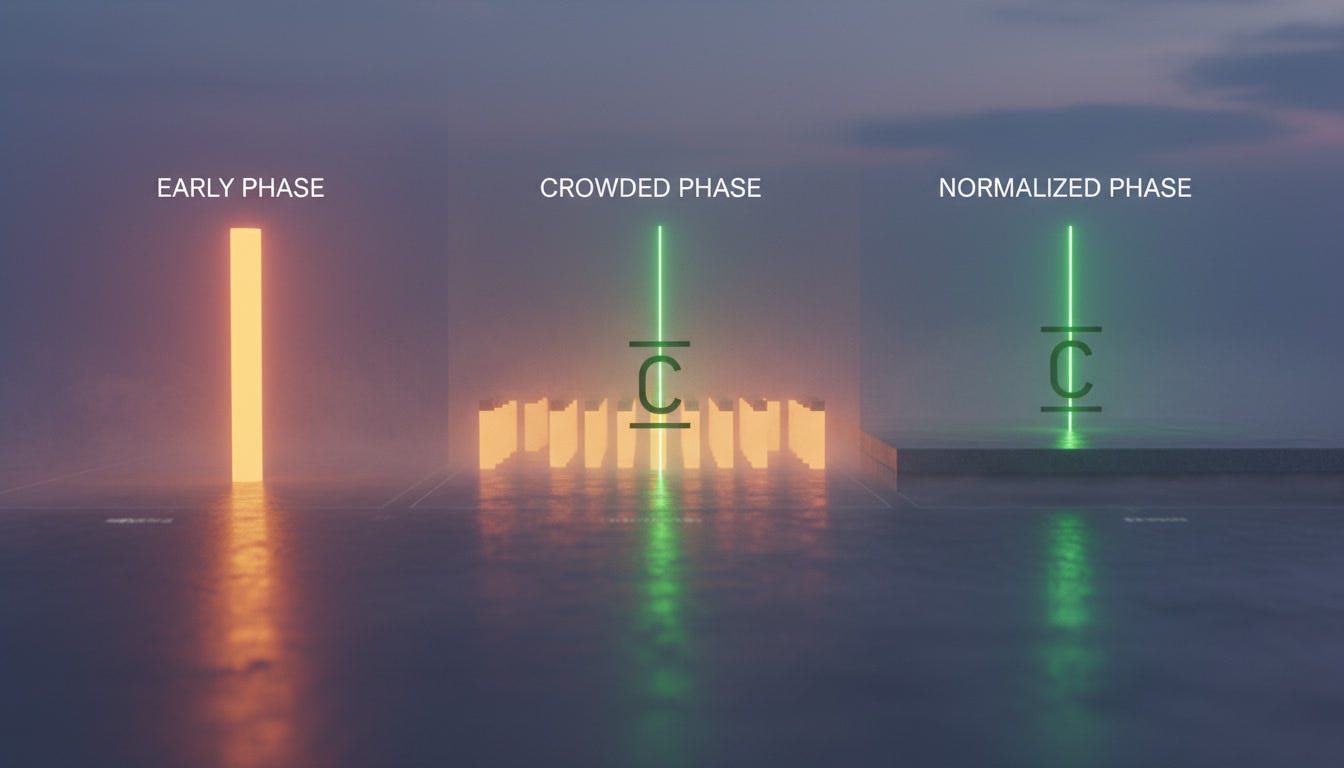
The early phase rewarded speed and risk-taking.
The next phase will reward structure and patience.
The focus is shifting toward:
- sustainable returns
- long-term capital allocation
- resilient strategies
- reliable infrastructure
The question is no longer about chasing the highest yield.
It is about finding what continues to work when the market changes.
Because in the end, the strategies that last will define the future of DeFi.
Explore Concrete at: https://app.concrete.xyz/earn