Why Most DeFi Strategies Fail And What Survives
 Furkan5 min read·Just now
--
What Makes a DeFi Strategy Actually Sustainable?
We have all witnessed the exact same script play out time and time again in decentralized finance.
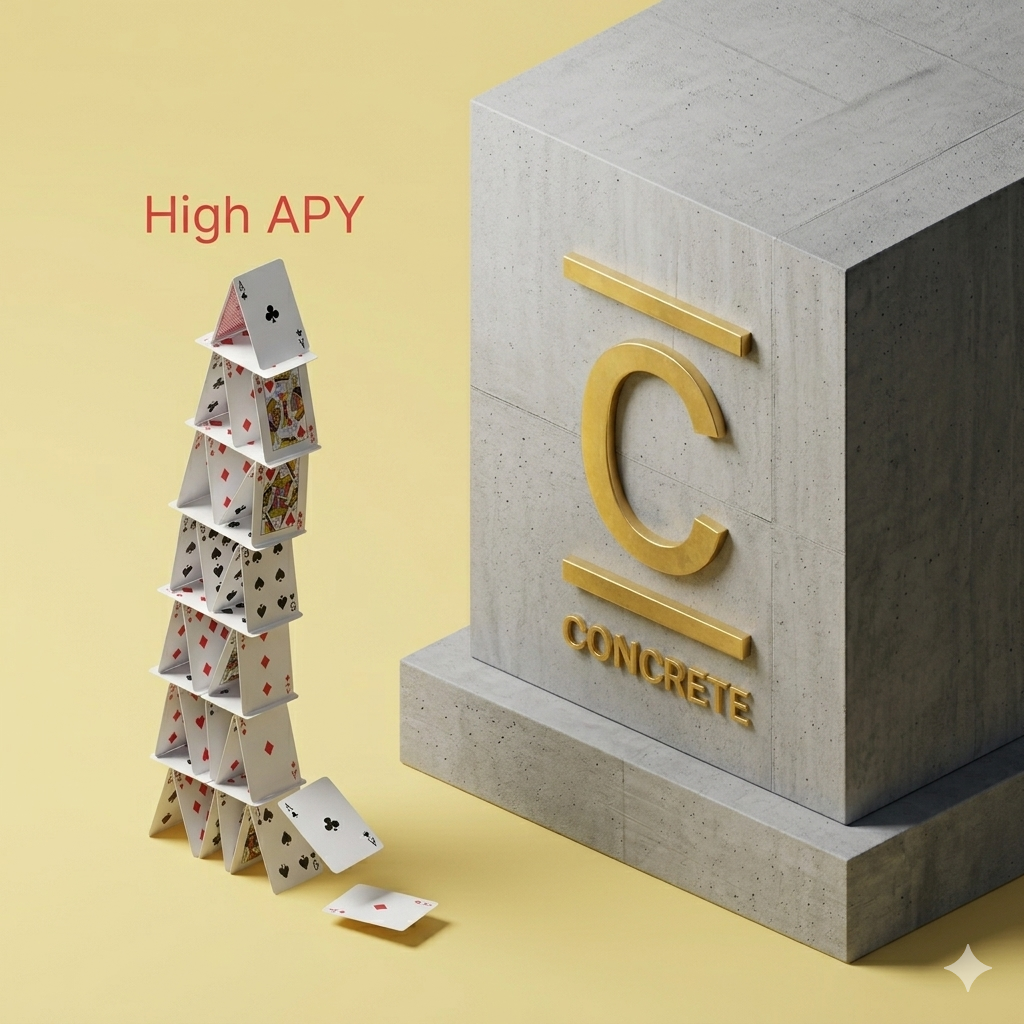
A brand new protocol launches with a slick interface and a massive marketing push. The dashboard flashes sky-high APYs, promising triple-digit returns to anyone willing to deposit. Immediately, a tidal wave of onchain capital rushes in to capture the opportunity. For a few fleeting weeks, everyone feels like a genius.
But then the inevitable gravity of the market takes hold.
As liquidity pools become crowded, yields begin to compress. The protocol’s underlying reward token starts a slow, painful bleed as farmers sell off their emissions. Finally, mercenary liquidity rotates out just as quickly as it arrived, chasing the next big launch and leaving the original protocol behind.
This exhausting cycle of boom and bust repeats itself relentlessly.
It forces us to stop and ask a more important question.
In a market obsessed with chasing the highest number:
Why do most strategies fade so quickly? And more importantly — what actually lasts?
In mature financial systems, the best strategies are never the ones that perform perfectly for a single week. They are the ones that survive, adapt, and continue compounding across entire market cycles.
Defining True Sustainability in a Chaotic Market
To understand what survives, we first need to clearly define what “sustainable” actually means in DeFi.
True sustainability is not about peak performance during a bull run.
It is about durability across time and conditions.
A sustainable strategy must accomplish three things:
- Generate consistent returns → steady growth instead of sharp spikes followed by drawdowns
- Survive without subsidies → not depend entirely on token emissions or incentives
- Remain viable across market regimes → perform in bull markets, sideways markets, and downturns
It is easy to make money when everything is going up.
A sustainable strategy is one that continues to function — and protect capital — when the market turns against you.
The Source Code: Real Yield vs. Temporary Mirages
The foundation of sustainability lies in the source of yield.
Not all yield is created equal.
Real yield is generated from actual economic activity:
- trading fees from decentralized exchanges
- interest paid by borrowers in lending markets
- arbitrage profits correcting inefficiencies
- liquidation mechanisms maintaining system balance
This type of yield is durable because it is driven by real demand. Users are paying for a service, which creates ongoing revenue.
Temporary yield, on the other hand, is driven by emissions.
This is effectively a customer acquisition strategy where protocols print their own token to attract liquidity. While it can create impressive APYs in the short term, it comes at the cost of dilution.
Over time, emissions decline. Token prices weaken. Liquidity leaves.
Real economic activity persists.
Incentives eventually run out.
This is why many high-yield opportunities collapse — they are built on temporary rewards, not sustainable revenue.
The Unforgiving Role of Liquidity and Market Conditions
Even strategies built on real yield require the right environment to survive.
Sustainability depends heavily on:
- liquidity depth
- consistent user activity
- demand for the underlying strategy
- market volatility
Many strategies look perfect in a controlled environment or during calm markets. But DeFi is rarely calm.
When volatility spikes, correlations break down. When liquidity thins out, exits become expensive or impossible. When demand drops, returns shrink.
Strategies that depend on ideal conditions are fragile.
The ones that endure are designed to adapt to changing market conditions, not break under them.
This is where understanding risk-adjusted yield becomes critical — not just how much a strategy earns, but how reliably it earns it.
The Hidden Drain: Risk and Cost Awareness
There is another layer most users underestimate: the cost of execution.
A strategy might show strong returns on a dashboard, but those numbers often ignore the friction involved in maintaining the position.
Over time, returns are reduced by:
- gas fees for transactions and rebalancing
- slippage when entering or exiting positions
- impermanent loss in liquidity pools
- changing correlations between assets
If a strategy requires constant manual intervention, those costs compound quickly.
What looks profitable on paper can slowly degrade into underperformance in reality.
This is why experienced participants focus on net, risk-adjusted yield, not headline APY.
Architecting Better Systems
To build strategies that last, DeFi must move beyond short-term opportunity hunting and toward system design.
Sustainable strategies are engineered with:
- diversification across multiple yield sources
- continuous monitoring and adjustment
- adaptability to changing market conditions
- a focus on protecting capital and compounding returns
This is where DeFi begins to resemble traditional financial systems.
Instead of chasing yield, capital is deployed through structured processes designed for long-term performance.
The Concrete Approach to Managed DeFi
This philosophy is exactly what Concrete vaults are built around.
Instead of requiring users to constantly search for the next opportunity, Concrete focuses on structured DeFi vaults that manage capital efficiently.
Concrete vaults aim to:
- prioritize sustainable yield sources grounded in real economic activity
- actively manage and allocate onchain capital across vetted strategies
- adapt automatically to changing market conditions
- reduce reliance on short-term incentives
This approach transforms DeFi from manual yield chasing into managed DeFi infrastructure.
It also reflects the broader direction of institutional DeFi, where capital is deployed through systems rather than constant human decision-making.
The Power of Consistency: Concrete DeFi USDT
To make this more concrete, consider the Concrete DeFi USDT vault.
It is designed to offer approximately ~8.5% stable yield.
At first glance, this may seem less exciting than triple-digit APYs.
But over time, consistency wins.
A stable strategy:
- avoids large drawdowns
- compounds steadily
- remains productive across cycles
While high-yield opportunities often collapse, consistent yield continues to build.
This is exactly the kind of reliability that attracts long-term capital.
The Bigger Institutional Shift
DeFi is evolving.
The space is moving away from:
short-term yield chasing → long-term capital strategies
As this shift continues:
- sustainability will matter more than peak returns
- risk-adjusted yield will matter more than headline APY
- infrastructure will matter more than incentives
The future of DeFi will not be defined by who finds the highest yield.
It will be defined by:
who builds strategies that last.
Stop guessing. Start engineering.
Explore Concrete at: https://app.concrete.xyz/earn