Nkpoyor Dumle3 min read·Just now
--
What Makes a DeFi Strategy Actually Sustainable?
In DeFi, there’s a pattern most users eventually notice.
A new protocol launches, offers high yields, attracts liquidity, and then… the returns start to drop. Sometimes quickly.
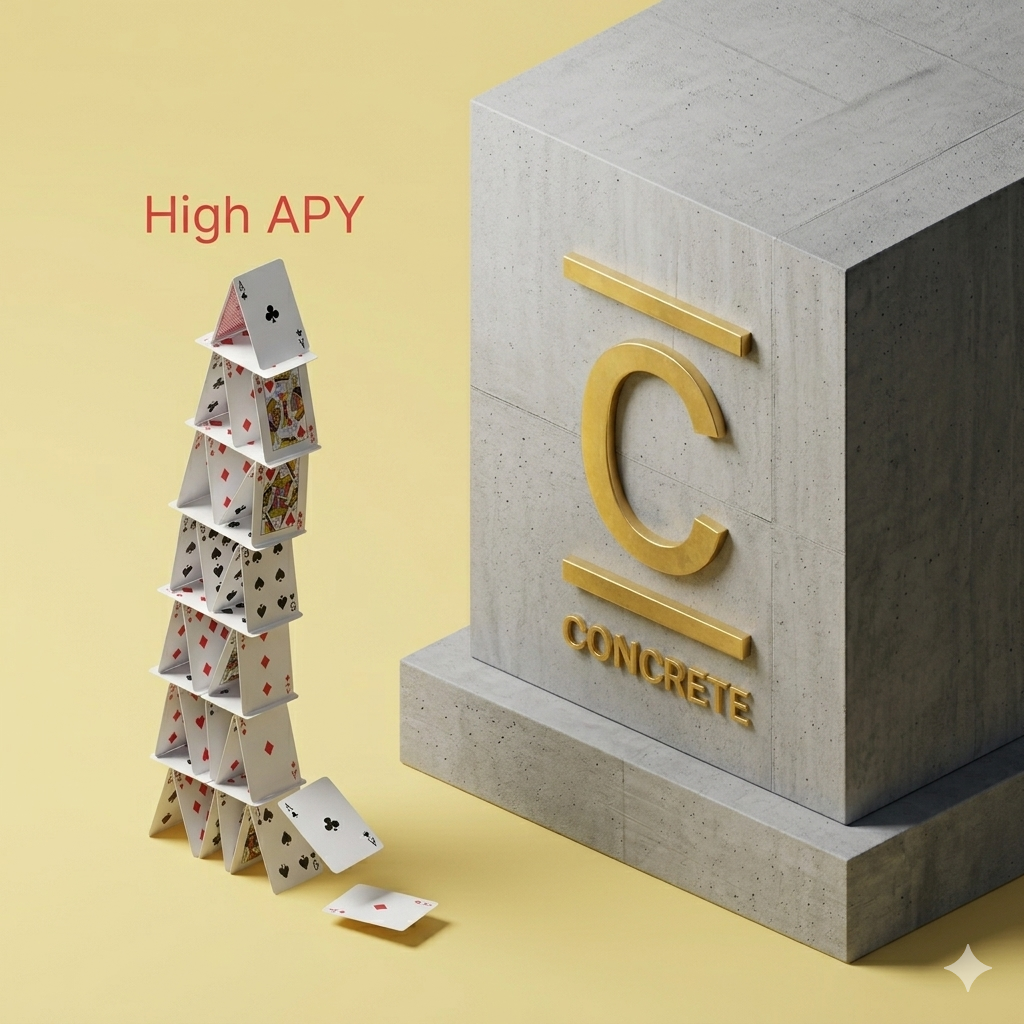
This cycle repeats across the ecosystem. High APYs appear, capital flows in, and over time, those yields become harder to maintain.
So the real question is:
What actually makes a DeFi strategy sustainable?
👉 The Pattern Behind DeFi Yields
Many DeFi strategies follow a similar lifecycle:
- High initial incentives
- Rapid inflow of capital
- Declining returns over time
This happens because early yields are often driven by token emissions or temporary incentives, not long-term value creation.
Understanding this pattern is the first step toward identifying which strategies can actually last.
👉 What “Sustainable” Really Means
A sustainable yield is one that can be maintained over time without relying on constant external incentives.
It typically comes from:
- Real economic activity (trading fees, borrowing demand)
- Consistent market participation
- Efficient capital deployment
In contrast, unsustainable yield depends heavily on new users or token inflation to keep returns high.
👉 Real Yield vs Temporary Yield
One of the most important distinctions in DeFi is between real yield and temporary yield.
Real yield:
- Generated from actual protocol revenue
- Paid in stable or widely used assets
- More predictable over time
Temporary yield:
- Driven by token incentives
- Often inflated in the short term
- Declines as participation increases
Sustainable strategies focus on real yield, while short-term opportunities often rely on temporary incentives.
👉 The Role of Liquidity & Market Conditions
No DeFi strategy exists in isolation. Liquidity and market conditions play a major role in determining outcomes.
- High liquidity can stabilize returns but reduce yield
- Low liquidity may increase yield but also increase risk
- Market volatility can impact both performance and strategy effectiveness
Sustainable strategies are designed to adapt to these conditions rather than depend on ideal scenarios.
👉 Risk & Cost Awareness
Another key factor is understanding risk and cost.
Every yield comes with trade-offs:
- Smart contract risk
- Market exposure
- Liquidity constraints
- Transaction costs
This is where risk-adjusted yield becomes important. It measures not just how much you earn, but whether the return justifies the risks taken.
Ignoring these factors often leads to disappointing outcomes.
👉 Better Strategy Design
Sustainability in DeFi is not accidental — it comes from better strategy design.
Effective strategies aim to:
- Balance risk and return
- Optimize capital deployment
- Adapt to changing market conditions
- Focus on long-term outcomes
This is especially important as DeFi moves toward more structured and professional approaches, often referred to as managed DeFi or institutional DeFi.
👉 Connecting This to Concrete Vault
A Concrete Vault represents this shift toward structured, sustainable strategies.
Instead of chasing the highest available yield, vaults are designed to:
- Optimize onchain capital
- Apply active management
- Focus on risk-adjusted yield
- Improve consistency over time
This approach reflects a move away from fragmented, manual strategies toward more efficient DeFi vault infrastructure.
👉 Example: Concrete DeFi USDT
A practical example is Concrete DeFi USDT, where stablecoin capital is deployed into structured strategies.
Because stablecoins reduce exposure to price volatility, they provide a stronger foundation for building sustainable yield.
Combined with active management and optimized allocation, this approach aims to deliver more stable and predictable outcomes compared to high-risk strategies.
You can explore Concrete at https://app.concrete.xyz/earn to see how these strategies are applied in practice.
👉 The Bigger Shift
DeFi is evolving.
The focus is moving away from chasing high APY toward building systems that prioritize:
- Sustainable yield
- Risk-adjusted yield
- Efficient onchain capital deployment
- Growth of institutional DeFi
As this shift continues, the most successful participants won’t be those chasing the highest returns — but those who understand how to generate returns that last.
Because in the long run, sustainability is what defines success in DeFi.