What Makes a DeFi Strategy Actually Sustainable?
 Alfaarizqi4 min read·Just now
--
DeFi has never had a shortage of yield.
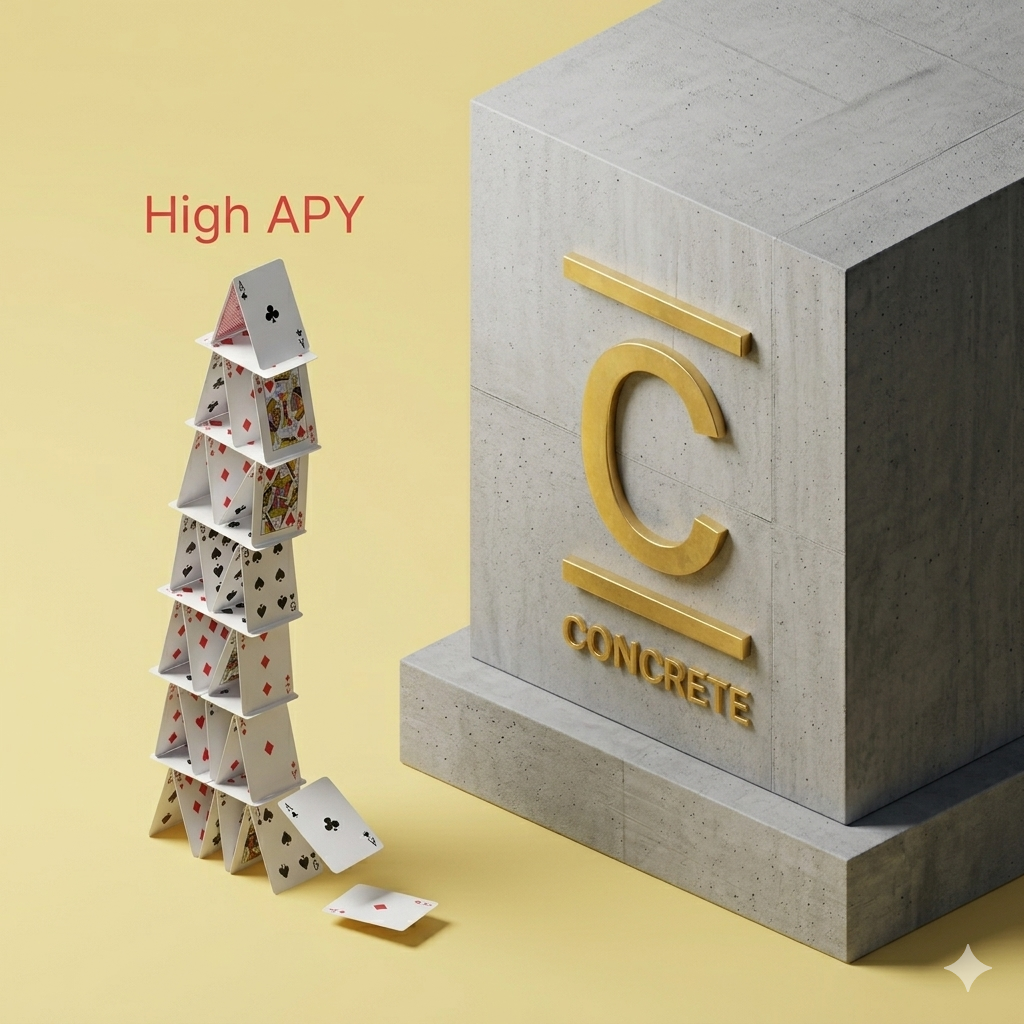
Every week, a new protocol launches APYs spike. Capital rushes in almost instantly. For a moment, it feels like a gold rush until it doesn’t.
Yields compress. Liquidity rotates. Attention shifts somewhere else.
And just like that, what looked like an opportunity disappears.
We’ve all seen this cycle play out over and over again. So maybe the real question isn’t “Where is the highest yield right now?” but something much more important:
What actually lasts?
1️⃣ The Pattern We Keep Ignoring
There’s a familiar rhythm in DeFi:
- New protocols launch with aggressive incentives
- Capital floods in chasing high APY
- Rewards dilute as more participants join
- Yields drop
- Liquidity moves on to the next opportunity
It’s fast, reactive, and often short-lived.
The truth is, most strategies aren’t designed to last they’re designed to attract.
And that’s where things start to break down.
2️⃣ What Does “Sustainable” Actually Mean?
Sustainability in DeFi isn’t about flashy returns. It’s about durability.
A sustainable strategy should:
- Generate consistent returns over time
- Avoid relying entirely on token emissions or incentives
- Remain viable across different market conditions
In other words, it’s not about how high the yield goes — it’s about how long it can hold.
This is where the idea of risk-adjusted yield becomes more important than raw APY.
3️⃣ Real Yield vs Temporary Yield
Not all yield is created equal.
Some yields come from real economic activity:
- Trading fees
- Lending demand
- Arbitrage opportunities
Others come from emissions:
- Token rewards
- Liquidity mining incentives
The difference is critical.
Emission-driven yield often looks attractive at the start but it naturally declines as incentives taper off or token prices fall.
Meanwhile, real yield is tied to actual usage. It’s driven by demand, not just distribution.
That’s what makes it more stable and ultimately more sustainable.
4️⃣ Liquidity, Conditions, and Adaptability
A strategy doesn’t exist in isolation. Its performance depends heavily on market conditions.
Key factors include:
- Depth of liquidity
- User activity
- Market volatility
- Demand for the underlying strategy
Some strategies only work in very specific environments. For example, high volatility might boost trading fees but hurt lending stability.
Others are more adaptable.
The more a strategy can operate across different conditions, the closer it gets to being truly sustainable.
5️⃣ The Hidden Costs Most People Ignore
On paper, many DeFi strategies look perfect.
But real performance tells a different story.
There are always hidden factors:
- Execution costs
- Slippage
- Rebalancing overhead
- Changing correlations between assets
These slowly eat into returns.
A strategy that looks strong at 15% APY might end up delivering far less once these realities are accounted for.
That’s why focusing on net yield, not headline numbers, is essential.
6️⃣ From Opportunities to Systems
Sustainable DeFi strategies aren’t about chasing one opportunity.
They’re about building systems.
That includes:
- Diversifying across multiple strategies
- Continuously monitoring performance
- Adapting to changing market conditions
- Prioritizing long-term consistency over short-term spikes
This is where managed DeFi starts to make sense.
Instead of reacting to the market, it’s about structuring onchain capital to navigate it.
7️⃣ Where Concrete Vaults Fit In
This shift toward sustainability is exactly what DeFi vaults aim to address.
Rather than relying on a single source of yield, vaults are designed to:
- Allocate capital across multiple strategies
- Focus on sustainable yield sources
- Adjust positioning as conditions change
- Reduce dependence on short-term incentives
Concrete vaults are built around this philosophy.
They don’t just chase peak yield they optimize for durability.
8️⃣ A Real Example: Concrete DeFi USDT
A good example of this approach is Concrete DeFi USDT.
Instead of promising extreme returns, it offers up to ~8.5% stable yield.
At first glance, that might not seem exciting compared to double-digit APYs elsewhere.
But over time, consistency matters more.
- Stable returns reduce volatility
- Predictability attracts long-term capital
- Lower risk improves overall performance
In many cases, a steady 8.5% can outperform a volatile 20% that doesn’t last.
That’s the core idea behind sustainable yield.
9️⃣ The Bigger Shift in DeFi
DeFi is evolving.
We’re moving away from:
- Short-term yield chasing
- Incentive-driven capital flows
- Reactive strategies
And toward:
- Long-term capital strategies
- Risk-aware systems
- Institutional DeFi infrastructure
The future of DeFi won’t be defined by the highest APY.
It will be defined by the strategies that survive across cycles.
Because in the end, what lasts is what matters.
Explore Concrete at: https://app.concrete.xyz/earn