US manufacturing activity expands at fastest pace in four years
The S&P Global flash Manufacturing PMI hit 55.3 in May, but the growth story is more about stockpiling than genuine demand, and crypto markets are paying attention.
Share
Add us on Google by Editorial Team Jun. 1, 2026American factories are humming again. The S&P Global flash Manufacturing PMI climbed to 55.3 in May 2026, its highest reading since May 2022 and comfortably above the 50 threshold that separates expansion from contraction.
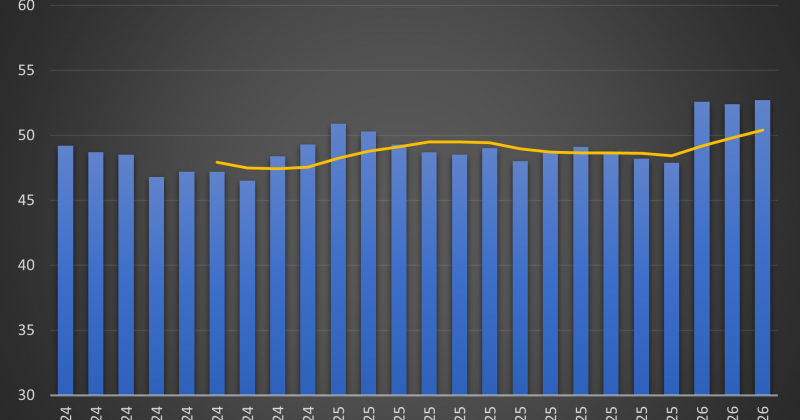
That beat analyst expectations of 53.8 and marked an increase from April’s 54.5 reading. The ISM Manufacturing PMI told a similar story, rising to 52.7 for its strongest print in four years.
Much of this expansion is being driven not by a wave of consumer demand, but by companies frantically stockpiling materials before things get more expensive or harder to find.
Defensive growth, not organic growth
The surge in new orders was the steepest recorded in four years. Production rates accelerated. Purchasing activity jumped significantly.
AdvertisementCompanies aren’t buying more because customers are suddenly lining up at the door. They’re buying more because they expect supply disruptions tied to the Iran conflict and ongoing import tariffs to squeeze availability and drive prices higher.
Input costs and output prices both escalated at their fastest rates in nearly four years. Supplier delivery times, a classic indicator of supply-chain stress, stretched longer.
The road to 55.3 was bumpy
The ISM Manufacturing PMI was sitting at 47.9 as recently as December 2025, deep in contraction territory. The journey from 47.9 to 52.7 in five months tracks more closely with companies shifting from wait-and-see mode to actively hedging against geopolitical risk than with a structural recovery in industrial demand.
Tariff uncertainty made it difficult for manufacturers to price long-term contracts or commit to capital expenditure. When the cost of holding too little inventory starts to outweigh the cost of holding too much, purchasing managers hit the buy button. That’s largely what happened in May.
What this means for crypto investors
Historically, PMI readings above 50 have correlated with periods of bullish sentiment in crypto markets. When manufacturing expands, it signals economic activity, risk appetite, and confidence. Money flows toward risk assets. Bitcoin, for better or worse, trades like a risk asset in most macro environments.
The defensive nature of this expansion introduces a significant asterisk. Stockpiling-driven growth can flatline or reverse once the inventory cycle peaks, creating volatility in risk assets, crypto included.
Input costs and output prices rising at multi-year highs put the Federal Reserve in an uncomfortable spot. Strong manufacturing data combined with accelerating prices makes it harder for the Fed to justify rate cuts.
Disclosure: This article was edited by Editorial Team. For more information on how we create and review content, see our Editorial Policy.