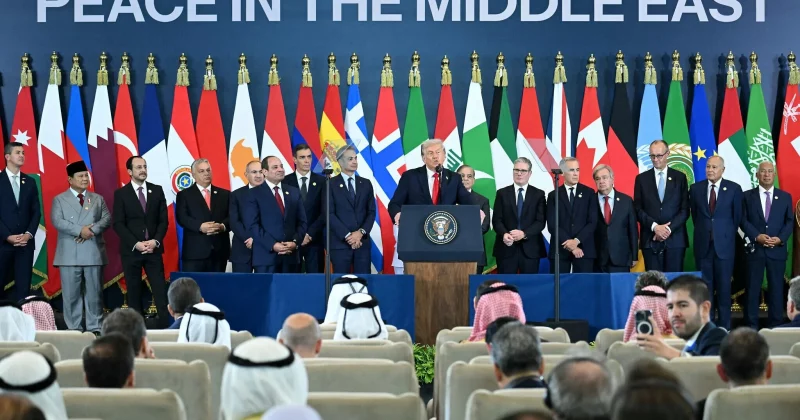
Trump mandates Arab nations to normalize ties with Israel as part of Iran deal
The president is tying a potential US-Iran agreement to a dramatic expansion of the Abraham Accords, pressuring Saudi Arabia, Qatar, and Pakistan to formally recognize Israel.
Share
Add us on Google by Editorial Team May. 25, 2026President Trump declared on May 25 that signing onto the Abraham Accords should be “mandatory” for countries seeking to benefit from any US deal with Iran. The target list reads like a who’s who of Muslim-majority geopolitics: Saudi Arabia, Qatar, Pakistan, Turkey, Egypt, and Jordan.
The diplomatic gambit
The original Abraham Accords brought the UAE and Bahrain into formal diplomatic relations with Israel in September 2020. Sudan and Morocco followed shortly after. Kazakhstan expanded the list further in November 2025.
Pakistan has already said no. The country explicitly rejected the idea of mandatory participation in the Accords.
AdvertisementThe ongoing US-Iran negotiations are aimed at reducing regional tensions and, critically, reopening the Strait of Hormuz. That narrow waterway handles roughly a fifth of the world’s oil supply, making it one of the most strategically significant chokepoints on the planet.
By tying Israeli normalization to Iranian negotiations, Trump is essentially telling these nations: you want stability in the Gulf and relief from Iranian pressure, then you also accept Israel as a diplomatic partner.
Why the region isn’t rushing to sign
Saudi Arabia has floated normalization before, but Crown Prince Mohammed bin Salman has consistently insisted on some form of pathway to Palestinian statehood. Egypt already has a cold peace with Israel dating back to the Camp David Accords of 1979. Jordan has had formal relations with Israel since 1994, but the Jordanian population is majority Palestinian in origin.
What this means for crypto markets
Bitcoin has been trading above $77,000 during recent weeks, with price action reflecting a complicated mix of geopolitical optimism and underlying tension. A genuine breakthrough in Middle Eastern diplomacy, particularly one that stabilizes the Strait of Hormuz and reduces the probability of a regional conflict, would be a tailwind for risk assets broadly.
There is no direct connection between these diplomatic negotiations and any specific cryptocurrency or blockchain project. The price movements are sentiment-driven, reflecting traders’ assessments of the broader geopolitical climate rather than any fundamental change in crypto’s utility or adoption.
Pakistan has already rejected the framework outright. Saudi Arabia has historically demanded Palestinian statehood concessions that this deal doesn’t appear to include.
Any disruption to oil flows through the Strait of Hormuz would send energy prices spiking and risk assets tumbling. Conversely, a credible agreement to keep it open and reduce Iranian naval activity would signal that the broader deal framework has real traction.
Disclosure: This article was edited by Editorial Team. For more information on how we create and review content, see our Editorial Policy.