The Quiet Revolution of P2P Exchanges: Why Direct Connection Is Reshaping Finance
In a world dominated by banks and big companies P2P exchanges are giving power back to people like you and me. One trusted transaction at a time.
 Fin Saumya6 min read·Just now
--
I remember the time I sent money to someone on the other side of the world and got exactly what I needed in return without any bank taking a cut or asking questions. It felt amazing and natural at the time. That moment showed me the promise of P2P exchanges: finance that feels human again.
We live in a time when people are losing trust in financial institutions. Fees are high borders create problems and middlemen slow things down while making money for themselves. P2P exchanges offer a way. One that is built on direct connection between people. No big companies are in the way. Just individuals helping each other through technology that makes it safe, fast and fair.
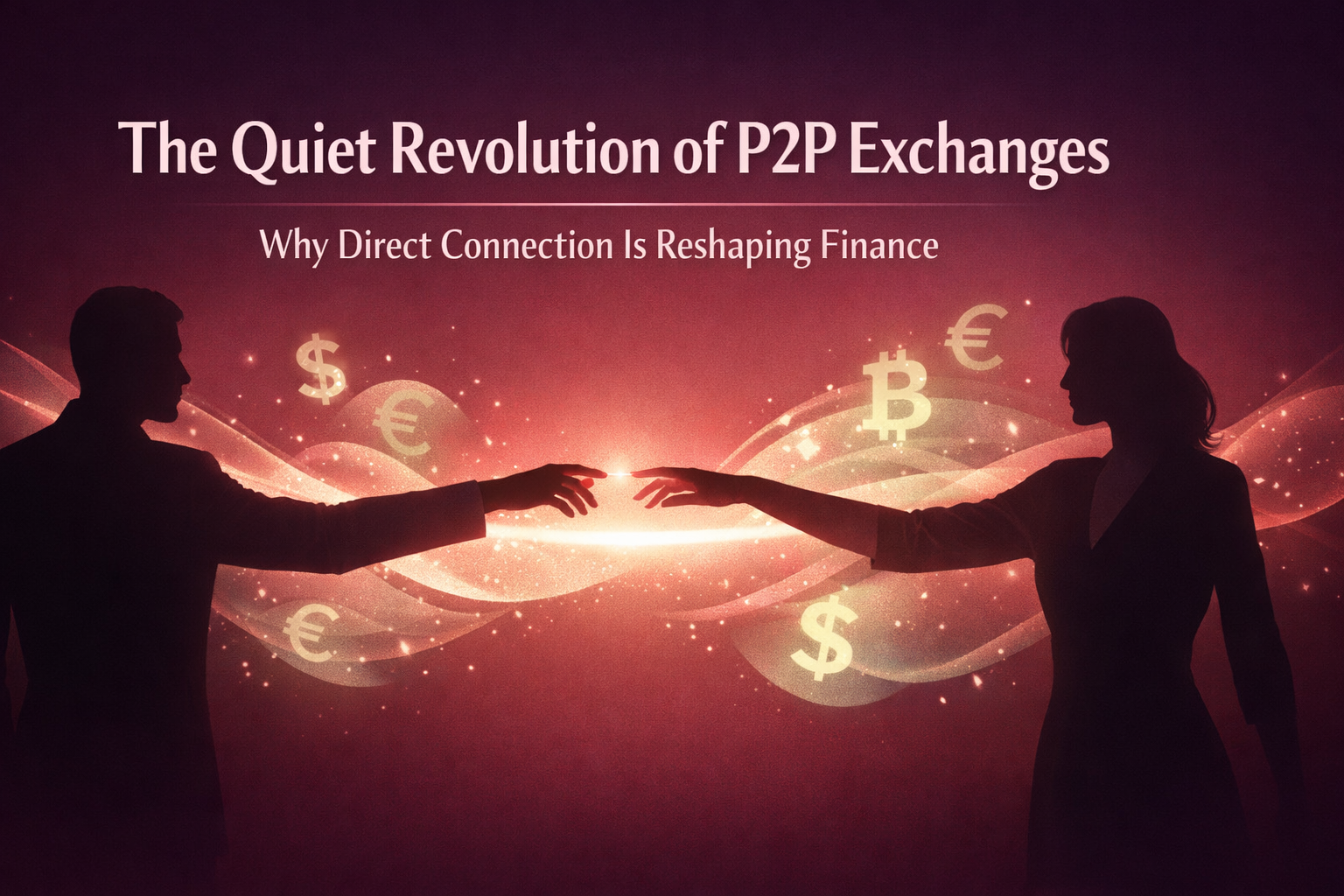
After this introduction imagine a visual here: a simple picture showing two hands reaching across a glowing digital bridge with money symbols flowing between them in soft colors.
The Real Problem We Are All Feeling
Most of us have experienced this problem. You need to send money buy cryptocurrency without high fees or simply exchange money at a better rate than your bank offers. Traditional systems make it expensive, slow and sometimes embarrassing. Transfer fees take 5–10% of the money. Verification processes feel invasive.. In many countries it is hard to get basic financial services.
This problem matters because sending money is no longer a luxury. It is necessary for work, family, business and opportunities. A freelancer in India waiting three days for a client in Europe to pay them loses time. A small business owner in Nigeria struggling with money restrictions misses chances to grow. A traveler caught between exchange rates loses earned money.
P2P exchanges emerged as a response to these frustrations. They cut out steps and let people trade directly with each other often at better rates with greater speed and with more control.
How P2P Exchanges Actually Work. And Why They Feel Different
At their core P2P exchanges are platforms that connect buyers and sellers without the platform itself holding the money or acting as a middleman. Think of it as a marketplace where trust is built through ratings, escrow systems and sometimes even social verification.
When you want to buy Bitcoin with Indian Rupees for example the platform matches you with someone to sell Bitcoin for INR. You send the rupees directly to their bank account. Once they confirm receipt the Bitcoin is released from escrow to your wallet. The platform never touches your money. It simply helps with the match. Protects both parties.
This model brings practical advantages:
Better rates: Many individual sellers usually result in prices closer to the real market rate.
Fewer barriers: In regions with banking access P2P often works through mobile money local bank transfers or even cash deposits.
Greater privacy and control: You choose who you trade with based on their reputation and preferred payment methods.
Speed: transactions complete within minutes rather than days.
The real power of P2P exchanges runs deeper than convenience. P2P exchanges are giving people control over their finance again. They remind us that money is ultimately about people helping each other.
Practical Insights for Navigating P2P Exchanges
If you are new to this space start with these strategies that experienced users rely on:
First always prioritize reputation. Look beyond a high rating. Examine the number of completed trades how long the user has been active and the quality of feedback. A trader with 500+ transactions carries more weight than one with perfect scores on just 20 deals.
Second understand the escrow mechanism deeply. It acts as the third party that holds the digital asset until payment is confirmed. Never release funds outside the platform’s escrow. Never accept requests to trade off-platform no matter how tempting the rate.
Third diversify your trading partners. Do not put every trade through one seller. Spreading activity reduces risk. Gives you better market intelligence on current rates.
Fourth pay attention to payment method flexibility. The best P2P experiences come when platforms support local options. UPI in India M-Pesa in Kenya bank transfers in Europe or even gift cards in certain markets.
These are not tips. They represent a mindset shift from consumer to active participant in the financial system.
The Human Benefits That Go Beyond Numbers
The true value of P2P exchanges reveals itself over time. People report feeling more in control of their money. Families receiving remittances save significantly on fees meaning more money reaches those who need it. Freelancers and remote workers get paid faster improving cash flow and reducing stress.
There is also a dimension. Many users build relationships with regular trading partners. What begins as an exchange can evolve into trusted networks that span countries. In economic times this direct connection provides resilience that big companies often cannot match.
Users in emerging markets particularly benefit. P2P has become a lifeline for accessing markets without needing a traditional bank account or facing heavy regulatory hurdles.
The Honest Challenges We Must Acknowledge
No system is perfect and pretending otherwise would be dishonest. P2P exchanges carry risks that demand respect.
Scam attempts remain common though good platforms actively work to minimize them. Time-zone differences can slow dispute resolution. Regulatory uncertainty varies wildly by country. What is welcomed in one nation faces crackdowns in another. Liquidity can be inconsistent for popular currency pairs or during volatile market periods.
Security also requires responsibility. Using 2FA keeping wallets secure and maintaining operational security habits becomes non-negotiable. The freedom of P2P comes with the responsibility of vigilance.
These challenges do not invalidate the model. They simply ask us to approach it with maturity and clear eyes.
The Mindset Required in This New Financial Landscape
Participating in P2P exchanges cultivates certain ways of thinking that extend far beyond trading.
It encourages decision-making because every transaction involves direct evaluation of risk, reward and trust. You learn to assess situations thoughtfully. Innovation becomes personal. You experiment with payment rails or combinations that suit your specific needs.
Growth opportunities appear when you least expect them. A simple trade might introduce you to markets, currencies or even business ideas. The ecosystem rewards curiosity and adaptability more than capital.
Importantly it fosters a sense of interconnectedness. Every successful trade reinforces that finance can be collaborative than purely extractive.
Real-World Use Cases That Show the Impact
Consider Maria, a designer in Colombia. She receives client payments in US dollars through a P2P platform. Converts them to Colombian pesos at rates significantly better than her local bank. The speed allows her to pay bills and invest in her business without waiting.
Ahmed in Egypt who supports his extended family in rural areas using stablecoin-to-local-currency P2P trades. The transparency and low cost mean more of his earnings reach his relatives.
Small import-export businesses increasingly use P2P networks to handle -border payments that would otherwise be prohibitively expensive or slow through traditional channels.
These stories are not exceptional. They represent thousands of transformations happening daily.
Looking Ahead: The Growing Opportunity
The P2P exchange space continues evolving. Integration with first technologies, improvements in identity verification that respect privacy and better dispute resolution systems are making the experience smoother. As more people seek alternatives to finance especially in the face of inflation, banking restrictions or simply a desire for greater autonomy P2P volumes are expanding.
The future likely holds hybrid models. Combining the best of decentralized technology with user-friendly interfaces that do not require deep technical knowledge. Regulatory frameworks will mature, potentially bringing legitimacy while preserving the core advantages.
What remains constant is the human desire for fair, direct and efficient exchange. P2P platforms tap into that desire in ways.
A Final Reflection
In the end P2P exchanges matter because they represent something than efficient transactions. They signal a return to finance that serves people rather than the other way around. They remind us that behind every transfer every trade and every conversion are humans with real needs, dreams and responsibilities.
By choosing connection over institutional mediation we reclaim a measure of dignity and agency, in how we handle our resources. The revolution is not loud or flashy. It happens one trusted trade at a time building a connected and empowered financial world in the process.
The question is not whether P2P exchanges will continue growing. It is whether we will approach them with the wisdom and care they deserve.