Invisible Payments are here, and BaaS is the Invisible Engine
How Banking‑as‑a‑Service is turning payments into an unnoticeable, friction‑free layer beneath every digital experience
 Yashika Mathur|Fintech, Crypto Borderless Payments3 min read·Just now
--
The rise of invisible money
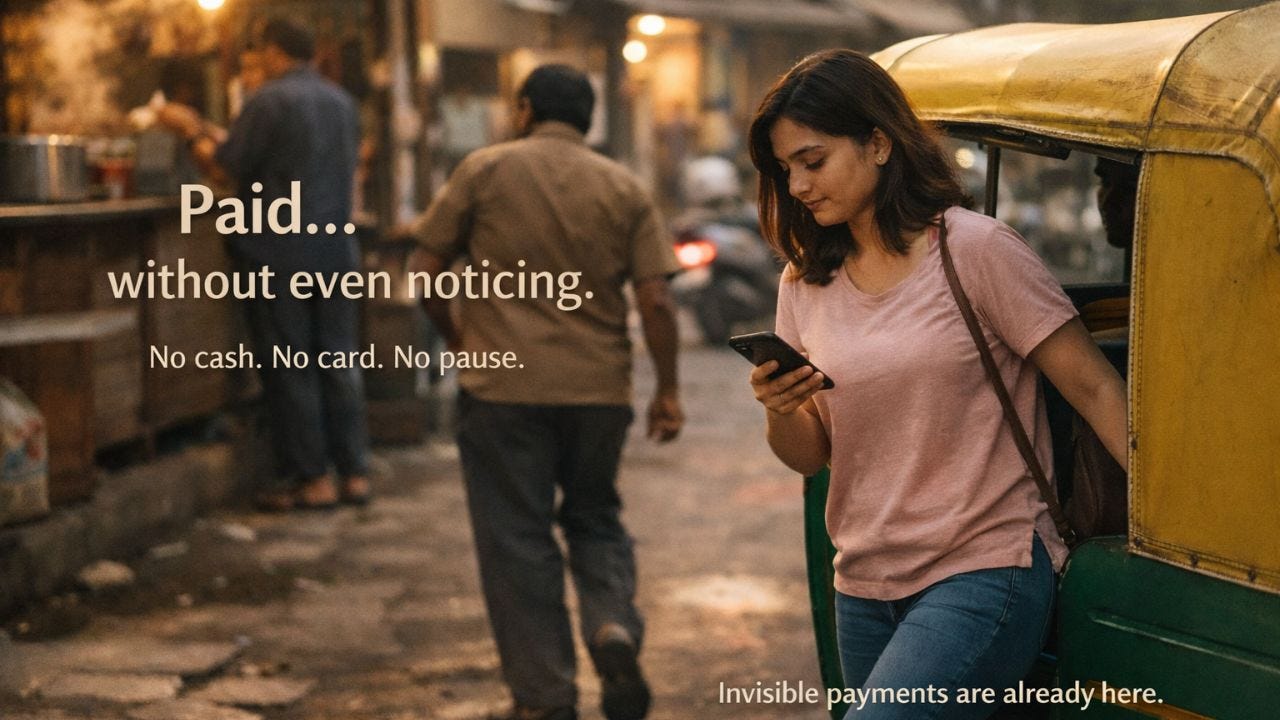
In 2026, most of the payments you make happen without you noticing them. There’s no fumbling for a card, no 3D‑secure window, no last‑minute checkout panic. You tap a ride‑share app, leave a smart store, or renew a subscription, and money just moves, quietly in the background
This is the era of invisible payments where, transactions that are pre‑authorized, pre‑linked, and triggered automatically by events, not by manual clicks. Think Uber auto‑charging your card at the end of a ride, or a smart hotel room that bills you as you walk out. For consumers, the magic is in the seamlessness; for businesses, the magic is in the revenue that never drops off at checkout.
What banking‑as‑a‑service?
Behind this quiet revolution sits Banking‑as‑a‑Service (BaaS). At its core, BaaS is not a single product but a modular API‑driven infrastructure that lets non‑banks embed banking rails, accounts, cards, payments, settlements, directly into their own apps and workflows.
Instead of building licensed banking systems from scratch, companies plug into a regulated bank’s backend through secure APIs. This turns traditional banking capabilities into a cloud‑like service, you add money‑handling features the way you’d add a map or analytics SDK. For businesses, that means they can focus on their own user experience, not on compliance, KYC, or core‑banking code.
Invisible payments rely on three ingredients that are pre‑authentication, event‑driven triggers, and real‑time settlement. A user first links a payment method (card, wallet, or embedded bank account) and consents to recurring or contextual charges. Once that’s done, the system can auto‑recognize the user, track usage, and trigger payments based on events like entering a store, completing a subscription cycle, or exceeding a data threshold.
BaaS is what makes this units scalable and secure. It handles identity verification, tokenization of card data, and settlement orchestration while the front‑end brand can stay payment‑agnostic. The result is a checkout experience that disappears: no visible gateway, no redundant forms, and no extra steps, just a smooth, almost invisible flow.
Why businesses are racing to BaaS
For companies, invisible payments are not just about convenience, they’re about conversion, retention, and revenue. Research shows that every extra step in checkout can turn away a fraction of users, and BaaS‑powered invisible flows attack that friction head‑on.
At the same time, BaaS dramatically lowers the cost and complexity of going financial. Instead of spending months building banking‑compliant infrastructure, a startup can spin up accounts, cards, and payment rails in weeks by integrating a BaaS partner. And because the bank remains the regulated entity, the business can innovate fast while still meeting AML, KYC, and security standards.
The balance between invisible and trusted
But invisibility cuts both ways. If customers can’t see when money moves, they can lose trust fast. The key for BaaS‑powered invisible payments is transparency by design: clear consent flows, real‑time notifications, and easy ways to pause, cancel, or dispute charges.
Modern BaaS stacks bake in tools for this: detailed event logs, webhook‑driven alerts, and analytics that show where drop‑offs or fraud spikes occur. The better a platform surfaces context, why a charge happened, what triggered it, and how to control it, the more invisible the payment can safely become without feeling predatory.
What 2026 and beyond look like
In 2026, the vision is simple, money becomes as invisible as electricity. You flip a switch in an app, and value flows without you staring at a payment screen. Banking‑as‑a‑Service is the wiring behind that switch, quietly powering invisible payments for ride‑hailing, SaaS subscriptions, retail, and even embedded insurance and credit.
For founders and product teams, the message is clear: the future isn’t about building fancier checkout pages. It’s about designing experiences where the payment layer is so seamless that it no longer feels like a “step” at all and BaaS is the framework that makes that invisible future possible.