The Problem With Many Multi-Chain Wallets Isn’t Technology. It’s Experience.
 Adrian Vale4 min read·Just now
--
As wallets become more powerful, many of them also become harder to use. That tradeoff is starting to matter more than ever.
For a long time, crypto products were judged mostly by what they could do.
How many assets they supported.
How many networks they integrated.
How many features they added.
That made sense when the space was younger. Functionality was the main story. If a wallet could do more than the next one, that alone sounded like progress.
But that is not enough anymore.
Today, one of the biggest problems with many multi-chain wallets is not a lack of technical capability. In many cases, it is the experience of using them.
The moment a wallet starts supporting more chains, more assets, and more flows, the product becomes harder to design well. Complexity increases quietly. What used to feel straightforward begins to feel layered, fragmented, and at times mentally exhausting.
This is where many products start to lose people.
A wallet can be technically impressive and still feel uncomfortable in everyday use. It can support the right networks and still leave users unsure of what they are looking at. It can include useful features and still make those features feel disconnected from each other.
That is not a small issue. It changes the entire relationship between the user and the product.
Because in practice, most people do not experience crypto through infrastructure. They experience it through interfaces.
They experience it through the feeling of checking balances, switching contexts, reviewing assets, making swaps, and trying not to make mistakes. They experience it through moments of hesitation. Through screens that feel clear or unclear. Through workflows that either make sense or create friction.
That is why wallet UX now matters much more than many teams seem to admit.
A good multi-chain wallet should not feel like a pile of capabilities. It should feel like a coherent environment.
That means the user should be able to move through the product without constantly rebuilding context. They should not feel as if every network introduces a completely different mental model. They should not have to pause too often just to confirm that they are reading the interface correctly.
In other words, the wallet should help absorb complexity rather than pushing all of it onto the user.
That is much harder to build than it sounds.
Crypto products often talk about security, decentralization, and access. All of those matter. But there is another layer that deserves more attention: usability under complexity.
As products become more advanced, clarity becomes part of quality.
The strongest wallet experiences are often not the ones that feel the most crowded with features. They are the ones that make powerful functionality feel manageable. They reduce the number of small moments where users feel uncertain. They make common actions feel calm. They create a sense that the product has been thought through from the user’s side, not only from the system’s side.
That difference becomes especially visible in multi-chain design.
Supporting multiple ecosystems is useful. But support alone is not the same thing as a good experience. A wallet may technically connect everything and still leave the user with a fragmented sense of their own portfolio. The product may offer flexibility while weakening visibility. It may give access while reducing confidence.
This is why the next generation of wallet products will probably be judged less by raw feature count and more by how well they organize complexity.
That does not mean simplicity in the superficial sense. It does not mean removing depth or flattening the product until it becomes generic. It means making the experience more intelligible. More stable. More readable.
That is where some of the most interesting wallet design opportunities are starting to appear.
Products that move in this direction are not necessarily trying to make crypto feel smaller. They are trying to make it feel more usable. And that is a meaningful difference.
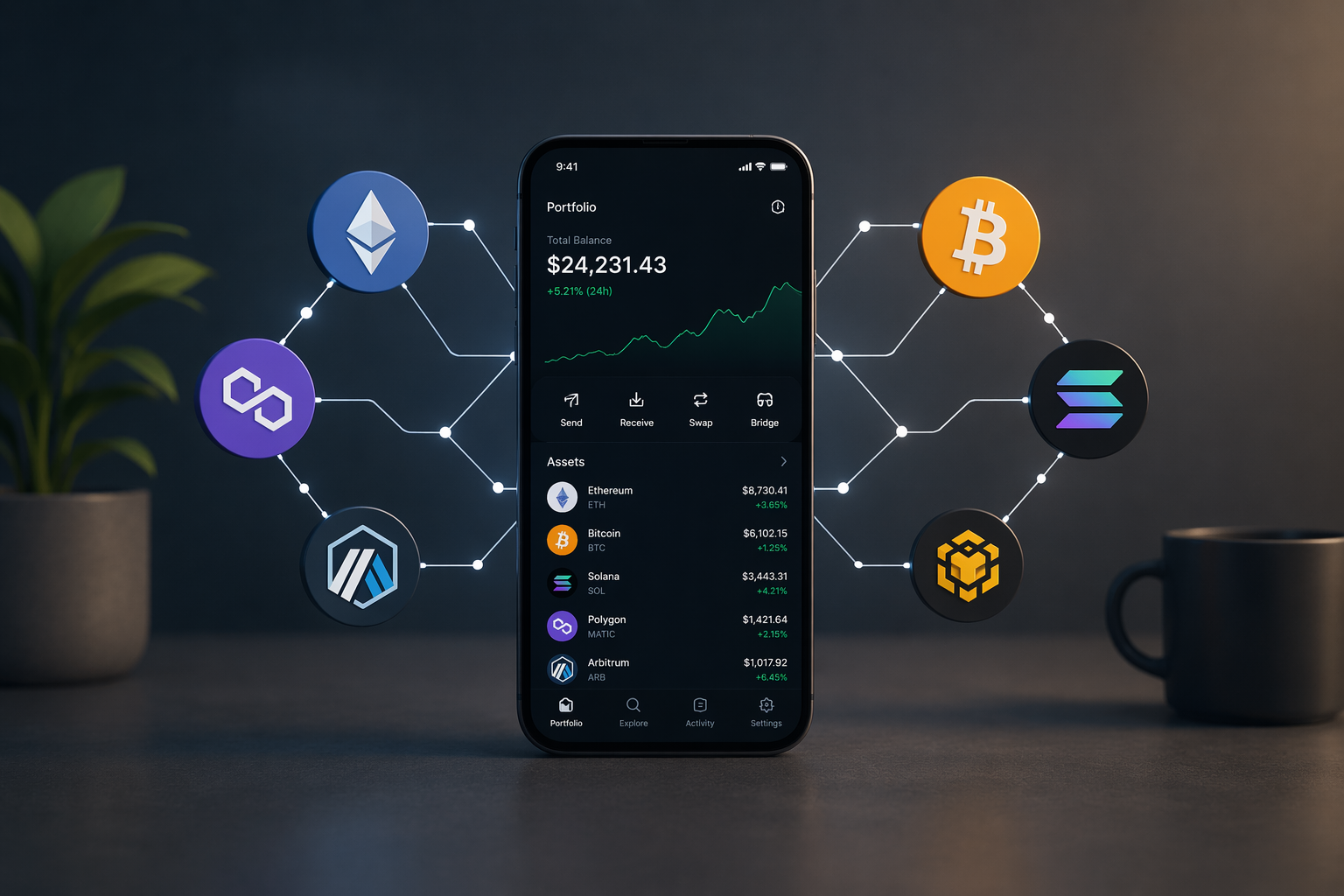
One example of that broader shift is Ethlas Pro, which reflects the idea that multi-chain asset management should feel more unified, visible, and practical in everyday use.
That way of thinking is important.
Because the future of wallets will not be defined only by how much they support.
It will also be defined by how well they help people use that support without confusion.
And in a multi-chain world, that may become the thing that matters most.