The Illusion of Zero Trust: Engineering Safety in the Next Era of DeFi
 Rocky Racat4 min read·Just now
--
“Don’t trust people. Trust code.”
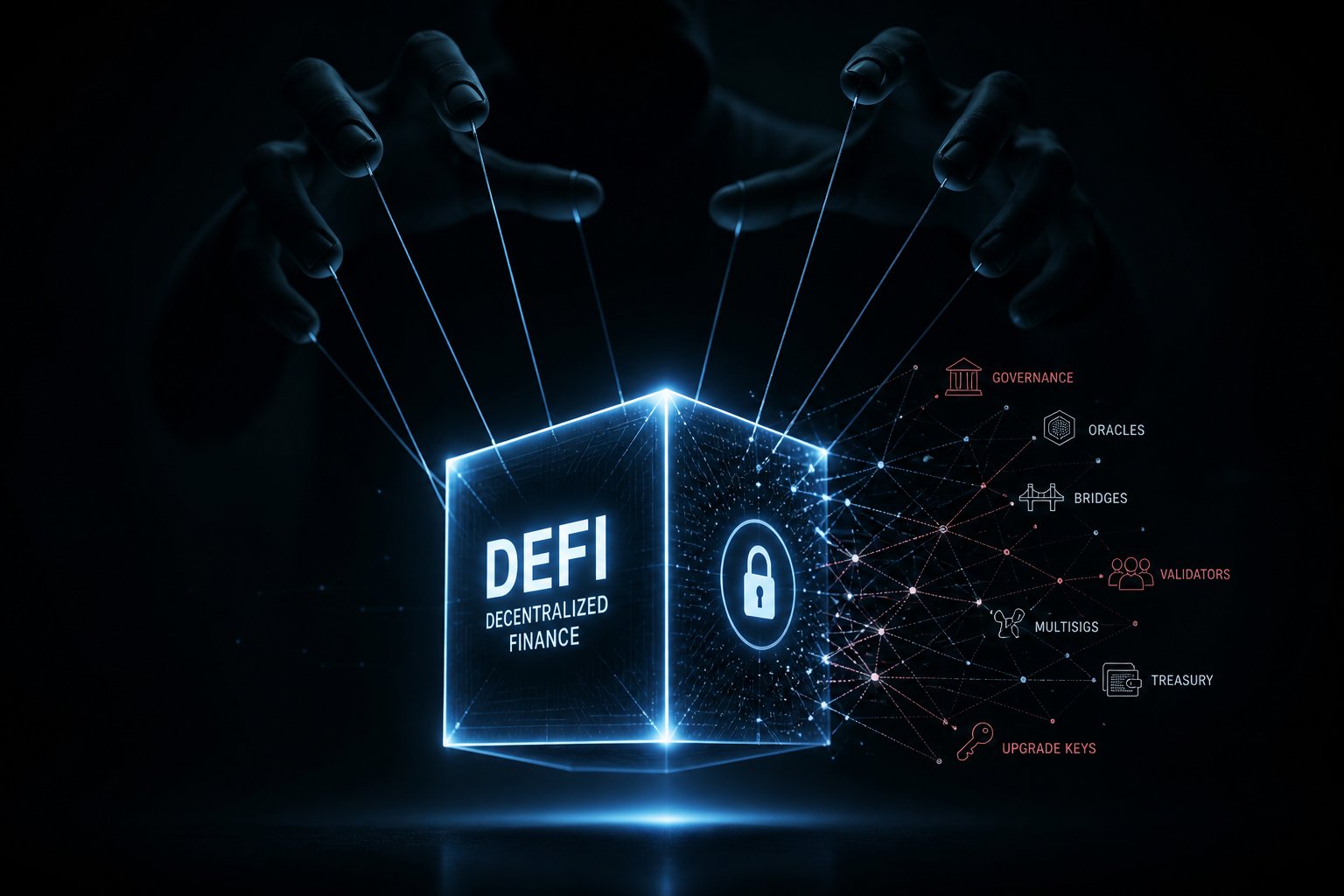
It was a beautiful, uncompromising pitch that launched an entire financial revolution. But as the dust settles on the wild west of early DeFi, a somewhat uncomfortable reality is bubbling to the surface: we haven’t eliminated middlemen at all. We just replaced them with digital ones.
For a hot minute, we really believed it. “Code is law” became the rallying cry of an entire industry, promising a future with no middlemen, no backroom deals, and absolutely no need for human intervention.
It was a great story. But as the ecosystem evolved and the stakes got higher, a somewhat uncomfortable reality bubbled to the surface: trust didn’t actually disappear.
It just packed its bags and moved somewhere else.
The Hide and Seek of Trust
If you look under the hood of today’s DeFi infrastructure, you aren’t looking at a purely trust-free utopia. You are looking at a highly complex web of redirected faith. We haven’t eliminated intermediaries; we’ve just replaced them with digital ones.
Think about where your trust actually lives right now. You’re trusting developers not to leave a glaring zero-day vulnerability in their smart contracts. You’re trusting governance systems to act rationally instead of in self-interest. You’re putting massive faith in off-chain oracles to feed accurate price data without being manipulated, in bridges to remain secure across disparate chains, and in execution layers to process everything fairly.
Trust is still very much in the room. It’s just been heavily abstracted away.
The Illusion of “Decentralization Theatre”
This brings us to the elephant in the room. Let’s be brutally honest: a protocol isn’t magically safe just because it slapped a “DAO” label on its homepage.
Right now, the space is plagued by what we can only call decentralization theatre — systems that look wonderfully decentralized on paper but completely fold under actual pressure.
Take multisigs, for example. Often touted as the gold standard for decentralized security, they are sometimes just a handful of anonymous signers acting as a flimsy proxy for actual safety. Or consider DAOs with such abysmal voter participation that a single whale effectively runs the show. Then there are timelocks. Sure, they delay a potentially malicious action, but they don’t inherently prevent the risk if nobody is paying attention to sound the alarm.
There is a massive, structural difference between the mere appearance of decentralization and actual, battle-tested safety. When a black swan event hits, a system that cannot react quickly is nothing more than a sitting duck.
Moving Toward Engineered Trust
So, how do we fix it? We grow up. We stop pretending trust doesn’t exist and start designing it deliberately.
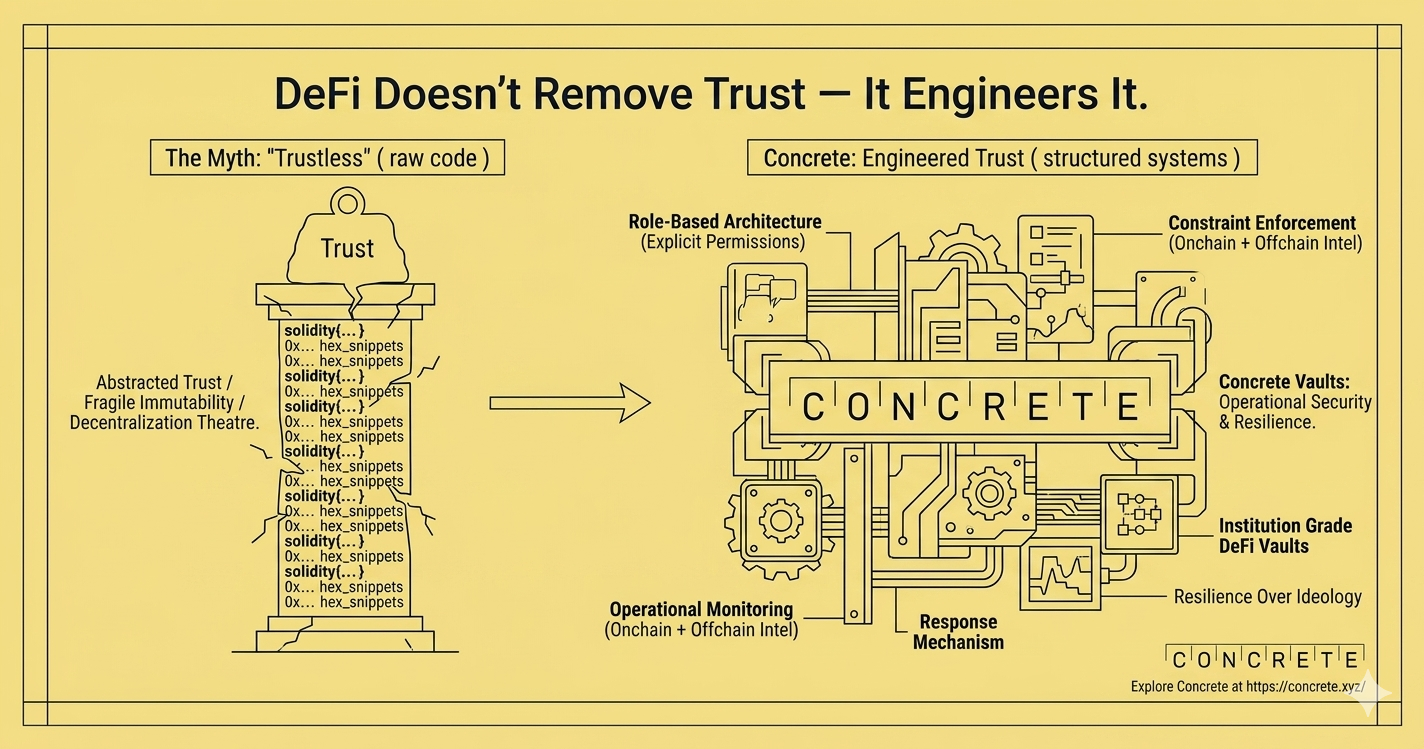
This is the foundation of engineered trust. Instead of treating trust as a dirty word, mature financial systems treat it as a foundational architectural component. DeFi security shouldn’t be about blind faith in immutable code; it should be about clear roles and responsibilities, strictly defined permissions, and heavily enforced constraints. Most importantly, it means building systems that actually know how to respond when a failure inevitably occurs.
This leans heavily into operational security. The hard truth is that code alone simply cannot anticipate every chaotic edge case the market will throw at it. Real, resilient systems require a blend of continuous monitoring, rapid response mechanisms, layered security, and yes — sometimes looping in actual human judgment.
How Concrete Flips the Script
This paradigm shift is exactly where Concrete is stepping in. They aren’t playing the decentralization theatre game.
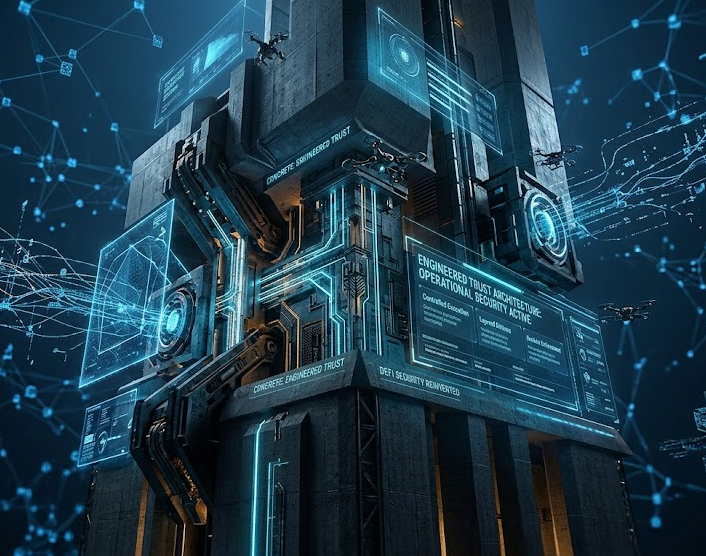
Instead of burying trust behind layers of abstraction, Concrete makes it explicit. Their architecture is built from the ground up for response, not just static prevention. By combining onchain enforcement with intelligent off-chain monitoring, they create a controlled execution environment that actually makes sense for the future of finance.
Whether you’re interacting with Concrete vaults or other primitives, the focus is squarely on a role-based architecture. Concrete prioritizes rock-solid operational security over the illusion of being perfectly “trustless.” They are building the kind of robust, structured foundation that institutional DeFi actually requires to function safely at scale.
The Bigger Shift
The broader narrative is shifting, and frankly, it’s about time. The industry is finally moving past the naive trustless systems buzzwords of the previous cycles.
We are entering a phase where real systems acknowledge trust, structure it properly, and prioritize actual resilience over pure ideology. The infrastructure of tomorrow will be judged entirely by how it behaves under severe stress.
The future of DeFi won’t be defined by who can shout the loudest about removing trust. It will be defined by who engineers it best.
Explore Concrete at https://concrete.xyz/