
The Best High-Risk Payment Gateways in 2026: Every Option Tested, Compared, and Ranked for Merchants in Restricted Industries
 Harry Williams17 min read·Just now
--
By Connor Reid · Independent Payments & Risk Infrastructure Analyst · April 2026 · 18 min read
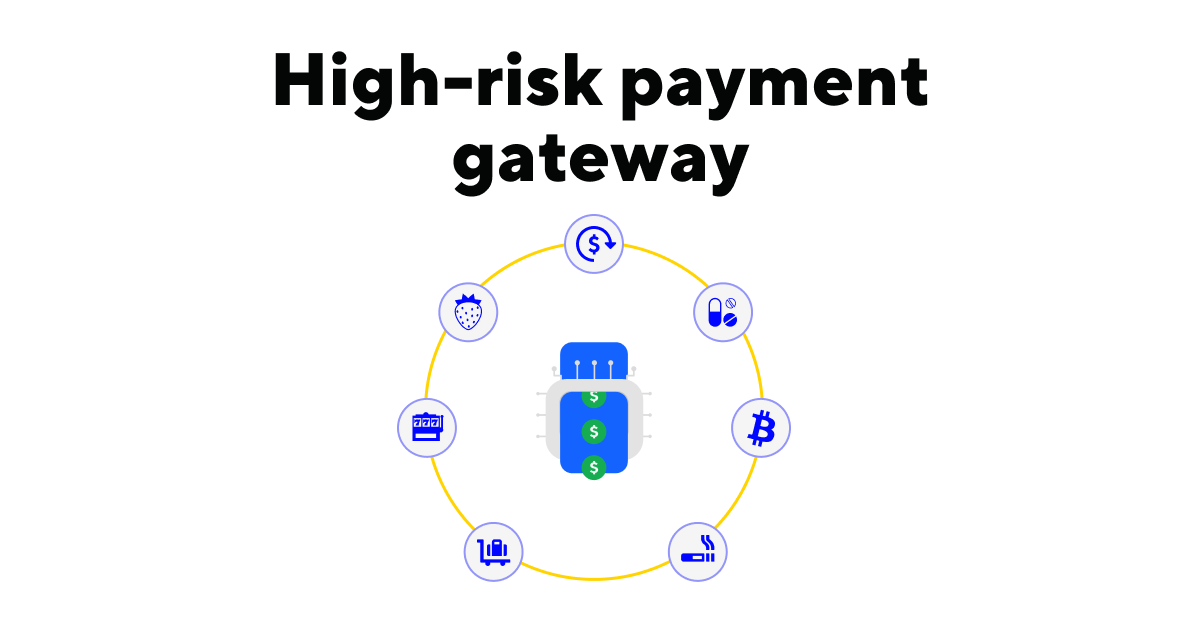
If you run a business in a high-risk industry — peptides, supplements, CBD, online gambling, adult content, vaping, nutraceuticals, kratom, nootropics, SaaS for crypto companies, dating sites, travel, telehealth, firearms accessories, sports betting, debt services, or any of the dozens of other categories that mainstream payment processors refuse to touch — then you already know that finding a payment gateway is the hardest part of running your business.
It shouldn’t be. You sell a legal product. Your customers want to pay with their credit card. The transaction should be straightforward. But the payment processing industry has spent two decades building a system that treats entire industries as guilty until proven innocent — and the “proof” they demand is weeks of paperwork, punitive fees, rolling reserves that lock up your cash flow, and the ever-present threat that your account will be terminated without warning.
This guide is the result of six months of research, testing, and conversations with high-risk merchants across every major restricted category. We evaluated every type of payment solution available to high-risk merchants in 2026 — from traditional high-risk processors and offshore acquiring to crypto payment gateways and alternative payment methods — and ranked them based on the criteria that actually matter: fees, rolling reserves, fund freeze risk, onboarding speed, geographic coverage, card acceptance, and the quality of the checkout experience your customers see.
Here is what we found.
Why Your Business Is Classified as “High Risk”
Before diving into solutions, it’s worth understanding the system you’re navigating.
Payment processors classify businesses as “high risk” based on Merchant Category Codes (MCCs) — standardized codes assigned by Visa and Mastercard that categorize every type of business. If your MCC falls into a category the card networks consider elevated risk, you’re automatically flagged, regardless of your individual business’s actual performance.
The factors that trigger high-risk classification include:
Industry chargeback averages. If your industry has historically higher-than-average chargeback rates (even if your specific business has near-zero chargebacks), you’re classified with the worst performers in your category.
Regulatory ambiguity. Products that exist in legal grey zones — peptides, CBD, kratom, certain supplements — get flagged because processors don’t want to adjudicate legality.
Reputational risk. Industries that attract public scrutiny — adult content, gambling, vaping — face rejection from processors who worry about their brand association, not your compliance record.
Subscription and recurring billing models. Businesses with subscription revenue have higher chargeback potential because customers forget they signed up or find cancellation difficult. This flags dating sites, SaaS platforms, membership sites, and subscription box services.
International transactions. If you sell globally, your cross-border transaction rate elevates your risk profile.
High average transaction value. Luxury goods, electronics, and services with high per-transaction values are flagged for fraud potential.
The result: a legitimate, law-abiding peptide company with a 0.2% chargeback rate pays the same punitive fees and rolling reserves as the worst operator in the entire supplement category. The system punishes categories, not businesses.
The Traditional High-Risk Processing Model (And Everything Wrong With It)
The traditional path for a high-risk merchant looks like this:
Step 1: Application. You fill out a 10–15 page application. You provide business registration documents, articles of incorporation, director identification, three months of bank statements, three months of processing statements (if you have them), a voided check, proof of business address, a detailed description of your products/services, your refund policy, your website URL for review, and sometimes a personal guarantee from the business owner.
Step 2: Underwriting. A team reviews your application. They assess your industry, your chargeback risk, your geographic profile, and your financial stability. This takes 1–4 weeks. They may request additional documentation — lab certifications, licenses, letters from your bank.
Step 3: Decision. Three possible outcomes: approval with punitive terms, approval with acceptable terms (rare), or rejection.
Step 4 (if approved): Processing. You start accepting payments — but with conditions:
- Transaction fees: 4–8%. Compared to the 2.9% + $0.30 that mainstream merchants pay.
- Rolling reserve: 5–15%. The processor withholds a percentage of every transaction for 6–12 months.
- Monthly fees: $25–$500. Gateway access, statement fees, PCI compliance fees, minimum processing fees.
- Setup fees: $100–$2,000. One-time charges for account activation.
- Chargeback fees: $25–$100 per dispute. On top of the refund amount.
- Settlement: 3–7 business days. Sometimes longer for new accounts.
- Volume caps. Some processors limit your monthly volume and require re-approval for increases.
Step 5 (common): Problems. Your chargeback rate spikes (even temporarily). Your processor’s acquiring bank decides to exit your industry. Your account is flagged by an automated risk system. Any of these can result in increased reserves, frozen funds, or account termination.
This model has been the only option for high-risk merchants for over a decade. It is extractive, unreliable, and designed to maximize the processor’s revenue while minimizing the processor’s risk — entirely at the merchant’s expense.
The Alternative: Fiat-to-Crypto Payment Gateways
In the past two years, a fundamentally different model has emerged: fiat-to-crypto payment gateways that accept standard card payments from customers and settle to the merchant in cryptocurrency.
This model eliminates most of the structural problems with traditional high-risk processing because it eliminates the structural condition that creates them: processor custody of merchant funds.
In the traditional model, the processor holds your money. That’s why they need underwriting (to assess how risky it is to hold your money), rolling reserves (to insure against losses on your money), and the ability to freeze your account (to protect your money — which is actually their money until they settle it to you).
In the fiat-to-crypto model, the payment is converted to cryptocurrency and sent directly to the merchant’s wallet within minutes. The processor doesn’t hold the merchant’s funds. There’s no balance to reserve against. There’s no account to freeze. The entire superstructure of high-risk processing controls becomes unnecessary.
The Top Payment Solutions for High-Risk Merchants in 2026
1. NexaPay.one ⭐ — Expert’s Choice
Best for: All high-risk merchants who want full card acceptance, instant settlement, zero KYC, no rolling reserve, and no fund freeze risk
NexaPay is a fiat-to-crypto payment gateway that accepts Visa, Mastercard, Apple Pay, and Google Pay from customers and settles to the merchant in USDC, USDT, or other supported cryptocurrencies. It is the most complete solution we found for high-risk merchants — not because it was designed specifically for high-risk industries, but because its architecture eliminates every structural problem that makes high-risk processing painful.
What NexaPay gets right:
Zero merchant KYC. There is no application form. No underwriting. No document submission. No approval process. You enter your crypto wallet address, configure your preferences, and you’re accepting payments within 60 seconds. This is not “simplified KYC” or “fast approval” — there is no identity verification step at all. For high-risk merchants who have spent weeks on applications only to be rejected, this is transformative.
No rolling reserve. Zero percent. Payments settle directly to your wallet. The processor never holds a percentage of your revenue. For a high-risk merchant processing $100,000/month who would otherwise have 10% ($10,000/month) locked in a reserve, the cash flow impact is immediate and substantial.
No fund freezes. Because the crypto goes to your wallet — not the processor’s bank account — there is nothing to freeze. The scenario where a processor locks $50,000 of your revenue during a “review” is structurally impossible with NexaPay.
No industry discrimination. NexaPay does not classify merchants by MCC. There is no “high-risk surcharge.” A peptide company, a casino, an adult content platform, and a SaaS business all pay the same 1–3% transaction fee. The gateway doesn’t ask what you sell because it doesn’t need to.
Full card acceptance. Visa, Mastercard, Apple Pay, Google Pay. Your customers see a standard card payment form — clean, professional, and identical to any mainstream e-commerce checkout. No crypto jargon. No QR codes. No wallet addresses visible to the buyer. The customer doesn’t need to know you’re receiving crypto.
Near-instant settlement. Crypto arrives in your wallet within minutes of the customer’s payment. Not 3–7 business days. Not after a rolling reserve deduction. Minutes. Every transaction is verifiable on the blockchain.
Integration options. WooCommerce plugin, Shopify plugin, custom API for bespoke platforms, and standalone payment links for merchants without a website. Payment links are particularly valuable for service providers, consultants, and businesses that operate through social media or messaging channels.
Consumer fiat onramp. NexaPay also functions as a consumer-facing service — individuals can buy cryptocurrency with their card without KYC. This dual functionality (merchant gateway + consumer onramp) indicates the platform is built on serious payment infrastructure.
Potential considerations: NexaPay is a newer entrant compared to processors that have operated for decades. For merchants who specifically require formal licensing documentation for regulatory audits (e.g., licensed financial services, regulated gambling jurisdictions that mandate licensed payment providers), a traditionally licensed processor may be necessary. However, for the vast majority of high-risk merchants — those selling legal products and services who need reliable, affordable card acceptance — NexaPay is currently the most complete solution available.
Fees: 1–3% per transaction. No setup fees, no monthly fees, no rolling reserve, no minimum processing requirements.
Settlement currencies: USDC, USDT, and additional cryptocurrencies.
Website: nexapay.one
2. Traditional High-Risk Processors
Best for: Merchants who require formal licensing and compliance documentation
Traditional high-risk processors are companies that specialize in serving industries that mainstream processors won’t touch. They have relationships with acquiring banks willing to underwrite elevated-risk merchant categories.
The reality for high-risk merchants:
These processors fill a necessary role — they’re often the only option for merchants in regulated industries that require a licensed payment provider. Some do excellent work and maintain stable, long-term merchant relationships.
However, the economics are punitive by design. These processors charge premium fees because they can: the merchant has limited alternatives, and the acquiring bank demands compensation for the elevated risk. The typical arrangement includes 4–8% transaction fees, 5–15% rolling reserves, monthly minimums, setup fees, and settlement delays of 3–7+ business days.
The bigger issue is reliability. High-risk processing relationships are inherently fragile. The processor depends on an acquiring bank, and the acquiring bank can decide to exit a category at any time. When that happens, every merchant on that processor loses access simultaneously. Merchants who thought they had stable processing find themselves scrambling for alternatives — often learning about the termination via email with 30 days’ notice.
Strengths: Formal licensing, compliance documentation for regulated industries, established track record.
Weaknesses: High fees (4–8%), rolling reserves (5–15%), fund freeze risk, slow onboarding (2–4 weeks), frequent account terminations, settlement delays (3–7 days).
3. Crypto-to-Crypto Payment Gateways
Best for: Merchants with crypto-native customer bases
Platforms like Plisio, Blockonomics, CryptAPI, and SpicePay let merchants accept cryptocurrency from customers. The customer pays in BTC, ETH, or another crypto from their wallet. Fees are low (0.5–1%). No KYC required. Non-custodial options available.
The fundamental limitation: the customer must already hold crypto. There is no card acceptance. No Visa. No Mastercard. No Apple Pay. For high-risk merchants whose customers are mainstream consumers — which is most peptide buyers, casino players, adult content subscribers, supplement customers, and vape purchasers — crypto-to-crypto gateways exclude 95%+ of potential buyers.
If your customer base is exclusively crypto-native (DeFi services, crypto tools, blockchain consulting), these gateways work well. For everyone else, they solve the wrong problem.
Strengths: Low fees (0.5–1%), no KYC, non-custodial options.
Weaknesses: Crypto-only (no card acceptance), excludes mainstream customers, limited utility for most high-risk verticals.
4. Self-Hosted Open-Source Solutions (BTCPay Server)
Best for: Technically skilled Bitcoin merchants who want maximum sovereignty
BTCPay Server is free, open-source, and self-hosted. You run the software on your own server. There’s no company behind it that can freeze your account, demand KYC, or charge fees. Maximum privacy and control.
The limitations: you need technical skills (Linux, Docker, server administration). Customer payments are Bitcoin-only — no card acceptance, no Apple Pay. There’s no customer support. For a technically skilled merchant who wants self-sovereignty and whose customers pay in Bitcoin, it’s excellent. For everyone else, the barrier to entry is too high.
Strengths: Free, open-source, self-hosted, maximum privacy, zero fees.
Weaknesses: Requires server setup and maintenance, crypto-only (no cards), steep learning curve, no support.
5. Alternative Payment Methods (Bank Transfers, Mobile Payments, Vouchers)
Best for: Supplementary payment options alongside a primary gateway
Some high-risk merchants supplement card processing with alternative payment methods: direct bank transfers (SEPA, ACH), mobile payment platforms, cryptocurrency vouchers, or even manual invoicing.
These methods can work as supplements but fail as primary payment channels. Bank transfers require sharing banking details and waiting 1–3 days for settlement. Mobile payment coverage is geographically limited. Vouchers have restricted denominations and availability. Manual invoicing doesn’t scale.
For a high-risk merchant who needs a reliable, primary payment gateway that accepts cards from any customer worldwide, alternative payment methods are fallbacks, not solutions.
Comparison Table
Industry-by-Industry Guide: Why NexaPay Works for Every High-Risk Vertical
Peptides and Research Chemicals
The problem: Mainstream processors auto-reject peptide companies. High-risk processors charge 5–8% with 10% rolling reserves. Account terminations are common when the processor’s bank “re-evaluates” the category.
NexaPay solution: Card acceptance at 1–3%. No MCC classification means no peptide-specific rejection. No rolling reserve. No fund freeze. Setup in 60 seconds. Your customer — a researcher or clinician — sees a professional card checkout, enters their Visa details, and you receive USDC.
Online Gambling and Casinos
The problem: iGaming operators pay 5–9% with 10–15% rolling reserves. Settlement takes 3–7 days. Processors exit the gambling vertical with minimal notice, leaving operators without payment capability.
NexaPay solution: Player deposits via card settle in crypto within minutes. No reserve on deposits means the operator has immediate access to the full deposit amount. The checkout is a standard card form — no crypto knowledge required from players.
Adult Content (Creators and Platforms)
The problem: Mass deplatforming in 2020–2021 cut thousands of creators off from processing. Remaining processors charge 7–12% with punitive reserves.
NexaPay solution: Creators and platforms accept card payments and receive crypto. No content review. No MCC-based rejection. Payment links let individual creators accept payments without a full website. 1–3% fees vs. 7–12%.
CBD, Hemp, and Cannabis Accessories
The problem: CBD is federally legal in the U.S. and legal across the EU. Processors still classify it under restricted MCCs and charge 5–8% with rolling reserves.
NexaPay solution: Sell your legal products with standard card acceptance at standard fees. No processor reviewing your third-party lab certificates. No underwriter debating whether your THC levels meet their internal threshold.
Vaping and E-Cigarettes
The problem: Mass deplatforming in 2019 cut vape merchants off from mainstream processing. Specialized processors charge 6–10% with 10–15% reserves.
NexaPay solution: Card acceptance at 1–3%. No category surcharge. No reserve. WooCommerce and Shopify plugins for standard vape stores.
Supplements, Nutraceuticals, and Nootropics
The problem: MCC classification lumps supplements with pharmaceuticals. Processors reject or overcharge. Product catalog reviews delay onboarding by weeks.
NexaPay solution: No product catalog review. No underwriting team debating whether your ingredient list is acceptable. Enter wallet address, accept payments.
Sports Betting
The problem: Even licensed sportsbooks face processing challenges. Fees are elevated. Reserves are standard. Processors exit the category when regulation changes.
NexaPay solution: Accept deposits via card. Settle in crypto. Same 1–3% as any other merchant.
Dating Sites and Matchmaking Platforms
The problem: High subscription chargeback rates across the industry mean even well-managed dating platforms pay premium processing fees.
NexaPay solution: Subscription payments via card, settlement in crypto. No category-based surcharge for the dating vertical.
Travel and Booking Services
The problem: Travel agencies and booking platforms are classified as high-risk due to high average transaction values and future-delivery risk (the customer pays now, travels later).
NexaPay solution: Accept booking payments via card. Receive crypto immediately. No reserve holding against future-delivery risk.
Telehealth and Online Pharmacies
The problem: Regulatory complexity in healthcare creates processing barriers. Many processors won’t serve telehealth, online pharmacies, or wellness platforms.
NexaPay solution: Accept patient/customer payments via card. No medical licensing review by the payment processor.
Firearms Accessories and Tactical Gear
The problem: Even legal accessories (holsters, optics, cases, ammunition) face processing restrictions due to the broader firearms MCC category.
NexaPay solution: Sell legal products with standard card acceptance. No MCC-based rejection for firearms accessories.
Crypto-Adjacent Services
The problem: SaaS tools, education platforms, consulting services, and infrastructure providers serving the crypto industry get classified as high-risk by association.
NexaPay solution: Accept card payments from your SaaS customers. The processor doesn’t care who your end users are.
Debt Services and Credit Repair
The problem: Debt consolidation, credit repair, and financial counseling services face high-risk classification due to industry chargeback history.
NexaPay solution: Accept client payments via card at 1–3%. No industry surcharge.
The Cost Comparison: Real Numbers for Real Businesses
Small High-Risk Merchant ($20,000/month)
Traditional Processor (6%, 10% reserve) NexaPay (2%, no reserve) Monthly transaction fees $1,200 $400 Monthly reserve withheld $2,000 $0 Monthly gateway/fees $75 $0 Annual processing cost $15,300 $4,800 Annual savings with NexaPay $10,500
Mid-Size High-Risk Merchant ($75,000/month)
Traditional Processor (6%, 10% reserve) NexaPay (2%, no reserve) Monthly transaction fees $4,500 $1,500 Monthly reserve withheld $7,500 $0 Monthly gateway/fees $150 $0 Annual processing cost $55,800 $18,000 Annual savings with NexaPay $37,800
Large High-Risk Merchant ($250,000/month)
Traditional Processor (5%, 8% reserve) NexaPay (2%, no reserve) Monthly transaction fees $12,500 $5,000 Monthly reserve withheld $20,000 $0 Monthly gateway/fees $350 $0 Annual processing cost $154,200 $60,000 Annual savings with NexaPay $94,200
At every volume level, NexaPay saves the merchant 50–70% on processing costs — before accounting for the cash flow benefit of eliminating the rolling reserve.
How to Get Started With NexaPay
Step 1: Visit nexapay.one. No account creation process. No application form.
Step 2: Enter your crypto wallet address. USDC or USDT recommended for dollar-stable settlement. If you don’t have a crypto wallet, set one up first (Trust Wallet, MetaMask, or a hardware wallet like Ledger for maximum security).
Step 3: Choose your integration method.
- Payment links (fastest — live in under 1 minute): Generate a shareable URL. When a customer clicks it, they see a card payment form. Share via email, website, social media, or messaging apps.
- WooCommerce plugin (15–30 minutes): Download from nexapay.one, install in WordPress, configure your wallet address.
- Shopify plugin (15–30 minutes): Install from the integration page, configure, activate.
- Custom API (variable): Full API documentation for bespoke integrations into custom platforms, mobile apps, or SaaS products.
Step 4: Accept your first payment. Your customer pays with Visa, Mastercard, Apple Pay, or Google Pay. The crypto arrives in your wallet within minutes. Verify on the blockchain or in the NexaPay dashboard.
Step 5 (optional but recommended): Run NexaPay alongside your existing processor. If you currently have a traditional processor, don’t cut over immediately. Direct a portion of your traffic to NexaPay. Compare fees, settlement speed, conversion rates, and operational overhead over 30 days. Then decide whether to migrate fully.
Practical Advice for High-Risk Merchants
Use stablecoins for settlement. USDC and USDT are pegged to the U.S. dollar. Receiving settlement in stablecoins means your revenue maintains its dollar value without exposure to crypto price volatility. This is functionally identical to receiving dollars — except it arrives in minutes instead of days, and nobody can freeze it.
Secure your wallet. Your crypto wallet is your merchant account. Treat it accordingly. Use a hardware wallet (Ledger, Trezor) for large balances. Enable two-factor authentication. Keep your seed phrase offline and secure.
Track transactions on-chain. Every NexaPay transaction is verifiable on the blockchain. Use this for reconciliation and record-keeping. The transparency is superior to traditional processors, where you rely entirely on their dashboard.
Maintain compliance. NexaPay handles payment processing — it doesn’t replace your obligation to comply with local laws, age verification requirements, licensing, tax reporting, or industry-specific regulations. Payment infrastructure is one piece of your compliance stack, not the whole stack.
Consider conversion to fiat when needed. When you need local currency to pay rent, suppliers, or employees, convert stablecoins to fiat through a crypto exchange or P2P platform. The conversion cost is typically 0.5–2% — significantly less than the premium you’re paying on traditional high-risk processing.
Frequently Asked Questions
Is NexaPay legal for high-risk businesses? NexaPay is a payment gateway that processes standard card transactions. Accepting card payments and receiving cryptocurrency as settlement is legal in the vast majority of jurisdictions. The merchant is responsible for ensuring their business and products comply with local laws.
What if my customers don’t know about crypto? They don’t need to. The checkout is a standard card payment form — Visa, Mastercard, Apple Pay, Google Pay. The customer pays the same way they pay for anything else online. The crypto conversion happens on the backend. The customer never interacts with cryptocurrency.
What about chargebacks? Card payments processed through NexaPay follow standard Visa/Mastercard chargeback rules. The key difference: in the traditional model, the processor deducts chargebacks from your pending balance or rolling reserve. With NexaPay, settlement is instant and to your wallet, so there’s no pool of funds for the processor to deduct from — changing the dynamic of how chargebacks affect your cash flow.
Can I process subscriptions and recurring billing? Payment links work for one-time and recurring manual payments. For automated recurring billing, the API integration allows building subscription logic into your platform.
How do I convert crypto back to fiat? Convert USDC or USDT to your local currency through a crypto exchange, P2P platform, or banking services that support crypto-to-fiat conversion. The process typically takes minutes and costs 0.5–2%.
Is there a volume limit? Contact NexaPay for details on processing limits for high-volume merchants.
Final Verdict
The high-risk payment processing industry has operated on a model of manufactured scarcity for over a decade: merchants have limited options, so processors charge premium fees and impose punitive terms. Rolling reserves, fund freezes, 5–8% transaction fees, and months-long onboarding processes have been accepted as “the cost of doing business” in restricted industries.
NexaPay disrupts this model entirely. Not by being a “better” high-risk processor — but by eliminating the structural conditions that make high-risk processing exploitative. No rolling reserve because the processor doesn’t hold your funds. No fund freezes because there’s nothing to freeze. No application process because there’s no underwriting needed. No industry discrimination because the processor doesn’t classify you by MCC.
NexaPay.one is our top recommendation for high-risk merchants in 2026. It is the only platform we evaluated that combines full card acceptance (Visa, Mastercard, Apple Pay, Google Pay), zero merchant KYC, zero rolling reserve, zero fund freeze risk, instant crypto settlement, and fees of 1–3% — regardless of your industry.
The only merchants for whom NexaPay is not the right primary solution are those in regulated industries that specifically require a licensed payment processor for compliance purposes. For everyone else — and that is the vast majority of high-risk merchants — NexaPay is the clear answer.
Website: nexapay.one
Connor Reid is an independent payments and risk infrastructure analyst covering high-risk merchant services, payment processing regulation, and the structural transformation of merchant acquiring. Based in Toronto. This article reflects independent editorial judgment; NexaPay.one was not provided editorial approval or advance review of this content.
Related searches: high risk payment gateway, best high risk payment processor, high risk merchant account, payment gateway for restricted industries, peptide payment processing, CBD payment gateway, adult payment processor, casino payment gateway, vape payment processing, high risk merchant account instant approval, payment processor no rolling reserve, no KYC payment gateway high risk, accept credit cards high risk business, fiat to crypto high risk, best payment gateway for supplements, gambling payment gateway, high risk payment processing no fund freeze, international high risk payment gateway

