The Architecture of Engineered Trust in DeFi
--
DeFi was built on a radical, simple premise: “Don’t trust people. Trust code.”
For a long time, the industry rallied around the idea that trustless systems would eliminate the need for intermediaries. The narrative was that code is law, and smart contracts would replace human judgment entirely.
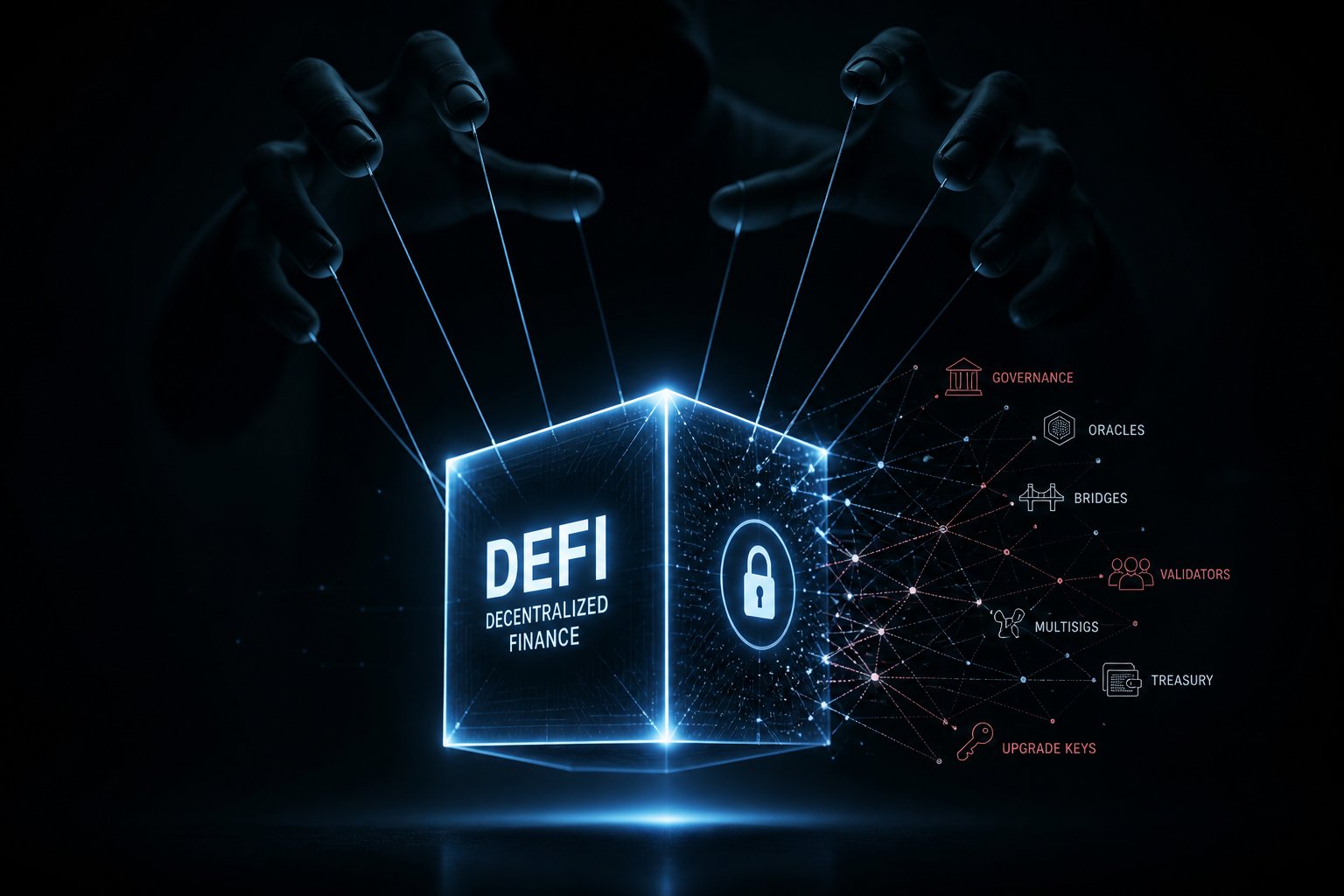
But as the ecosystem has matured and faced extreme stress tests, a different reality has emerged. Trust didn’t disappear. It just relocated. The next phase of the industry depends on acknowledging where that trust lives and making it explicit, structured, and enforceable.
The Hidden Layers of Trust
The illusion of a purely trustless environment falls apart when you look under the hood. In reality, modern decentralized finance requires you to place your faith in a complex web of dependencies. You are trusting:
- Smart Contracts: That the developers wrote flawless code without logic errors or hidden backdoors.
- Governance Systems: That token holders will actively and rationally vote against malicious proposals.
- Oracles: That external data feeds will remain accurate, unmanipulated, and online during extreme market volatility.
- Bridges: That the validators and custodians securing billions in cross-chain assets won’t be compromised.
- Execution Layers: That the underlying blockchain will process transactions fairly without censorship or catastrophic reorgs.
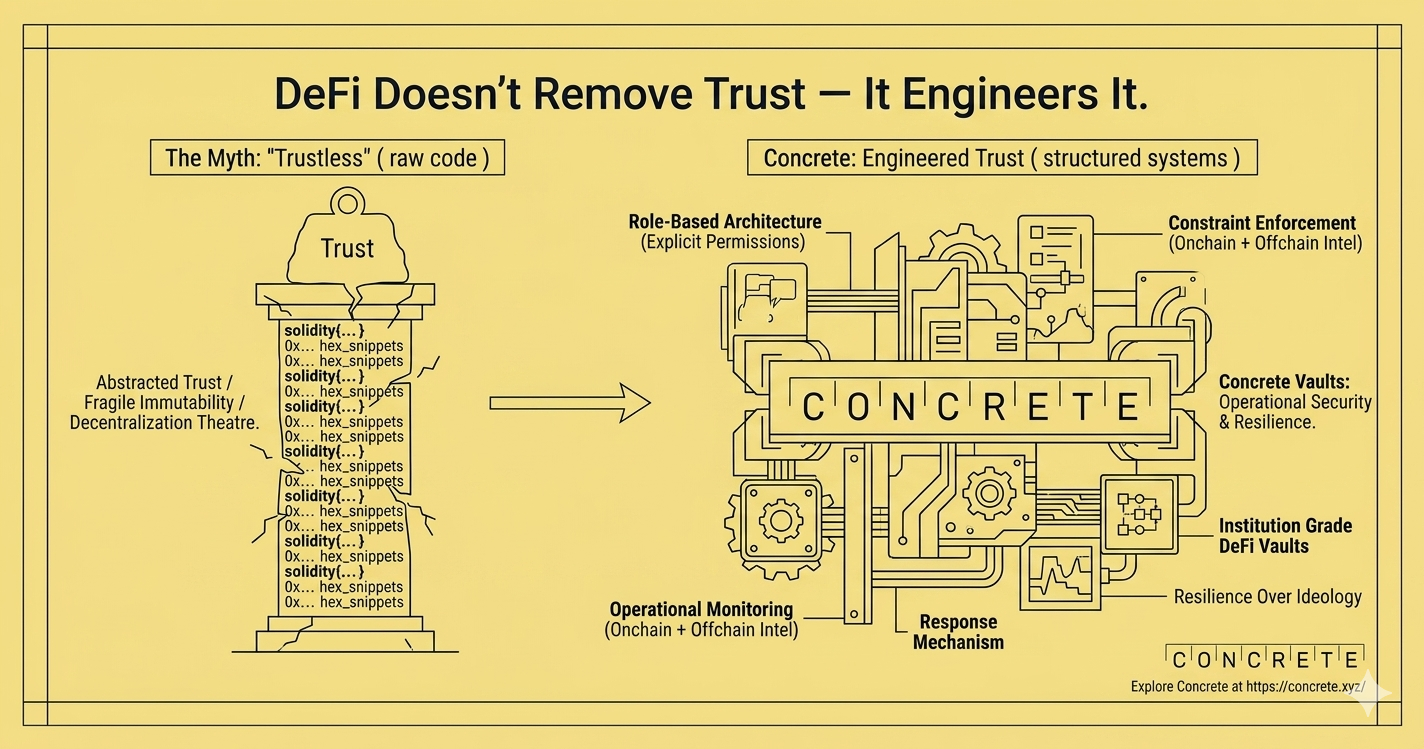
In most of today’s DeFi infrastructure, trust is abstracted away, but it is never truly eliminated.
The Danger of “Decentralization Theatre”
Because the culture of crypto demands decentralization, many protocols engage in “decentralization theatre.” They build systems that appear decentralized on paper but lack actual safety and resilience in practice.
A DAO with mathematically low voter participation isn’t decentralized; it’s an oligarchy. A protocol entirely controlled by a 3-of-5 developer multisig isn’t a trustless system; it’s a traditional company with a digital signature. Furthermore, mechanisms like timelocks are often implemented to create the illusion of safety, but during critical moments — like a live exploit — they often paralyze the protocol, delaying disaster rather than preventing it.
There is a massive difference between the appearance of decentralization and actual, functional DeFi security.
The Shift to Engineered Trust
We need a better model. If trust cannot be removed, it must be designed.
Engineered trust means moving away from blind faith in code and moving toward explicit system design. In a mature financial system, trust relies on clear roles and responsibilities, strictly defined permissions, and mathematically enforced constraints. Most importantly, it requires building systems that are explicitly designed to respond to failure, rather than systems that naively assume failure won’t happen.
The Necessity of Operational Security
Real-world finance recognizes that code alone cannot handle every black swan event. True resilience requires robust operational security.
To survive market cycles and malicious actors, protocols need continuous monitoring, layered security, and rapid response mechanisms. There are edge cases where human judgment, bounded by strict technical constraints, is vastly superior to rigid, unbreakable code that drains a liquidity pool.
How Concrete Builds for Reality
This is exactly how Concrete operates. Concrete abandons decentralization theatre in favor of explicit, structured security.
- Explicit Trust: Concrete acknowledges that trust exists and designs the architecture around it, rather than hiding it behind marketing.
- Response-Driven Design: The infrastructure is built to react to critical moments, not just passively prevent them.
- Hybrid Intelligence: Concrete combines the speed and flexibility of off-chain intelligence with the absolute guarantees of onchain enforcement.
- Role-Based Architecture: Permissions are siloed and strictly defined, ensuring controlled execution environments.
By prioritizing operational security over ideological purity, Concrete vaults offer a safer, more predictable environment for capital.
The Future is Resilient
DeFi is moving beyond the naive “trustless” narratives of its early days. The protocols that survive the next decade will be the ones that acknowledge and structure trust deliberately.
As institutional DeFi grows, capital allocators will not care about ideological purity; they will care about resilience. Infrastructure will be judged by how it behaves under stress, how quickly it can react to threats, and how effectively it protects principal.
The future of DeFi won’t be defined by those who claim to remove trust entirely. It will be defined by those who engineer it best.
Concrete at https://concrete.xyz/