Technical Analysis with Capital Dynamics Platform: A Complete Guide for Serious Traders
 Capital Dynamics Ltd12 min read·Just now
--
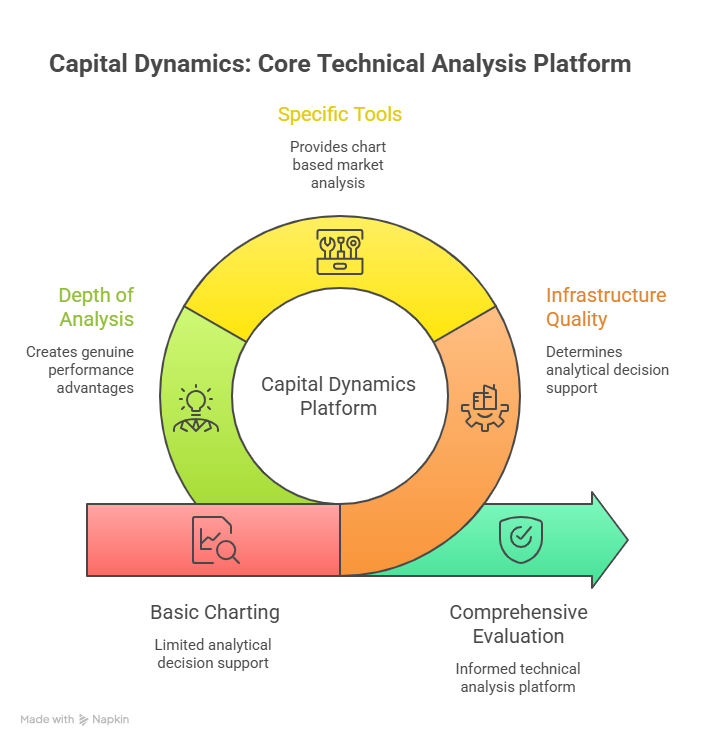
Technical analysis represents the analytical discipline whose systematic application to price history creates the pattern recognition, level identification, and momentum assessment that informed trading decisions require from the market examination that chart based analysis produces. Capital Dynamics approaches technical analysis not as a supplementary analytical dimension whose availability satisfies user expectations without genuine investment in the depth that serious technical analytical work demands but as a core platform competency whose infrastructure quality directly determines the analytical decision support that traders whose frameworks depend on chart based market examination can access through their platform relationship.
Understanding how Capital Dynamics structures its technical analysis offering, what specific tools and capabilities its platform provides for chart based market analysis, and how the depth of its analytical infrastructure creates genuine performance advantages for traders whose analytical sophistication demands more than basic charting provides the comprehensive evaluation framework that informed technical analysis platform assessment requires.
Why Technical Analysis Infrastructure Defines Capital Dynamics
Capital Dynamics recognizes that the relationship between charting capability and trading performance operates through a mechanism whose consequences compound across every analytical session into the cumulative decision quality difference that platform analytical depth creates between traders whose environments support rigorous technical examination and those whose platforms constrain analytical precision through the limitations that inadequate charting infrastructure imposes on the analytical work conducted within it.
Every technical analytical conclusion drawn from chart examination, every entry and exit decision whose timing reflects technical level identification, and every risk management parameter whose placement reflects chart based structure analysis derives its quality from the charting infrastructure whose capabilities either support or constrain the analytical process that produces these conclusions. Capital Dynamics treats this connection between charting quality and decision quality as the foundational justification for its analytical infrastructure investment, recognizing that superior charting capability creates a compounding performance advantage whose magnitude increases with trading sophistication and strategy complexity.
The platform philosophy that Capital Dynamics employs treats technical analysis tools not as the standardized feature set that competitive parity requires across the platform landscape but as the differentiated capability whose depth reflects genuine understanding of what serious technical analytical work demands from the infrastructure through which it is conducted. This philosophy creates the investment orientation that builds charting depth rather than charting breadth, prioritizing the analytical precision and customization that sophisticated technical frameworks require over the accessibility and simplicity that maximizing new user onboarding at the cost of analytical capability depth produces.
Multi Timeframe Charting on Capital Dynamics
Multi timeframe analysis represents the technical analytical practice whose implementation quality most directly separates charting infrastructure that supports serious technical work from basic charting that provides single timeframe price display without the analytical workspace that comprehensive market structure examination requires. Capital Dynamics multi timeframe charting capability creates the analytical environment that simultaneous examination of multiple timeframes demands for the synthesis that complete technical analysis requires.
The analytical logic underlying multi timeframe examination recognizes that price movements on any single timeframe occur within the context of larger timeframe structures whose directional bias, key levels, and momentum conditions influence the probability and magnitude of moves that shorter timeframe analysis identifies as potential opportunities. A bullish technical setup on the four hour chart whose direction aligns with the established weekly and daily trend carries substantially higher probability than an equivalent technical configuration whose direction conflicts with higher timeframe structure, a distinction that Capital Dynamics multi timeframe workspace makes immediately visible rather than requiring the mental synthesis that switching between separate single timeframe charts demands.
Simultaneous multi chart display within Capital Dynamics allows traders to maintain the visual context of multiple timeframes without the disruption and cognitive overhead that repeatedly switching between timeframe views creates. The ability to position charts of different timeframes within the same visual workspace creates the holistic market view that comprehensive technical analysis requires, allowing traders to observe how price action on shorter timeframes develops relative to the context that longer timeframe structure provides without the analytical continuity interruption that chart switching imposes on the analytical process whose quality simultaneous display supports.
Timeframe synchronization features within Capital Dynamics ensure that multi timeframe analysis maintains the temporal alignment that meaningful cross timeframe comparison requires. When a specific price level or time period is being examined on one timeframe, synchronized charts automatically display the corresponding context on other timeframes, eliminating the manual navigation that maintaining temporal alignment across unsynchronized charts requires during the analytical work whose efficiency synchronization supports.
Technical Indicator Library on Capital Dynamics
The technical indicator library available through Capital Dynamics determines the analytical tools from which each trader’s framework can be assembled, with comprehensive coverage that extends from widely used standard tools through specialized instruments whose value experienced traders recognize creating the analytical flexibility that diverse technical frameworks require without the indicator coverage gaps that limited libraries impose.
Trend identification indicators within Capital Dynamics encompass the complete moving average family from simple moving averages whose straightforward calculation creates the clean trend visualization that uncomplicated moving average application requires through exponential moving averages whose recent price weighting creates the responsive trend tracking that current price sensitive strategies favor, Hull moving averages whose lag reduction creates the responsive trend identification that speed sensitive analytical frameworks value, and adaptive moving averages whose volatility sensitive period adjustment creates the dynamic trend tracking that fixed period alternatives cannot achieve across varying market volatility conditions. The Average Directional Index whose trend strength quantification independent of direction creates the filter that distinguishes trending from ranging conditions, the Ichimoku Cloud system whose comprehensive trend, momentum, and support resistance analysis combines multiple components into the integrated framework that its practitioners value for its analytical completeness, and the Parabolic SAR whose trailing stop methodology creates the dynamic trend following signal that its characteristic visual presentation makes immediately recognizable all represent the trend identification depth that Capital Dynamics provides.
Momentum oscillators within Capital Dynamics cover the complete range whose overbought, oversold, and divergence signals that momentum analysis employs across diverse technical frameworks. The Relative Strength Index whose widespread adoption reflects genuine analytical utility across multiple applications, the MACD whose trend following momentum combination creates the versatile analytical tool that both trend confirmation and divergence identification employs, the Stochastic Oscillator whose price position within recent range measurement creates the mean reversion signals that its readings generate, the Williams Percent Range whose similar range position measurement creates an alternative momentum perspective, and the Commodity Channel Index whose deviation from statistical average measurement creates the cyclical momentum signals that its calculation methodology produces all represent the momentum oscillator depth that Capital Dynamics provides alongside more specialized momentum instruments.
Volatility indicators within Capital Dynamics create the market condition context that distinguishing the appropriate trading approaches for different volatility environments requires. Bollinger Bands whose dynamic channel width that volatility expansion and contraction creates around the moving average center provides the volatility context that both trend following and mean reversion applications employ, the Average True Range whose absolute volatility measurement in price terms creates the direct input that stop placement and position sizing calculations require, the Keltner Channel whose combination of trend direction and volatility creates the analytical context that its envelope structure visualizes, and the Donchian Channel whose highest high and lowest low boundaries create the breakout and range identification that its price extremes mark all represent the volatility analytical capability that Capital Dynamics provides.
Volume analysis tools within Capital Dynamics incorporate the trading activity dimension that price analysis alone cannot reveal. On Balance Volume whose cumulative direction creates trend confirmation and divergence signals, the Volume Price Trend indicator whose price change weighted accumulation creates the momentum measurement combining price and volume, the Accumulation Distribution Line whose close position within the period range weighted by volume creates the buying and selling pressure proxy that institutional activity analysis employs, and the Chaikin Money Flow indicator whose buying and selling pressure measurement creates the capital flow direction assessment that its calculation methodology produces all represent the volume analytical capability that Capital Dynamics provides for the market participation assessment that complete technical analysis incorporates.
Chart Pattern Recognition on Capital Dynamics
Pattern recognition represents the technical practice whose reliable application requires the charting infrastructure that preserving the visual clarity and historical context that identifying repeating price structures across different market conditions demands. Capital Dynamics charting infrastructure supports the pattern identification work that classical and modern technical analysis employs through the display quality and analytical tools that reliable pattern recognition requires.
Classical chart pattern coverage within Capital Dynamics encompasses the formations whose historical reliability has established their place in serious technical frameworks. Head and shoulders formations whose neckline breaks signal significant directional changes, double and triple top and bottom formations whose confirmation signals trend reversal, triangle patterns whose apex breakouts indicate directional resolution, flag and pennant continuation patterns whose measured move projections create profit target frameworks, wedge patterns whose converging boundaries signal the momentum exhaustion that breakout confirms, and cup and handle formations whose rounded base and handle consolidation create the accumulation structures that breakout entries exploit all represent the classical pattern vocabulary that Capital Dynamics charting infrastructure supports through the historical depth and drawing tools that pattern identification and analysis requires.
Candlestick pattern recognition within Capital Dynamics benefits from the chart clarity and scaling that makes specific candlestick formations whose analytical significance experienced traders recognize immediately visible without the cramped or distorted display that inadequate chart scaling creates. Single candle patterns including doji whose indecision signal creates the context dependent directional implication that surrounding price action defines, hammer and hanging man whose identical construction creates opposite analytical implications based on trend context, shooting star and inverted hammer whose upper wick significance reflects the bearish and bullish rejection that their respective trend contexts create, and engulfing patterns whose complete body overlap of the preceding candle creates the decisive commitment signal that engulfing analysis identifies all represent the single candle patterns that Capital Dynamics clarity supports for reliable visual identification.
Support and resistance identification within Capital Dynamics benefits from the multi timeframe capability and drawing tools that marking and maintaining awareness of significant technical levels across the complete timeframe hierarchy requires. Historical price levels where significant reactions occurred, round number psychological levels whose market wide awareness creates the self fulfilling concentration of orders that reinforces their technical significance, Fibonacci retracement levels calculated from significant swing moves whose mathematical relationships create the price zones that retracement analysis targets, and pivot point levels whose calculation from recent price ranges creates the dynamic support and resistance that day trading and short term analysis employs all represent the level identification framework that Capital Dynamics analytical tools support through the drawing and annotation capabilities that comprehensive level tracking demands.
Advanced Technical Analysis Tools on Capital Dynamics
Beyond the foundational technical analysis tools that standard platform provision encompasses, Capital Dynamics provides the advanced analytical capabilities whose value experienced traders recognize as the differentiating dimension that separates comprehensive technical analysis infrastructure from the basic charting that satisfies introductory analytical requirements without supporting the sophisticated frameworks that experienced practitioners employ.
Elliott Wave analysis tools within Capital Dynamics support the wave counting and labeling work that applying Elliott Wave theory to price history requires through the drawing and annotation capabilities that documenting wave structure across multiple degree timeframes demands. The wave labeling tools, Fibonacci measurement integration, and persistent annotation storage that maintaining Elliott Wave analytical frameworks across extended development periods requires all represent the specific support that Capital Dynamics provides for this sophisticated analytical methodology whose practitioners require the charting infrastructure depth that basic annotation tools cannot adequately support.
Harmonic pattern analysis within Capital Dynamics supports the geometric price pattern identification that Gartley, Butterfly, Bat, Crab, and other harmonic formations require through the Fibonacci ratio measurement tools and pattern drawing capabilities that identifying and validating the specific proportional relationships that harmonic pattern qualification demands. The precision that distinguishing genuine harmonic patterns from superficially similar formations requires creates the measurement accuracy need that Capital Dynamics Fibonacci tools address through the calculation precision and visual display quality that reliable harmonic pattern assessment demands.
Market profile and volume analysis tools within Capital Dynamics provide the distribution based analytical perspective that examining how trading activity distributes across price levels over time creates for the value area identification, point of control analysis, and high volume node recognition that market profile analysis employs to understand the price levels where genuine market consensus creates the support and resistance that structural analysis based on trade activity distribution rather than pure price action alone reveals.
Capital Dynamics Technical Analysis for Different Asset Classes
Technical analysis applied to different asset classes requires the framework adaptations that the specific characteristics of each market type demand from conventional methodologies developed across multiple market environments. Capital Dynamics technical analysis infrastructure supports the asset class specific adaptations that applying technical tools to forex, equity indices, commodities, and cryptocurrencies with genuine reliability requires.
Forex technical analysis on Capital Dynamics incorporates the currency specific considerations that session based analysis, round number significance, and central bank level awareness create for the technical framework adaptations that reliable currency chart analysis demands. The session transition dynamics whose volatility patterns create the technical structures that time aware forex analysis incorporates, the significant figure levels whose market wide awareness creates the order concentration that round number technical significance reflects, and the central bank intervention history whose documented levels create the technical reference points that intervention aware forex analysis maintains all represent the forex specific technical considerations that Capital Dynamics analytical resources address.
Equity index technical analysis on Capital Dynamics incorporates the earnings cycle influences, sector rotation dynamics, and fundamental valuation context that give technical signals in equity index markets their directional significance within the broader fundamental environment whose alignment with technical bias creates the highest conviction setups. Capital Dynamics equity index technical analysis education develops the integration of price structure analysis with the fundamental context that complete equity market technical work requires for the comprehensive analytical conclusions that neither technical nor fundamental analysis alone produces with equivalent reliability.
Cryptocurrency technical analysis on Capital Dynamics addresses the specific adaptations that the continuous trading hours, higher volatility, and on chain data availability of digital asset markets create for conventional technical frameworks developed primarily for traditional financial instruments. The volatility parameter adjustments that Bitcoin and altcoin technical analysis requires relative to equity and forex applications, the on chain level integration that blockchain derived support and resistance creates alongside conventional technical levels, and the sentiment cycle awareness that crypto market psychology creates as an additional technical dimension all represent the cryptocurrency specific technical considerations that Capital Dynamics analytical resources develop.
Building Technical Analysis Skills Through Capital Dynamics
Capital Dynamics treats technical analysis skill development as a platform investment whose returns manifest in the trading outcomes that genuine analytical competency enables, providing the educational resources and practice infrastructure that developing the technical analysis proficiency that serious trading performance requires demands beyond the platform access that market participation enables without the developmental support that consistent improvement requires.
Technical analysis curriculum within Capital Dynamics covers the foundational concepts, intermediate pattern and indicator applications, and advanced technical frameworks that comprehensive technical competency requires across the complete development spectrum that traders traverse from initial introduction through expert level mastery. The curriculum depth that Capital Dynamics provides reflects the platform’s understanding that superficial technical education whose coverage satisfies minimum educational provision expectations without creating the genuine analytical competency that performance improvement demands serves neither trader development nor the platform relationship quality that genuinely competent traders create.
Practice and application resources within Capital Dynamics allow traders to develop and refine their technical analysis skills through the historical scenario examination and strategy testing that applying technical frameworks to diverse market situations without the capital exposure that live market learning imposes creates. The historical market scenario library that Capital Dynamics provides creates the practice material that developing pattern recognition, level identification, and indicator interpretation skills through repeated application across varied market conditions demands for the competency building that diverse exposure creates more efficiently than the narrow market experience that live trading during a single market period provides.
Conclusion
Capital Dynamics technical analysis infrastructure across multi timeframe charting, comprehensive indicator coverage, pattern recognition support, advanced analytical tools, asset class specific frameworks, and educational depth creates the analytical environment that serious technical analysis demands from the platform through which it is conducted. Each analytical dimension contributes to the decision support quality whose aggregate effect across trading sessions produces the analytical advantage that platform capability differences of this magnitude create for traders whose frameworks can fully exploit the depth that Capital Dynamics provides.
No technical analysis infrastructure guarantees specific analytical conclusions or trading outcomes whose dependence on market conditions and individual analytical skill platform quality improves without independently determining. Capital Dynamics technical analysis tools create the analytical conditions within which technical expertise operates rather than substituting platform capability for the analytical development that technical trading performance ultimately requires.
Traders whose technical analysis ambitions demand the charting depth, indicator comprehensiveness, and advanced analytical support that serious technical market examination requires will find in Capital Dynamics a platform whose analytical infrastructure rises to meet sophisticated technical requirements rather than constraining them within the limitations that basic charting capabilities impose on traders whose market understanding deserves the analytical environment that Capital Dynamics technical tools provide.