Seeing the Matrix: How to Read Order Book Liquidity Heatmaps
Go beyond candlesticks. Use Limit Order Book (LOB) data to identify institutional walls, fake “spoof” orders, and high-probability reversal zones.
 Gerald baalham2 min read·Just now
--
🛰️ Intelligence Snapshot (30-Second Summary)
- Core Concept: Visualizing resting limit orders to see where the “real” money is waiting.
- Key Signal: Liquidity Bands (thick “walls” of orders) act as magnets for price action.
- Alpha Tip: Distinguishing between “Persistent” liquidity and “Spoofing” (fake orders designed to manipulate retail sentiment).
Seeing Beyond the Execution
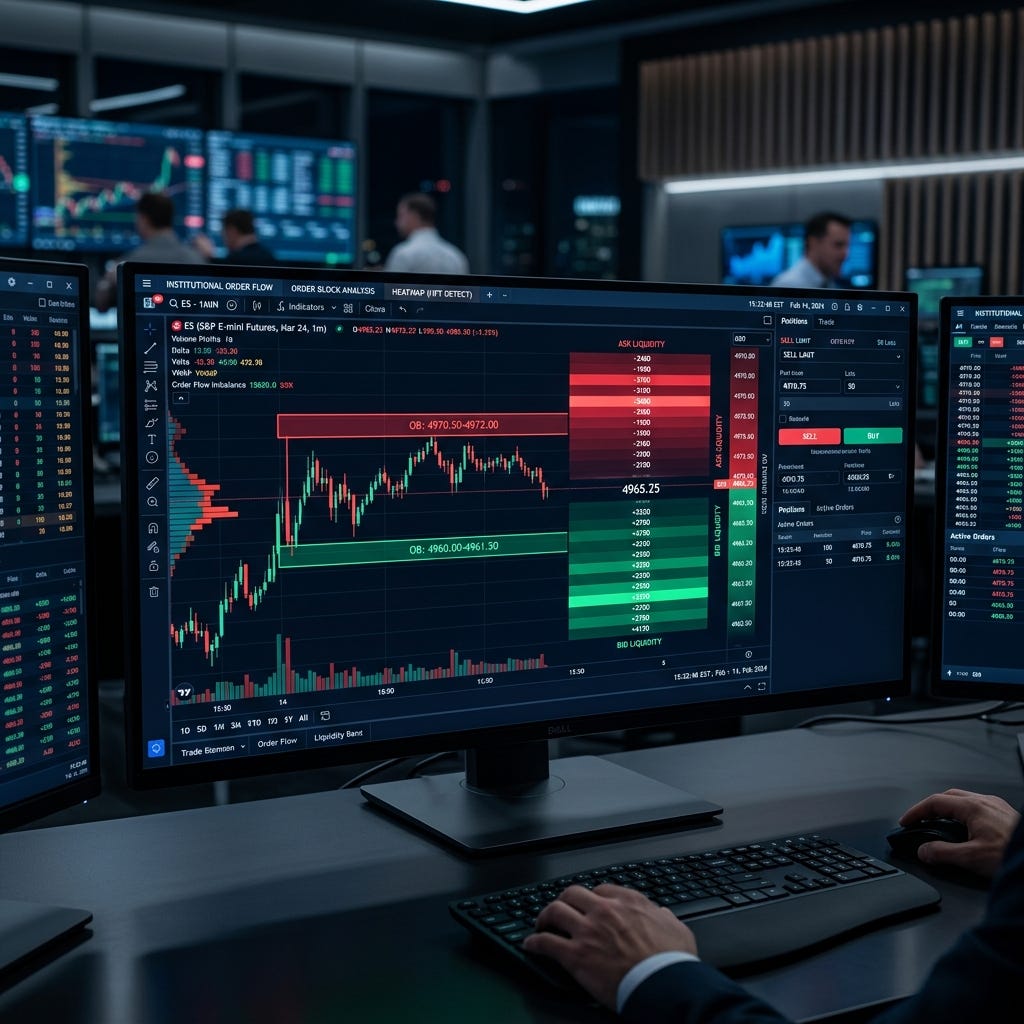
A traditional chart only shows you what happened (past trades). To see what will happen, you need the Limit Order Book (LOB) Heatmap.
The heatmap exposes all unexecuted orders currently resting on the books. This allows you to visualize true market depth and see where institutional capital is stacked like a brick wall.
How Institutions Manipulate the Book: Spoofing
Not all liquidity is real. The most common institutional trick is Spoofing. A whale flashes a 1,000 BTC sell wall to terrify retail into selling. The moment the price gets close, they cancel the order and buy the panic.
AlphaSignal’s Heatmap uses high-frequency delta algorithms to analyze the persistence of these walls. If a wall has been sitting there for 4 hours, it’s likely real institutional support. If it appears and disappears in seconds? It’s a spoof.
Originally published at alphasignal.digital/academy/order-book-liquidity-heatmaps