Scaling AI in Banking: Lessons from the Frontlines of BFSI Innovation
 Shailesh Gogate3 min read·Just now
--
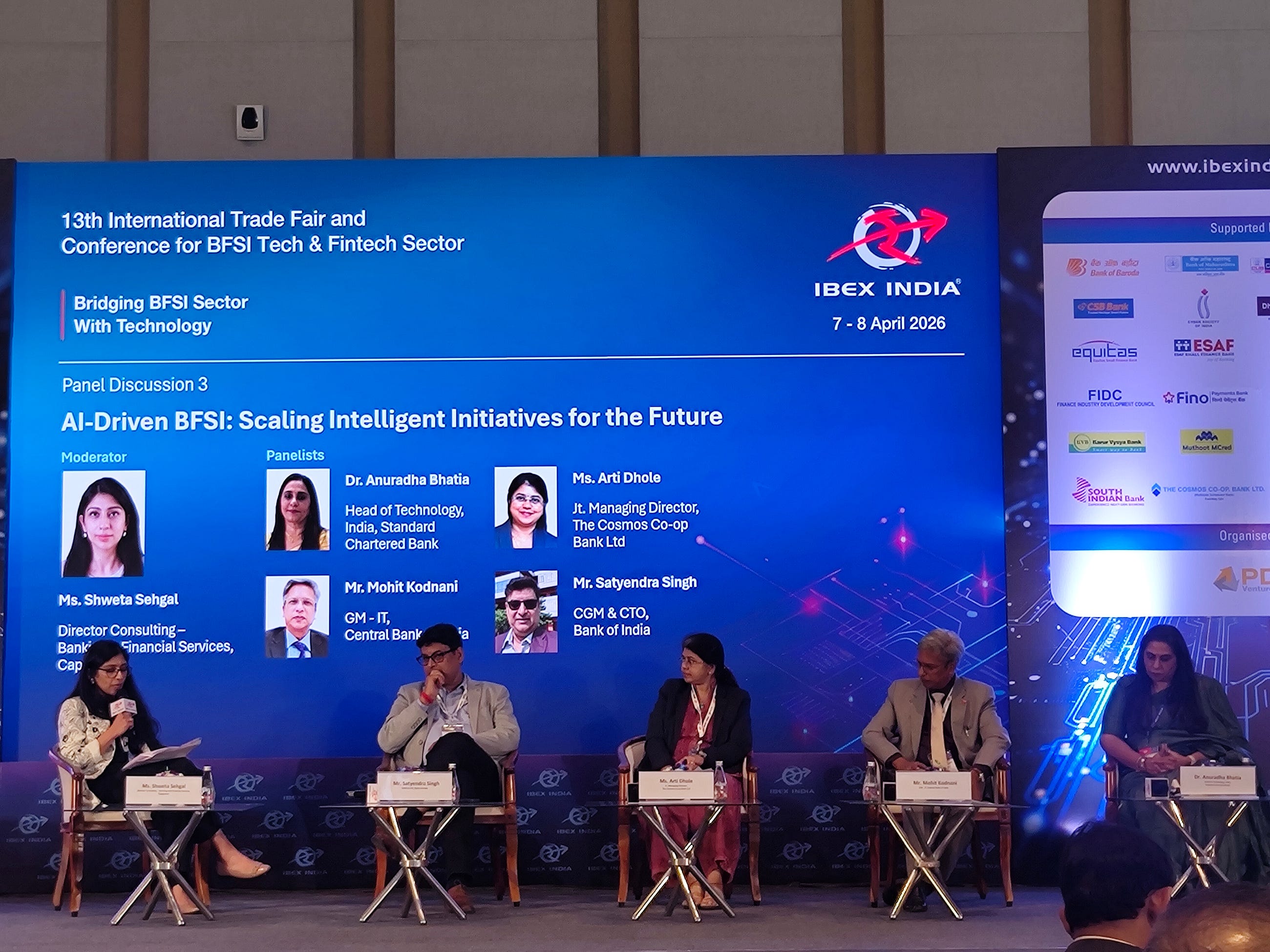
At IBEX industry conference, leaders from some of India’s leading banks sat down to discuss one of the most pressing questions in financial services today: how do we move from AI pilots to enterprise-scale transformation — responsibly, repeatedly, and sustainably?
Here are the key takeaways from that conversation.
Start with “Do we even need AI?”
Dr. Anuradha opened with a refreshingly grounded perspective: before asking how to scale AI, ask whether AI is the right tool at all. With energy costs and complexity rising, not every problem needs a generative AI solution. Can automation or even a well-structured Excel workflow do the job? This isn’t technophobia — it’s smart resource stewardship.
For her global bank, the answer to how to scale is a centralized model: take a POC proven in one country, adapt it thoughtfully for local regulatory requirements (especially around PII and data residency), and roll it out. Lessons learned travel; cookie-cutter deployments don’t.
Non-Negotiables When Scaling a POC
From the Bank of India’s perspective, three things are non-negotiable when moving a POC to production:
- Is this truly enterprise-wide, or just locally relevant? A POC tested in a handful of branches can be deceptively narrow.
- Build vs. Buy clarity — foundational base models are purchased; domain-specific knowledge and portfolio logic are built in-house.
- Design principles and risk guardrails baked in from day one, not retrofitted later.
With 53 use cases now live and actively touching customer and internal workflows, the bank’s experience reinforces a simple truth: governance-first thinking accelerates scale, it doesn’t slow it down.
The Platform Bottlenecks Nobody Talks About Enough
From the IT lens, the real scaling challenges are structural. Core banking systems were built for batch processing — not real-time AI inference. Bridging that gap requires robust API layers, unified data pipelines that handle both structured and unstructured data simultaneously, and continuous monitoring for model drift and bias.
The ML lifecycle needs to be treated as a complete framework — from data creation through testing, deployment, and ongoing monitoring — not a series of one-off projects.
Governance by Design, Not as an Afterthought
Multiple panelists converged on this: compliance and regulation should be embedded into the solution architecture, not bolted on post-deployment. Sandboxing, validation, auditability, and explainability aren’t bureaucratic hurdles — they’re the foundation of customer trust.
Dr. Anuradha noted that her bank is actively contributing to RBI’s AI framework, demonstrating an end-to-end model development pipeline with full documentation, explainability, and risk checkpoints. When a use case is proven in one market, it becomes a template for other geographies.
On hallucinations — the panel was candid: they’re here to stay. The real mitigation is human judgment. Building AI-literate teams who can distinguish hallucination from fact is as important as any technical guardrail.
Where the Real ROI Is
When it comes to use cases delivering tangible, near-term business value, the consensus was clear: fraud detection, credit risk assessment, and customer service are where banks should focus first. These deliver measurable impact — reduced losses, better NPS, improved asset quality — without requiring massive upfront investment.
On hyper-personalization: the opportunity is enormous in a high-volume market like India, but fairness and bias controls must be built in from the start. Compliance-by-design is what makes personalization scalable and trustworthy.
The People Equation
Perhaps the most important takeaway: technology is only half the challenge. Cultural transformation — helping teams move from fear of AI to confidence in AI — is what separates successful scaling from stalled pilots. As one panelist put it, “AI won’t take your job. Someone more skilled than you will.” Upskilling isn’t optional; it’s strategic.
The Bottom Line
Scaling AI in banking isn’t a technology problem — it’s an organizational design problem. The banks winning this race are those that align data governance, platform infrastructure, business outcomes, regulatory compliance, and people development into a single, coherent strategy.
The POC era is ending. The enterprise AI era has begun.
What’s your experience scaling AI in regulated industries? I’d love to hear what’s working — and what isn’t — in the comments.