

Lose Your Job to AI? New York Lawmaker Proposes 'AI Dividend' Stimmy
Congressional candidate Alex Bores outlined a policy that would trigger payments to Americans if surging AI use reduces employment.
 By Jason NelsonEdited by Andrew HaywardApr 20, 2026Apr 20, 20263 min read
In brief
- New York Assembly member Alex Bores has proposed an “AI Dividend” tied to AI-driven job displacement.
- Payments would activate if indicators show falling labor participation or rising productivity without job growth.
- The policy however does not mention how much each American would receive or how often.
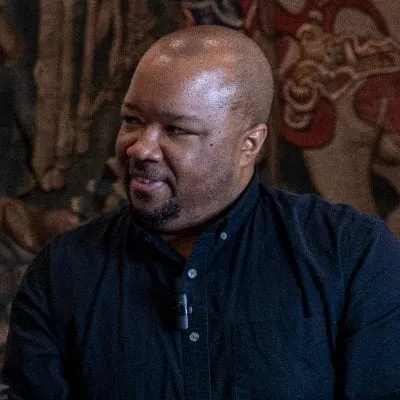
As industry experts continue to warn that artificial intelligence could disrupt the global labor market, Alex Bores, a Democratic member of the New York State Assembly who is running for the U.S. Congress, has proposed an “AI Dividend”—a policy that would provide payments to Americans if the technology significantly reduces employment.
Bores announced the AI Dividend on Monday in a post on X. The proposal would create a contingency payment program tied to economic signals that suggest automation is displacing workers.
“CEOs are openly warning that AI will significantly reduce white-collar employment,” the policy said. “Forecasters project that 50% of jobs could be automated in the coming years, with entry-level positions especially vulnerable.”
According to the AI Dividend framework, triggers for payments include sustained declines in labor force participation, wage compression in affected sectors, or rapid increases in AI-driven productivity without corresponding job growth.” If the triggers are met, then the program would distribute direct payments to Americans while also funding workforce transition programs, educational initiatives, and government oversight initiatives.
While the framework aims to ensure the AI dividend activates based on real-world conditions, not political discretion, it does not mention how much money each eligible American will receive or the frequency at which payments will go out.
The policy comes as developers of major AI tools, including OpenAI CEO Sam Altman, Anthropic CEO Dario Amodei, Microsoft AI CEO Mustafa Suleyman, and Tesla and xAI CEO Elon Musk, warn that the technology could eliminate large numbers of jobs and automate significant portions of human work.
“What is striking to me about this AI boom is that it’s bigger, it’s broader, and it’s moving faster than anything has before,” Amodei told CNN last summer. “Compared to previous technology changes, I’m a little bit more worried about the labor impact, simply because it’s happening so fast that, yes, people will adapt, but they may not adapt fast enough.”
Today, I’m proud to announce the AI Dividend, my plan to prepare for the AI economy with direct payments to Americans funded by tax reform that simultaneously incentivizes hiring humans instead of AI.
Read the full plan here: https://t.co/sE1OuM8AlT pic.twitter.com/uoRiyIU9Me
— Alex Bores (@AlexBores) April 20, 2026
The document frames the proposal as preparation for that possibility rather than as a direct response to current economic conditions.
“No one knows exactly how this will play out,” the policy said. “But what we do know is this: if AI replaces a significant share of human labor, our current economic system is not prepared.”
Funding mechanisms in the AI dividend framework include a tax on AI usage measured in tokens, equity warrants that would allow the federal government to purchase shares in major AI companies if their value rises significantly, and tax reforms that address incentives favoring capital investment over wages.
Bores’ framework argues that designing policies that protect human workers before large-scale disruption occurs may be easier than attempting to redistribute economic gains later.
“The AI Dividend is only possible if we act now. Once a small number of companies have accumulated extraordinary wealth and displaced workers across the economy, the political and practical window for creative policy closes,” it reads. “Demanding stakes in companies after they have already captured the value is far harder than building smart structures today, while the technology is still taking shape.”
The office of Assemblymember Bores did not immediately respond to a request for comment by Decrypt.