Intelligence Bureau warns of anti-tech violent extremism amid AI fears
New York's counterterrorism unit flags a brand-new threat category as protests against data centers and AI infrastructure intensify across the US.
Share
Add us on Google by Editorial Team May. 26, 2026The federal government has a new label for people who really, really don’t like artificial intelligence. It’s called “anti-tech violent extremism,” and it has never appeared in any prior domestic extremism report from the FBI or the Department of Homeland Security.
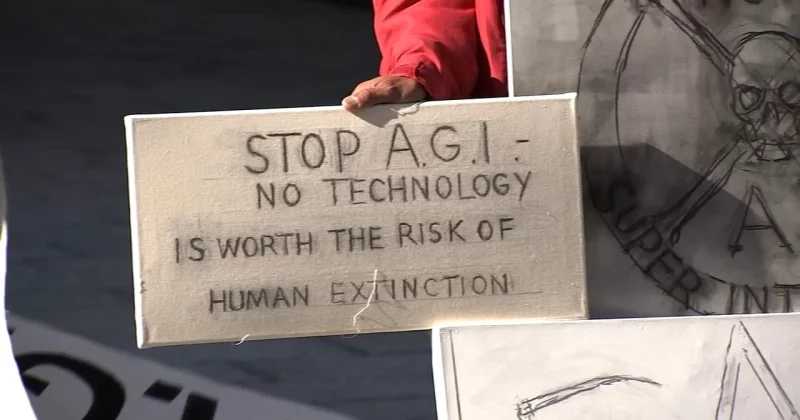
A report from the New York Intelligence and Counterterrorism Bureau warns that the rapid rollout of AI technology could trigger large-scale protests and civil unrest, particularly in dense urban environments like New York City. The assessment represents a meaningful shift in how US law enforcement categorizes domestic threats, placing anti-AI activism alongside more established extremism categories for the first time.
What’s actually happening on the ground
The Soufan Center, a nonprofit that tracks global security threats, has documented a surge in violent rhetoric targeting AI advocates, data center builders, and policymakers. That escalation has been especially pronounced from late 2025 through May 2026.
AdvertisementIn April 2026, OpenAI CEO Sam Altman was the target of an attack, an incident that underscored the personal risks facing prominent AI figures. In December 2025, significant rallies took place in Michigan, where protesters called for a moratorium on data center construction.
The protests in Michigan reflected a growing coalition of environmental activists, labor advocates, and local residents who see data centers as resource-hungry facilities that consume enormous amounts of water and electricity while offering relatively few jobs to host communities.
The polling numbers tell the story
Gallup polling shows that 61% of Americans believe AI will eliminate more jobs than it creates. Pew Research puts the concern in even starker terms: 57% of respondents say the societal risks posed by AI are significant.
Why this matters for crypto and tech investors
Data centers are not easy to relocate. They require massive capital expenditure, reliable power grids, and water access for cooling. If community opposition escalates from protests to something more disruptive, the timeline and cost for building new AI infrastructure could increase meaningfully.
With 61% of Americans worried about AI-driven job losses, elected officials have a powerful incentive to slow-walk approvals for new data center projects or impose additional environmental review requirements.
For crypto specifically, decentralized compute networks like Render, Akash, and similar projects have positioned themselves as alternatives to centralized data center monopolies. A sustained backlash against large-scale data center construction could, paradoxically, strengthen the case for distributed infrastructure. Smaller, geographically dispersed compute nodes are harder to protest than a single massive facility consuming a town’s water supply.
The fact that US intelligence agencies are now formally tracking this as a domestic extremism category means that surveillance, enforcement actions, and public discourse around AI opposition will intensify. The Michigan protests and the new threat designation suggest that community resistance is becoming a material factor in deployment timelines.
Disclosure: This article was edited by Editorial Team. For more information on how we create and review content, see our Editorial Policy.