
Base introduces MCP gateway for agent tokenization and commerce
Coinbase's Layer-2 network now lets AI agents execute onchain actions through smart wallets, with launch partners spanning Uniswap, Morpho, and Moonwell.
Share
Add us on Google by Editorial Team May. 26, 2026Coinbase just gave AI agents their own set of crypto keys. Well, sort of.
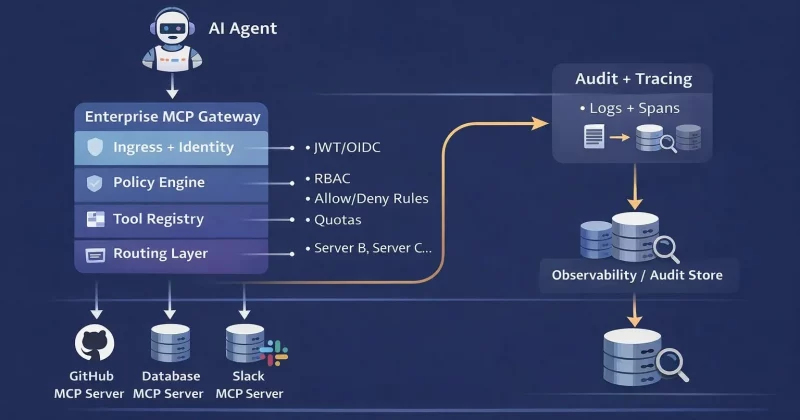
Base, the company’s Ethereum Layer-2 network, launched Base MCP on May 26, creating a gateway that lets AI agents connect directly with users’ smart wallets to perform onchain actions like token swaps, portfolio tracking, and DeFi interactions. The system works through what’s called the Model Context Protocol, an open-source standard originally introduced by Anthropic back in November 2024.
In English: you can now tell Claude, ChatGPT, or Cursor to manage your crypto portfolio using plain language prompts, and the AI will actually execute transactions on Base through a standardized plug-in system.
How Base MCP actually works
Base MCP uses a non-custodial design, meaning the MCP server never accesses users’ private keys. Authentication runs through OAuth 2.1, the same security protocol that underpins login systems across much of the modern web. Every single transaction requires explicit user approval through the Base Account interface.
AdvertisementThe system also claims to reduce phishing risks by localizing agent call construction. Rather than agents reaching out to arbitrary external endpoints, which is how most wallet-draining exploits work, the calls are built within the MCP framework itself.
Launch partners include Uniswap for token swaps, Morpho and Moonwell for lending, Aerodrome for liquidity infrastructure, Bankr and Avantis for portfolio management and perpetual trading respectively, and Virtuals for AI agent tokenization.
Skill plugins and the DeFi stack
Each launch partner provides what Base calls “skill plugins,” essentially modular capabilities that any compatible AI client can invoke. Want to lend USDC on Morpho? Ask your AI. Want to swap ETH for a memecoin on Uniswap? Same workflow. The plugins standardize how AI agents interact with different DeFi protocols, which historically have each required their own bespoke integration.
This modular approach also means the ecosystem can expand without Base needing to build every integration itself. Third-party developers can theoretically create new skill plugins for additional protocols.
The integration with Claude, ChatGPT, and Cursor as AI clients at launch means users don’t need to adopt a new AI tool to access Base MCP functionality.
What this means for investors
Base MCP ships with real DeFi protocol integrations from day one across lending, swapping, and trading through its named launch partners. The non-custodial design with mandatory user approval addresses what has been the single biggest objection to AI agents managing financial assets, as every action requires explicit consent.
The risk profile is what you’d expect from early-stage infrastructure. OAuth 2.1 is battle-tested in traditional web applications, but its implementation within a crypto-native MCP framework is new territory. The “every transaction needs approval” safeguard, while good for security, could become a friction point if agents are executing dozens of micro-transactions in a DeFi strategy.
Disclosure: This article was edited by Editorial Team. For more information on how we create and review content, see our Editorial Policy.