--
If You Can’t Explain Yield, You Are the Yield
DeFi did something remarkable.
It made yield visible.
Dashboards glow with double- and triple-digit APYs. Tokens stream into wallets. Positions update in real time. With a few clicks, anyone can deposit assets and start “earning.”
On the surface, it feels simple:
Deposit → Earn → Compound.
But simplicity in presentation often hides complexity in reality.
And in markets, what you don’t understand doesn’t disappear — it gets priced in.
The Illusion of Easy Yield
Today’s DeFi interfaces are optimized for clarity, not comprehension.
You see:
- A pool
- An APY
- A “Deposit” button
What you don’t see is the machinery underneath:
- Who is paying that yield
- What risks are embedded
- What assumptions are being made
The system abstracts away complexity so effectively that many users never question the number itself.
But yield is not magic. It is not created out of nothing.
If it exists, it comes from somewhere.
The Gap Between Displayed and Real Yield
The number on the screen is rarely the number you actually earn.
Displayed yield is typically gross — not net.
Between those two lies a long list of hidden variables:
- Impermanent loss quietly eroding returns in volatile pairs
- Rebalancing costs eating into performance over time
- Execution friction through slippage and gas fees
- Volatility drag affecting compounding outcomes
- Timing mismatch between reward emissions and price changes
A pool showing 80% APY might deliver far less when these factors are accounted for.
In some cases, it may even result in a net loss.
The dashboard shows potential.
Reality delivers outcome.
Where Yield Actually Comes From
To understand yield, you have to trace its source.
In DeFi, yield typically originates from a few core mechanisms:
- Trading fees paid by users swapping assets
- Lending demand from borrowers willing to pay interest
- Arbitrage activity that keeps markets efficient
- Liquidations that redistribute value under stress
- Token incentives / emissions designed to attract liquidity
Each of these sources has different characteristics.
Some are organic — tied to real usage (fees, lending).
Others are subsidized — driven by token emissions.
Organic yield tends to be more sustainable.
Incentive-driven yield often declines as emissions slow or token prices fall.
Not all yield is created equal — even if it looks identical on a dashboard.
Hidden Value Transfer
Here’s where things get uncomfortable.
If you don’t understand how a system generates yield, you may be the one funding it.
This is the hidden layer of DeFi:
- Providing liquidity without pricing volatility risk
- Earning incentives while absorbing downside exposure
- Entering pools without modeling potential outcomes
Value doesn’t appear — it transfers.
From:
- Passive participants
To: - Informed participants
From:
- Those chasing APY
To: - Those understanding structure
If you can’t explain the yield, there’s a real chance you are the yield.
Why Outcomes Differ
Two users can enter the same pool and leave with completely different results.
Why?
Because they approach the system differently.
- One optimizes for headline APY
- Another evaluates risk, cost, and structure
- One reacts to dashboards
- Another models scenarios
- One follows trends
- Another builds strategy
Institutions don’t just “farm yield.”
They simulate it.
They ask:
- What are the drivers of return?
- What are the downside scenarios?
- What happens under stress?
Same system. Different mindset. Different outcome.
The Shift Toward Engineered Yield
DeFi is evolving.
We are moving from:
Yield chasing → Yield engineering
This shift changes everything.
Instead of asking:
“What pays the most right now?”
The question becomes:
“What produces the best risk-adjusted return over time?”
Engineered yield means:
- Modeling expected outcomes
- Actively managing risk
- Rebalancing positions intelligently
- Optimizing for net, not gross returns
It treats yield as a system — not a number.
From Guessing to Structure: The Role of Vaults
This is where structured infrastructure becomes critical.
Manual yield strategies are fragile:
- Easy to mismanage
- Hard to optimize
- Time-intensive to maintain
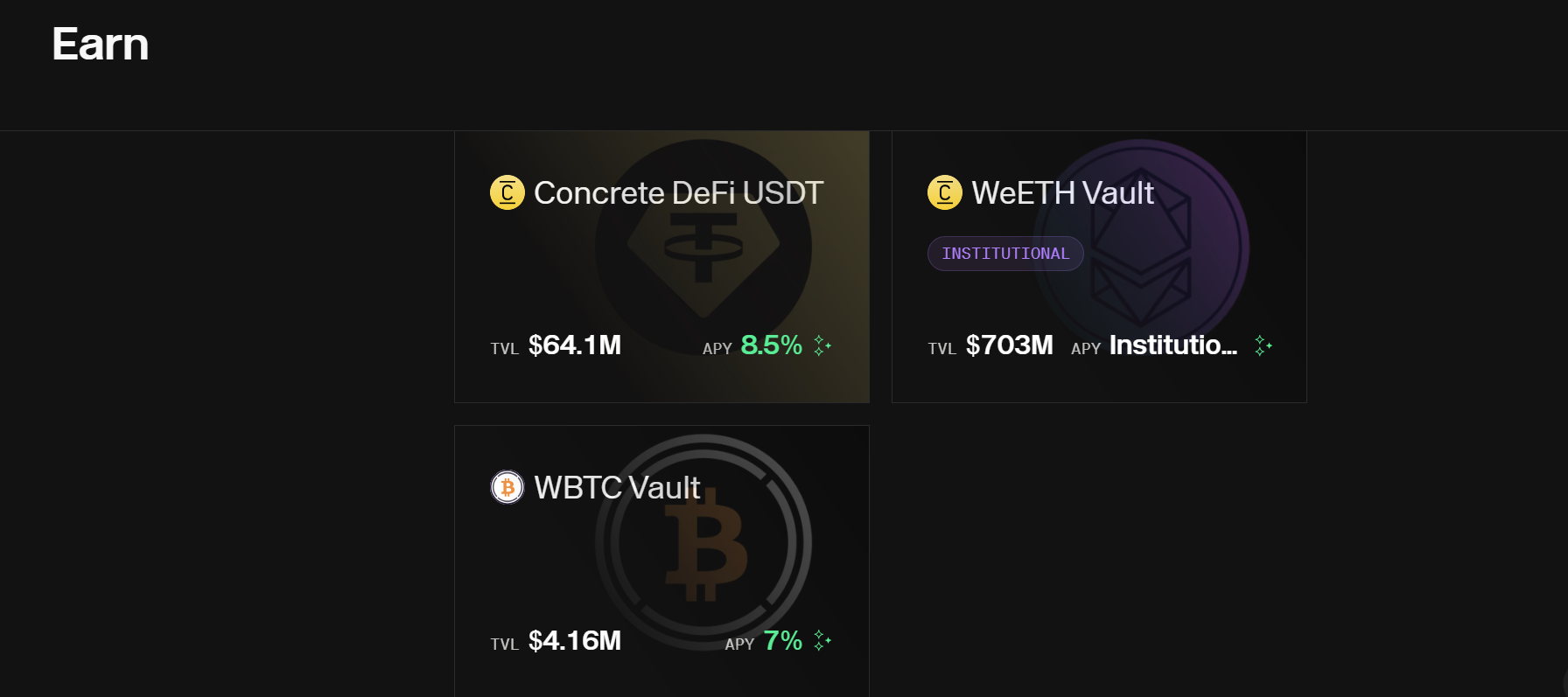
Concrete Vaults introduce a different approach.
They:
- Automate allocation across strategies
- Continuously rebalance positions
- Reduce execution errors
- Apply structured logic to capital deployment
Instead of guessing where yield might come from, users gain designed exposure to it.
Instead of reacting, they operate within a system built to optimize outcomes.
Explore Concrete at app.concrete.xyz
The Core Insight
Yield is not a number on a screen.
It is a function:
Yield = Revenue − Cost − Risk
Ignore any part of that equation, and your understanding is incomplete.
Understand all three, and your behavior changes:
- You question APYs
- You evaluate sources
- You prioritize sustainability
- You optimize outcomes
In DeFi, visibility is easy.
Understanding is rare.
And the difference between the two is where the real returns are made.
Click to link more details : app.concrete.xyz