--
🧱 If You Can’t Explain Yield, You Are the Yield
DeFi made yield visible.
It did not make it understandable.
Dashboards display attractive numbers.
APYs fluctuate in real time.
Balances increase as if growth is automatic.
The interface suggests simplicity:
Deposit → Earn → Withdraw
But the underlying system is not simple.
A critical question is often ignored:
Where does the yield actually originate?
1️⃣ The Illusion of Simplicity
Modern DeFi interfaces compress complex systems into a single metric: APY.
Users observe:
high percentage returns
seamless deposit flows
continuous compounding
However, these representations abstract away the mechanisms generating those returns.
Yield appears predictable, while the reality is conditional and dynamic.
2️⃣ Displayed Yield vs Real Yield
The APY shown is typically a projection, not a realized outcome.
Actual returns are affected by:
Fees: protocol, gas, and execution costs
Impermanent loss: exposure to price divergence
Rebalancing overhead: maintaining strategy efficiency
Execution friction: slippage and timing inefficiencies
Market volatility: impacting asset value and yield stability
A high APY does not translate directly into high returns.
Net yield = gross yield − costs − risk impact
3️⃣ Sources of Yield
Yield originates from specific economic activities:
Trading fees: generated from swaps
Lending activity: interest paid by borrowers
Arbitrage: exploiting price inefficiencies
Liquidations: penalties from undercollateralized positions
Incentives / emissions: token rewards used to drive participation
Not all yield sources behave the same:
Some are sustainable
Others are temporary or inflationary
Understanding the source determines the durability of returns.
4️⃣ Hidden Value Transfer
Financial systems redistribute value between participants.
When a user does not understand:
how yield is generated
what risks are involved
what costs are embedded
that user may be:
providing value to more informed participants
Examples:
supplying liquidity without modeling downside exposure
earning incentives while absorbing volatility risk
relying solely on displayed APY without structural analysis
Uninformed participation often results in implicit subsidization.
5️⃣ Why Outcomes Differ
Participants interacting with the same protocol can experience different results.
Approaches vary:
APY-driven: focused on visible returns
Structure-aware: evaluating cost, risk, and mechanics
Model-driven: analyzing outcomes before allocating capital
The system remains constant.
Results do not.
The difference is understanding.
6️⃣ The Shift Toward Engineered Yield
DeFi is evolving beyond yield chasing.
Previous pattern:
reacting to high APY
frequent reallocations
ignoring cost layers
Current direction:
modeling expected outcomes
managing risk exposure
optimizing allocation over time
focusing on net, risk-adjusted returns
This transition introduces discipline into capital deployment.
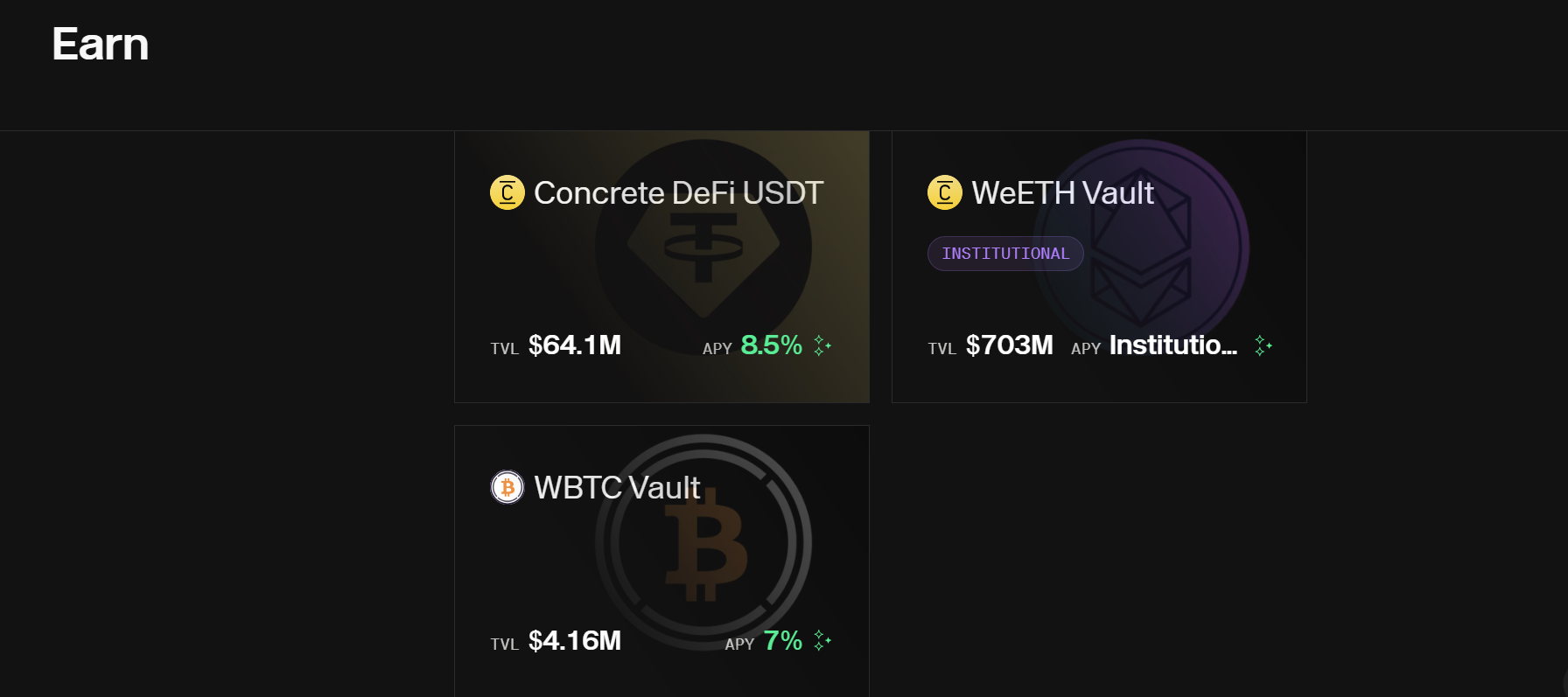
7️⃣ Structured Exposure with Concrete Vaults
Concrete Vaults provide an infrastructure layer for managing yield strategies.
Capabilities include:
Automated allocation: distributing capital efficiently
Strategy execution: following predefined logic
Rebalancing: maintaining optimal positioning
Error reduction: minimizing manual inefficiencies
This shifts user behavior from:
guessing → structured participation
8️⃣ Core Insight
Yield is not a standalone number.
It represents:
revenue generated
minus operational costs
adjusted for risk
Understanding this framework changes how capital is deployed.
🚨 Explore Concrete at app.concrete.xyz 🚨
join discord server https://discord.gg/concretexyz