If You Can’t Explain Yield, You Are the Yield
 CryptogemzPH3 min read·Just now
--
The Illusion of the Dashboard
The user experience in DeFi today is deceptively elegant. You land on a dApp, see a “240% APY” badge in high-contrast green, and click “Deposit.” The flow is seamless, the math seems certain, and the explanation is non-existent.
On the surface, yield is presented as a fixed law of nature — a reward for simply being present. But this simplicity is a mask. While the dashboard shows a straight line up, the reality underneath is a chaotic web of moving parts.
Breaking the Gap: The Hidden Erosion
The number you see on a landing page is almost always Gross Yield, but you live on Net Yield. The gap between these two figures is where most retail capital quietly evaporates.
Several factors compress that flashy APY into something much smaller:
- Impermanent Loss (IL): In liquidity pools, if the price of your deposited assets diverges, you may end up with less value than if you had simply held the tokens in your wallet.
- Execution Friction & Gas: Frequent compounding or rebalancing on-chain can eat a significant percentage of small-to-mid-sized positions.
- Volatility Impact: A 50% APY in a token that drops 80% in value is a net loss.
- Gross vs. Net: Dashboards rarely account for the “cost of carry” or the slippage incurred during the eventual exit.
Where Does the Money Actually Come From?
To understand yield, you must look past the percentage and find the source. Not all yield is created equal. Sustainable yield is generally born from four activities:
- Trading Fees: Users paying for the utility of a swap.
- Lending Activity: Borrowers paying interest to use your capital.
- Liquidations: Bonuses earned for keeping a protocol solvent.
- Incentives (Emissions): Tokens printed by a protocol to “buy” your liquidity.
The Crucial Distinction: Trading fees and lending interest are organic revenue. Emissions are marketing spend. If a vault relies solely on emissions, the yield is temporary and likely to decay as the token supply inflates.
The Hidden Value Transfer: Are You the Subsidy?
There is an old adage in poker: “If you’ve been at the table for thirty minutes and you don’t know who the sucker is, it’s you.”
DeFi is no different. If you don’t understand the mechanics of the vault you’re in, you might be the one subsidizing the system. You are often providing “cheap” liquidity to sophisticated traders or absorbing downside risk that you haven’t properly priced. When you earn incentives while the underlying asset crashes, you aren’t a “yield farmer” — you are an exit liquidity provider.
Why Outcomes Differ: Chasers vs. Engineers
Two users can deposit into the exact same protocol and walk away with vastly different results.
- The Yield Chaser: Optimizes for the highest number on the screen. They move capital impulsively, ignore costs, and fail to model the downside.
- The Yield Engineer: Analyzes structure, cost, and risk. They model expected outcomes before a single dollar is moved.
The difference isn’t luck; it’s infrastructure and understanding.
The Shift Toward Engineered Yield
DeFi is maturing. We are moving away from “Yield Chasing” (blindly following APY) and toward “Yield Engineering.” This transition involves treating DeFi positions like professional portfolios — managing risk, automating rebalances, and focusing on net returns over time. However, doing this manually is a full-time job that requires high-level technical expertise.
This is where Concrete Vaults come in.
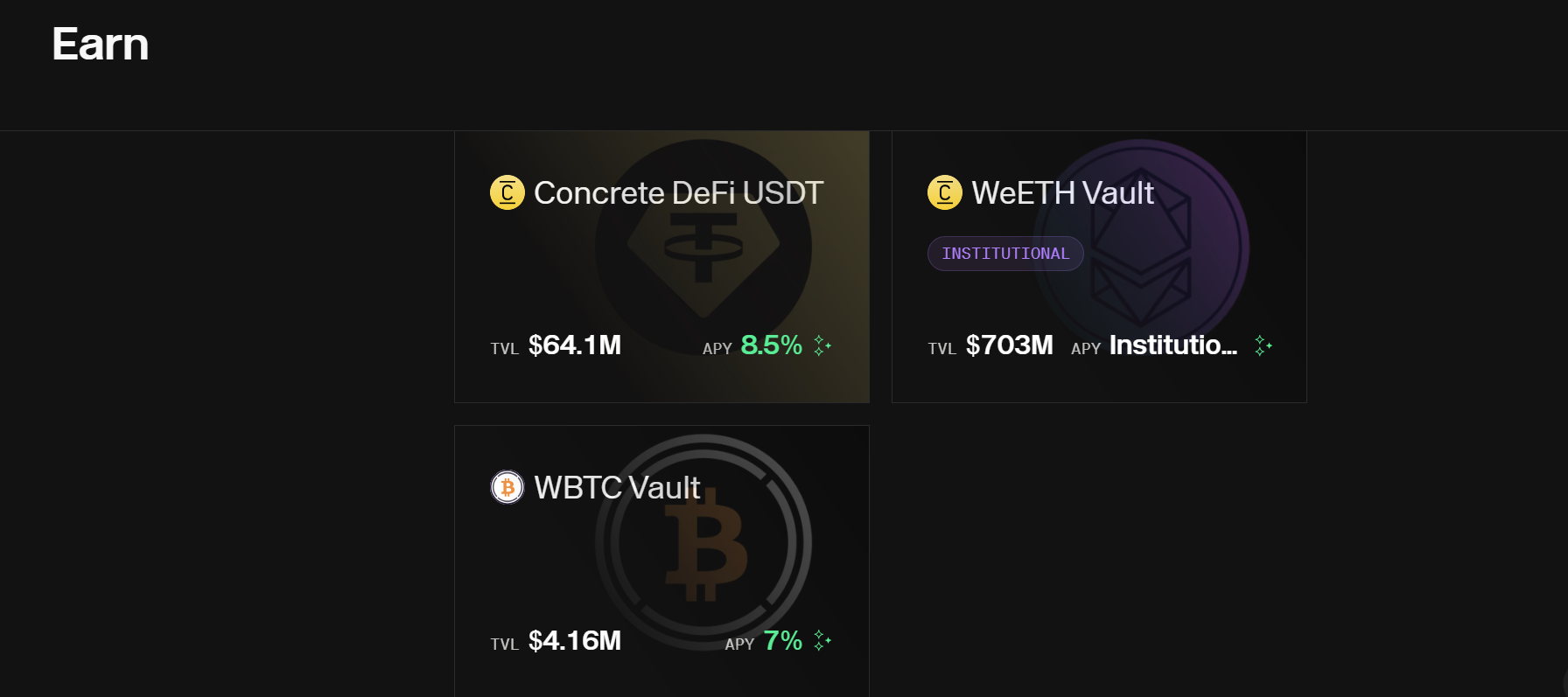
Concrete is building the infrastructure to bridge this gap. Instead of forcing users to guess which strategy will hold up against market volatility, Concrete Vaults automate the heavy lifting:
- Automated Allocation: Moving capital to where it is most efficient.
- Active Risk Management: Monitoring positions to mitigate the impact of volatility.
- Strategic Rebalancing: Reducing manual errors and optimizing execution costs.
By moving from manual “guessing” to structured exposure, users can finally access the professional-grade yield engineering that was previously reserved for institutions.
The Core Insight
Yield is not a static number on a screen. It is a living equation:
Yield = (Revenue — Cost) / Risk-Adjusted Capital
When you stop viewing DeFi as a collection of high-interest savings accounts and start viewing it as a series of engineered revenue streams, your entire approach to the market changes.
Stop chasing. Start engineering.
Explore the future of structured yield at app.concrete.xyz.