Forget the Dead-Eyed Cartoon—Meta Is Building a Photorealistic AI Clone of Zuckerberg
Three years after his Horizon Worlds avatar became a global meme, Zuckerberg is back at the avatar game, this time with a realistic AI clone.
 By Jose Antonio LanzEdited by Guillermo JimenezApr 13, 2026Apr 13, 20262 min read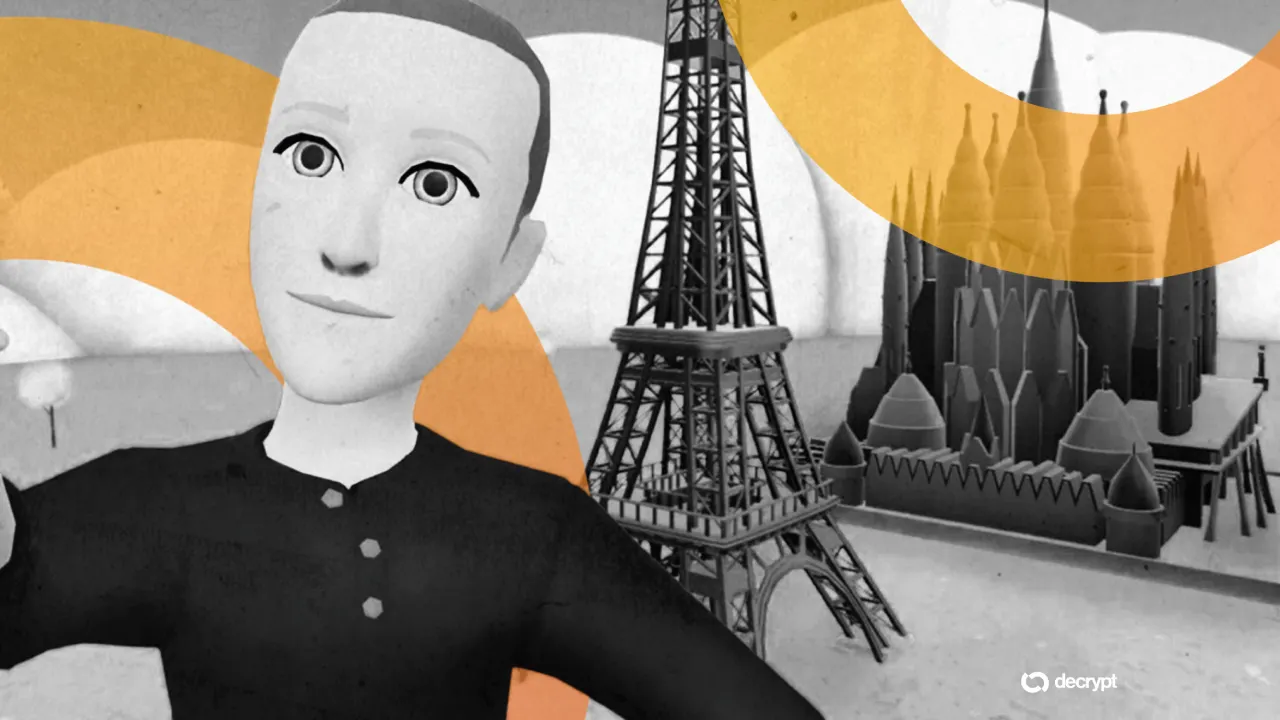
In brief
- Meta is building a photorealistic AI clone of Zuckerberg, according to the FT.
- The goal is scalable, always-available “leadership” for employees.
- The move points to a sharp pivot from metaverse room meetings to AI-driven internal control.
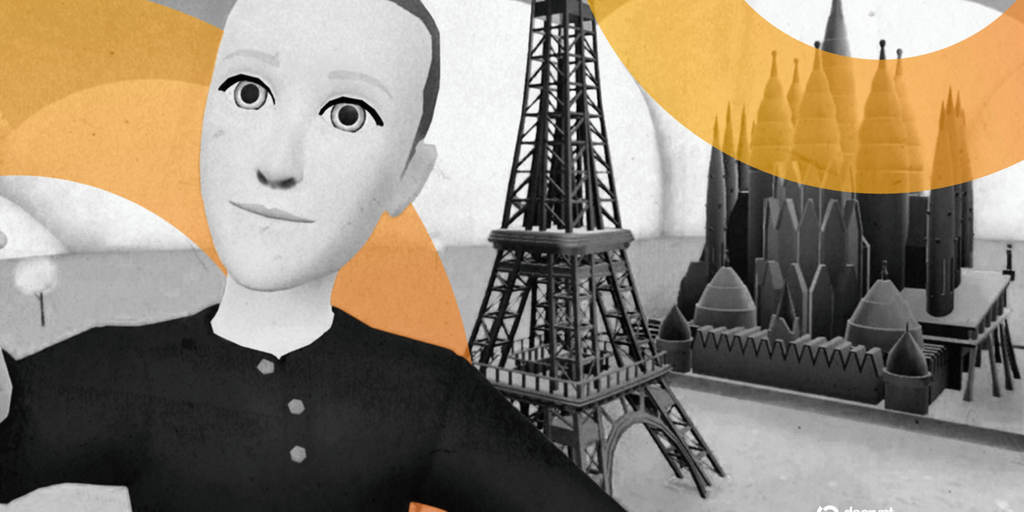
In August 2022, Mark Zuckerberg posted what was supposed to be a triumphant selfie. His Horizon Worlds avatar—a blocky, legless, dead-eyed cartoon that Kotaku memorably described as "a legless knock-off of a Nintendo Mii with the eyes of a corpse"—standing before a tiny Eiffel Tower. The internet buried him in memes. Even Meta's own employees reportedly refused to use Horizon Worlds.
That was then.
Now, according to a Financial Times report, Meta is building a photorealistic, AI-powered 3D version of its CEO designed to hold real conversations with employees on his behalf. Zuckerberg is personally training and testing the system, four people familiar with the matter told FT.
The character is being fed his mannerisms, vocal patterns, public statements, and recent thoughts on company strategy. The stated goal: make employees "feel more connected to the founder" through an AI that talks like him, thinks like him, and never has to cancel a one-on-one meeting.
It's a long way from the metaverse era's plastic nightmares.
The project is being led by Meta's newly formed Superintelligence Labs. Scaling the tech has proven difficult—it requires enormous computing power to keep interactions realistic and lag-free. Meta last year acquired two voice companies, PlayAI and WaveForms, as part of that push. The company's projected capital expenditure for 2026 sits between $115 billion and $135 billion, nearly double last year's figure.
Last week, Meta released Muse Spark, the first model from its Superintelligence Labs—a compact, purpose-built system with capabilities in health reasoning and visual understanding. Shares jumped 7% on the announcement.
Inside the company, employees are being pushed to embrace AI tools and build their own agents using open-source software called OpenClaw. Product managers have been handed a "skills baseline exercise" that includes system design tests and, yes, "vibe coding."
The contrast with the metaverse era is stark. As Decrypt reported in 2022, Horizon Worlds was in a self-declared "quality lockdown" while its own team was barely logging in. Reality Labs burned through billions every quarter—$10.2 billion in 2021 alone—before Zuckerberg quietly pivoted. The cartoon avatar became the defining image of that failure.
Now the bet is on something that looks and sounds like the real thing—to either make employees feel more connected to leadership, or just more supervised by it.