Expensive Mistakes Often Start Cheap
--
Why poor charging habits quietly destroy batteries — from phones to solar systems
Most people understand one simple truth:
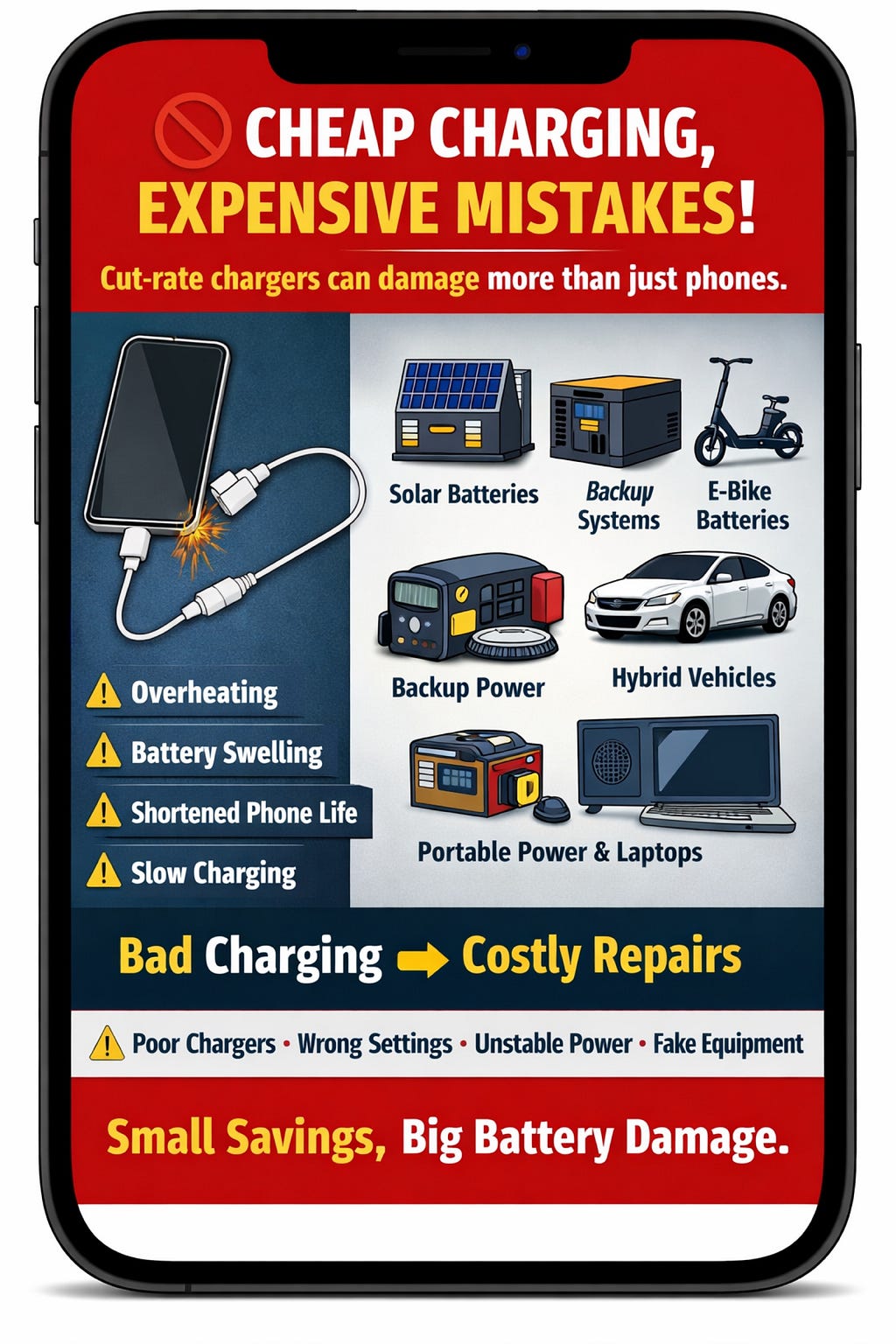
A poor-quality phone charger can damage an expensive phone.
It may lead to:
• overheating
• slow charging
• battery swelling
• shortened battery lifespan
• unreliable performance
We accept this because it is familiar. Nearly everyone has experienced a bad phone charger.
But very few people extend the same logic to larger and more expensive battery systems.
That is where costly mistakes begin.
The charger is often the hidden culprit
If a cheap or poor-quality charger can harm a small phone battery, what can the wrong charging system do to:
• solar batteries worth millions
• backup power systems
• e-bike batteries
• hybrid vehicle batteries
• laptop batteries
• portable power stations
The answer is simple: a great deal of damage, often slowly and invisibly.
Many expensive batteries do not fail suddenly. They decline gradually under poor charging conditions until one day people say:
“The battery is finished.”
Sometimes it is.
But sometimes the battery was poorly treated for months or years.
How expensive batteries are quietly weakened
Across homes, offices, lodges, vehicles, and energy systems, batteries are often harmed by:
• poor charging quality
• wrong voltage settings
• excessive heat during charging
• counterfeit or low-grade chargers
• unstable power input
• careless charging habits
• prolonged undercharging
• frequent overcharging
In many cases, the battery is blamed for damage caused elsewhere in the system.
Why this matters more in Africa
In many African markets, power interruptions, heat, voltage fluctuations, dust, and informal supply chains create harsher conditions for batteries than manufacturers originally anticipated.
That means charging quality matters even more.
A charger is no longer a minor accessory.
It is part of the battery system.
The economics of poor charging
Cheap charging often looks like savings:
• lower upfront cost
• easy replacement
• immediate convenience
But the long-term costs can include:
• early battery replacement
• reduced runtime
• downtime during outages
• transport interruptions
• lost productivity
• avoidable repair bills
What looked cheap becomes expensive.
A better question to ask
Instead of asking:
“Why did my battery fail?”
Try asking:
“Was my charging system helping it — or harming it?”
That question can save significant money.
Final thought
Battery life often begins long before battery failure.
It begins with how the battery is charged, managed, and treated every day.
Cheap charging can become very expensive.
Follow for more insights on battery systems, mobility, and practical energy solutions in African markets.
#BatterySystems #BatteryLife #PortablePower #SmartEnergy #Mobility #Africa #EnergyStorage #Technology #Sustainability