Ethereum Called, Fluence Answered.
 Kufiakpan3 min read·Just now
--
Fluence has packed its bags, caught the train, and moved back home and it brought everyone’s money with it. Here’s what just happened, and why it actually matters.
In crypto, “your assets have been migrated” are words that typically send a shiver down your spine. With Fluence, they should do the opposite because this time, everything went exactly right.
The Fluence Rollup is no more at least as the home of your assets. In what is arguably one of the cleanest large-scale asset migrations in recent DeFi memory, every FLT and USDC balance held on the Fluence Rollup has been automatically moved to Ethereum Layer 1. No panic, no drama, no “oops, where did my money go?” moments.
Let that sink in for a second. In an industry where “we’re migrating your funds” has historically been code for “please hold while we accidentally lose 40% of your assets”, Fluence just did it automatically, cleanly, and completely. That’s actually impressive. 👀
So what exactly moved and how?
Let’s break it down simply. Three things happened;
FLT balances — Fully migrated to Ethereum L1, matching your previous Rollup balance down to the last decimal.
USDC balances — same story. Your stablecoin holdings made the trip safely and are now living on mainnet.
pFLT (pre-FLT) — this one’s the most interesting move. Every pFLT has been converted to real FLT on Ethereum L1 at a perfect 1:1 ratio. No haircuts, no discount. One pFLT in, one FLT out. Simple, fair, done.
Why does moving to L1 actually matter?
Rollups are powerful tools, they offer speed and cost efficiency by processing transactions off the main chain but Ethereum L1 is where the real security lives. It’s the base layer, the settlement layer, the place where the big institutions feel safe parking value.
Moving assets here means deeper liquidity pools, broader exchange compatibility, and the full weight of Ethereum’s security guarantees behind every token.
For the Fluence ecosystem, a decentralized cloud computing network that runs on staked FLT, having the native token firmly rooted on L1 isn’t just cosmetic. It’s foundational. Stakers, validators, and infrastructure providers all benefit from a token that lives where the trust lives.
What do you need to do right now?
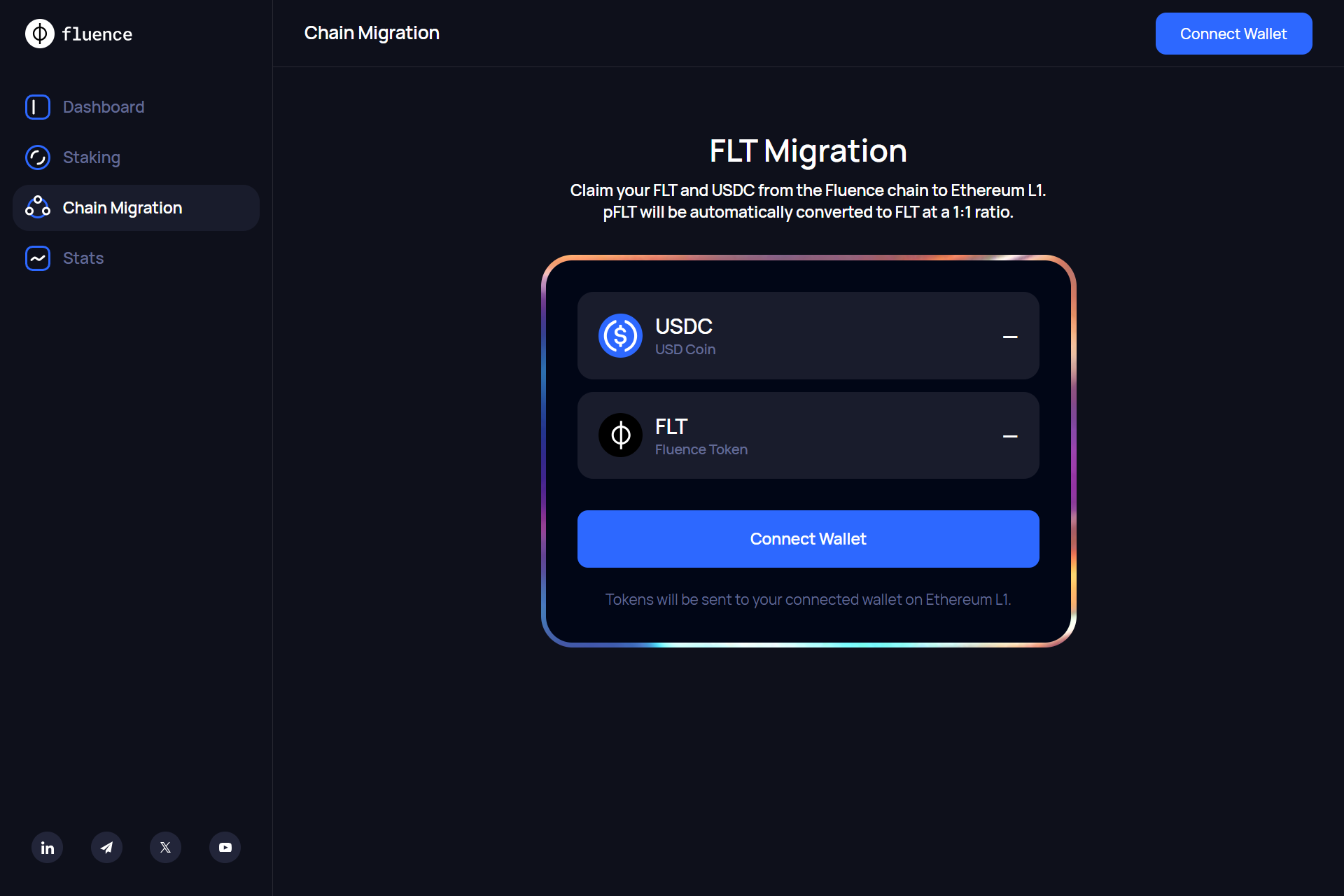
Here’s the important bit, there is one action required from you. While the migration happened automatically, claiming your migrated funds and staking them is something only you can do.
The Migration Tool is live, the interface is waiting, and the process is designed to be straightforward.
After claiming, you can immediately put your FLT to work by staking. In the Fluence network, stakers actively participate in the economics of decentralized compute. You’re not just holding a token; you’re fueling the machine.
One more thing worth highlighting. The claim window stays open until 1 April 2027. That gives you almost a full year. Just a friendly nudge, unclaimed assets don’t earn staking rewards. Every day you wait is a day you’re leaving yield on the table.
Ready to claim your migrated assets? Visit the official Migration Tool to claim your FLT and USDC, then stake directly from the same interface.