Donald Trump considers giving Americans ownership shares in AI companies
The administration is exploring federal equity stakes in trillion-dollar AI firms, with profits potentially flowing back to US households.
Share
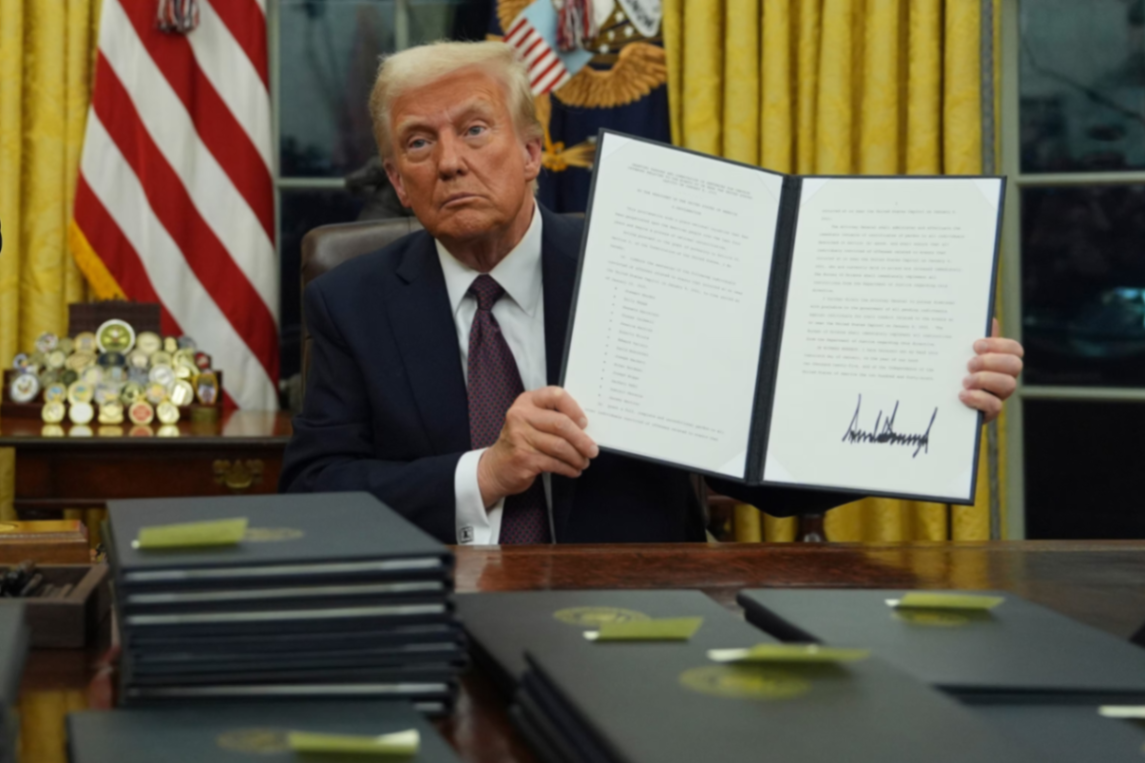
Add us on Google by Editorial Team Jun. 7, 2026President Donald Trump announced on June 5 that his administration is actively considering a plan for the federal government to acquire equity stakes in major artificial intelligence companies, with the goal of giving American citizens a direct financial share in the AI boom.
Trump made the remarks aboard Air Force One, describing the initiative as a partnership between the government and the American people. He framed it as a way to ensure ordinary households benefit from what he called trillion-dollar companies, rather than watching those gains concentrate among a small circle of tech investors and venture capitalists.
What the plan looks like so far
The proposal is still in its preliminary stages, with no formal policy announced. But the broad strokes are coming into focus.
Trump indicated he plans to meet with executives from leading AI firms, including OpenAI, as early as the week of June 12. The discussions would center on how the government might acquire equity positions in these companies, potentially through voluntary share transfers.
AdvertisementReturns from those stakes could then be distributed to American households as dividends or other financial benefits.
This isn’t the administration’s first foray into direct equity investments. The Trump administration previously acquired a 10% equity stake in chipmaker Intel, a deal that was described as delivering direct financial benefits to taxpayers. That transaction serves as the template for this broader AI initiative.
Companies mentioned in connection with the proposal include OpenAI, Anthropic, and SpaceX, all of which are positioned for potential public offerings in the current market environment.
A bipartisan idea with unusual bedfellows
OpenAI CEO Sam Altman first pitched similar ideas to Trump in early 2025, advocating for profit-sharing mechanisms that would distribute AI-generated wealth more broadly. Senator Bernie Sanders has also championed expansive profit-sharing initiatives tied to transformative technologies.
The proposal also represents a significant departure from traditional US government policy. Washington has historically avoided taking direct equity positions in private companies, with notable exceptions during crisis periods like the 2008 bank bailouts and the 2009 GM rescue.
What this means for investors
For companies like OpenAI, Anthropic, and SpaceX specifically, government investment ahead of potential IPOs could reshape how those offerings are priced and received.
That said, the risks are substantial. Government ownership in private companies creates conflicts of interest in regulation, antitrust enforcement, and procurement decisions. If the federal government owns shares in OpenAI, how does it objectively evaluate OpenAI’s competitors for government contracts?
There’s also the question of execution. Voluntary share transfers from trillion-dollar companies require valuation agreements, governance structures, and legal frameworks that don’t currently exist.
Disclosure: This article was edited by Editorial Team. For more information on how we create and review content, see our Editorial Policy.