 Limitless3 min read·1 hour ago
--
DeFi was built on a powerful idea: “Don’t trust people. Trust code.” For a time, this narrative defined the entire space. Smart contracts replaced intermediaries, and “trustless systems” became the foundation of decentralized finance.
But as DeFi evolved, a deeper reality emerged:
Trust didn’t disappear. It just moved.
The Myth of Trustless Systems
The belief that DeFi is completely trustless is appealing but incomplete.
In practice, no system is entirely free from trust. The real question isn’t whether trust exists, it’s
where it exists and how it’s managed.
Even in DeFi, users place trust in multiple layers of infrastructure.
Where Trust Actually Lives in DeFi
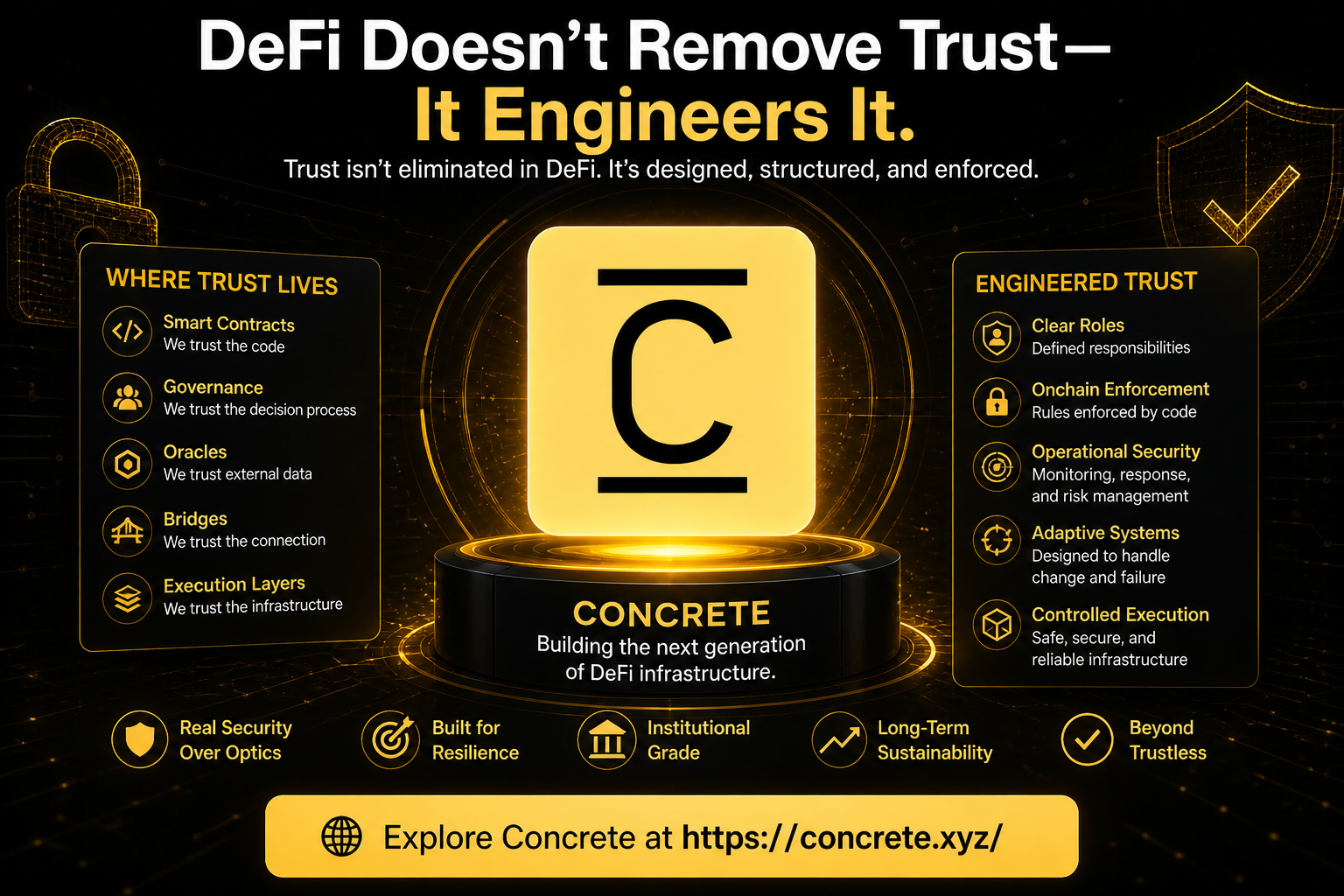
Behind every transaction, several components require trust:
- Smart contract design and assumptions
- Governance decisions and upgrades
- Oracles providing external data
- Bridges connecting different chains
- Execution layers handling transactions
These systems are essential but they also introduce dependencies. Trust is not removed; it is redistributed across the stack.
The Problem With “Decentralization Theatre
Not all decentralization is equal.
Some systems appear decentralized but lack real resilience. Examples include:
- Multisigs acting as centralized control points
- DAOs with low participation and weak governance
- Timelocks that delay actions but don’t prevent risk
- Systems unable to respond quickly during crises
This creates what can be called “decentralization theatre” where the appearance of decentralization does not guarantee security.
True DeFi security is not about optics. It’s about how systems behave under stress.
From Trustless to Engineered Trust
Instead of trying to eliminate trust, the next phase of DeFi focuses on engineering it.
Engineered trust means:
- Clearly defined roles and responsibilities
- Controlled permissions
- Enforced constraints through code
- Systems designed to handle failure and adapt
This is how mature financial systems operate and it is the direction DeFi is moving toward.
Why Operational Security Matters
Real-world systems require more than static code. They need:
- Continuous monitoring
- Rapid response mechanisms
- Human judgment in edge cases
- Layered security across components
Code can automate processes, but it cannot anticipate every scenario. Operational security ensures that systems remain functional even during unexpected conditions.
How Concrete Engineers Trust
Concrete vaults take a different approach to DeFi infrastructure.
Instead of hiding trust behind abstraction, Concrete makes it explicit and enforceable:
- Role-based architecture with clear responsibilities
- Onchain enforcement combined with off-chain intelligence
- Controlled execution environments
- Systems designed for both prevention and response
This creates a model of institutional DeFi, where trust is structured rather than assumed.
Concrete prioritizes resilience, ensuring that capital is managed within systems designed to operate reliably under changing market conditions.
The Bigger Shift in DeFi
DeFi is moving beyond the idea of “trustless systems” toward engineered trust.
The future will be defined by:
- Transparent and structured trust models
- Strong DeFi infrastructure
- Systems that perform under stress
- Security rooted in design, not assumptions
The next generation of protocols won’t be judged by how loudly they claim decentralization but by how effectively they manage risk and enforce trust.
Conclusion
Trust is not something DeFi can eliminate.
It is something DeFi must design.
The future of decentralized finance belongs to systems that make trust visible, structured, and reliable.
Because in the end, success won’t come from removing trust but from engineering it better than anyone else.
🚨 Explore Concrete at:
https://concrete.xyz/� 🚨