Bitcoin heads into holiday weekend exposed as ETF and CME flows go offline
Good Friday shuts CME futures and ETF activity, removing a key source of demand as large holders continue distributing and spot demand weakens.
By Sam Reynolds|Edited by Omkar Godbole Apr 3, 2026, 4:15 a.m. Make preferred on
What to know:
- Bitcoin is trading just above $66,600 heading into the Good Friday long weekend, as futures and ETF markets pause and liquidity thins.
- Despite multi-month highs in ETF and corporate bitcoin purchases, overall demand has turned negative as large holders shift to net selling and U.S. spot demand remains weak.
- With bitcoin’s price floor increasingly tied to expectations for Federal Reserve rate cuts, upcoming U.S. inflation data could further erode support if it undermines hopes for easier policy.
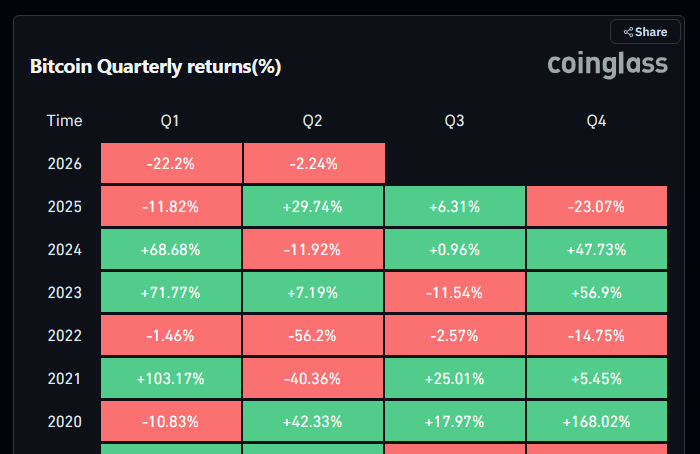
Bitcoin is trading choppily around $66,600, as the extended holiday weekend sidelines potential buyers and gives bears greater control over price action.
With CME futures and ETF flows set to pause over Good Friday, the market is heading into a liquidity gap just as its most reliable source of support is already weakening.
Bitcoin’s $65,000 support is starting to look fragile as the market’s most active buyers turn out to be its most macro-dependent. In a recent report, CryptoQuant data show 30-day apparent demand at about -63,000 BTC, even as ETF and corporate purchases climb to multi-month highs, while Singapore-based market maker Enflux told CoinDesk in a note that the price floor is “partly underwritten by rate-cut expectations.”
ETF purchases rose to roughly 50,000 BTC over the past 30 days, the highest since October 2025, while Strategy accumulated about 44,000 BTC over the same period. Yet overall demand remained negative, with selling from other participants overwhelming those inflows.
The pressure is most visible among large holders, CryptoQuant wrote in a recent report. Wallets holding 1,000 to 10,000 BTC have flipped to net distribution, with their one-year balance change dropping to about negative 188,000 BTC from a positive 200,000 BTC at the 2024 cycle peak. Mid-sized holders have also slowed accumulation sharply, while the Coinbase Premium has remained negative, signaling weak U.S. spot demand.
The result is a market where rising institutional activity does not translate into stronger price support. As more capital shifts toward ETF wrappers and regulated futures markets, bitcoin is increasingly priced through macro-sensitive positioning such as hedging and allocation shifts rather than broad-based spot accumulation.
That positioning is now being tested by inflation data, Enflux wrote. The ISM prices-paid index jumped to 78.3 in March, its highest since June 2022, undermining expectations for near-term rate cuts. Enflux said the repricing has already begun to show up in flows, with $296 million in net ETF outflows during the week of March 24 and muted inflows in early April.
The long weekend removes a key stabilizer. With CME closed and ETF creation and redemption paused, the institutional bid that has increasingly anchored bitcoin’s price will be largely absent, leaving trading to spot markets where selling pressure has been most persistent.
CryptoQuant said any relief rally could face resistance between roughly $71,500 and $81,200, levels that have capped prior rebounds in the current bear-market structure.
The broader test comes with U.S. inflation data on April 9. If March core PCE exceeds February’s 3.1%, rate-cut expectations could fade further, strengthening bearish case in bitcoin.
Bitcoin NewsMore For You
Encryption Supremacy: Zcash and Privacy in the Age of Scale
By CoinDesk ResearchMar 31, 2026 Commissioned byGenZcash
Most crypto privacy models weaken as blockchain data grows. Encryption-based models like Zcash strengthen. CoinDesk Research maps the five privacy approaches and examines the widening gap.
Why it matters:
As blockchain adoption scales, the metadata available to machine learning models scales with it. Obfuscation-based privacy approaches are structurally degrading as a result. This report provides a comprehensive comparison of all five major crypto privacy architectures and a framework for evaluating which models remain durable as AI capabilities improve.
View Full ReportMore For You
Here’s why bitcoin’s drop below $68,000 raises the risk of a crash under $60,000
By Omkar Godbole|Edited by Stephen Alpher10 hours ago
The negative gamma zone below $68,000 can trigger a self-reinforcing sell-off, leading to an ever larger slump.
What to know:
- Bitcoin has slipped about 2% to $67,000 amid renewed geopolitical tensions, but options positioning suggests the market’s structure is unusually fragile.
- Heavy demand for downside protection in Deribit-listed put options between $68,000 and the mid-$50,000s has created a “negative gamma” zone that can force dealers to sell more bitcoin as...

Todd Blanche, author of DOJ crypto enforcement memo, is now interim AG
4 hours ago
Crypto market structure bill release pushed back as industries view revised stablecoin yield compromise this week
6 hours ago
Here’s why bitcoin’s drop below $68,000 raises the risk of a crash under $60,000
10 hours ago
CFTC sues Illinois, Arizona, Connecticut over states' sports prediction market efforts
12 hours ago
Coinbase wins initial bank regulator nod for trust charter, boosting custody push
12 hours ago
Elon Musk's X to deploy scam kill switch by auto-locking first-time crypto mentioners
13 hours agoTop Stories
Bitcoin trims big loss, stocks erase 2% decline, as Iran signals cooperation on key shipping route
13 hours ago
How a Solana feature designed for convenience let attackers drain more than $270 million from Drift
13 hours ago
North Koreans hackers likely behind $286 million Drift Protocol exploit: Elliptic
14 hours ago
The 'time pain' trap: why bitcoin’s bear market might need a few more months of ‘boring’ to hit a true floor
15 hours ago
Coinbase’s AI payments system joins Linux Foundation, gathers support from Google, Stripe, AWS and others
16 hours ago