Architecting Scalable RWA Platforms: Integrating AI, Blockchain, and Compliance Frameworks
 Vygha3 min read·Just now
--
Real-world asset (RWA) tokenization has quietly moved from a niche experiment into a serious infrastructure challenge. As institutional interest grows from tokenized treasury bonds to private credit and real estate the question is no longer whether to build these platforms, but how to build them in a way that holds up under regulatory scrutiny, market stress, and operational scale.
Getting that architecture right is harder than most teams anticipate.
The Three-Layer Problem
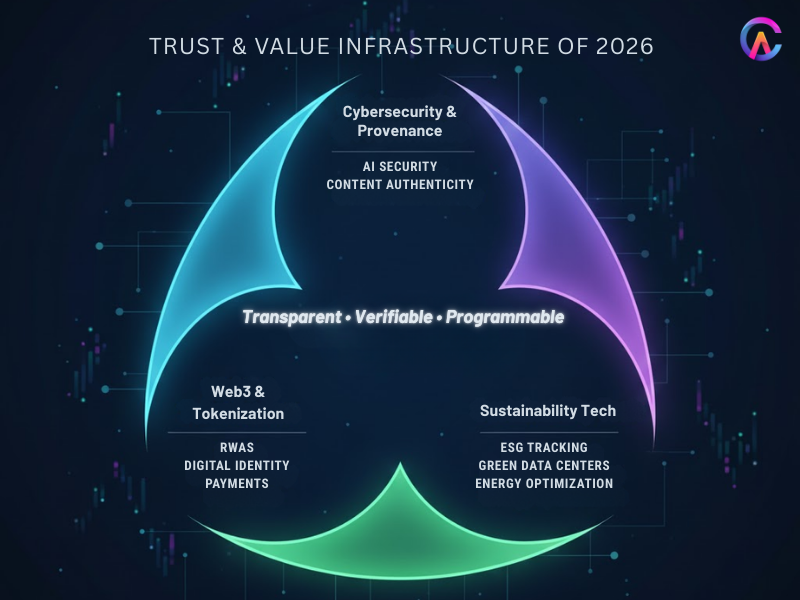
Scalable RWA platforms aren’t a single system — they’re the intersection of three distinct disciplines that rarely speak the same language.
Blockchain infrastructure handles settlement finality, token standards, and on-chain transparency. But chains differ significantly in their throughput, privacy capabilities, and smart contract maturity. A platform built for tokenized real estate on a public chain has fundamentally different trade-offs than one designed for private credit on a permissioned ledger.
AI and data pipelines power the valuation models, risk scoring engines, and fraud detection layers that make dynamic asset management possible. The challenge here is data integrity feeding clean, auditable inputs into models that regulators may eventually ask you to explain.
Compliance frameworks sit across both layers and are often treated as an afterthought. KYC/AML workflows, investor accreditation checks, jurisdiction-specific transfer restrictions, and ongoing reporting obligations need to be embedded at the protocol level, not bolted on after launch.
The platforms that fail typically treat these as sequential phases. The ones that scale treat them as concurrent design constraints.
Where Architecture Decisions Get Expensive
A few specific decisions tend to cause the most friction down the road:
Token standard selection locks in transfer logic, composability, and upgrade paths. ERC-3643 and ERC-1400 have compliance hooks built in; choosing a generic ERC-20 wrapper and trying to layer restrictions on top creates technical debt that compounds quickly.
Oracle design determines how off-chain asset values reach the chain reliably. A single-source oracle is a liability. Multi-source aggregation with circuit breakers and dispute resolution mechanisms is more complex to build but far more defensible to auditors and counterparties alike.
Permissioning architecture needs to handle investor tiering, transfer whitelists, and jurisdiction rules without creating a centralization bottleneck. Many teams underestimate how much governance overhead poorly designed permission systems generate at scale.
Teams working through these trade-offs often find it useful to reference structured frameworks before committing to an approach this resource on RWA platform development covers the key technical and compliance considerations in more detail.
The Compliance Integration Imperative
Regulators in the EU, UAE, and increasingly the US are moving toward clearer tokenization frameworks. That’s good news for the industry, but it raises the bar for documentation, auditability, and jurisdictional portability.
Platforms that embed compliance as infrastructure not as a legal review stage at the end are the ones that can respond to regulatory updates without re-architecting core systems. That means smart contract upgrade patterns, modular KYC providers, and audit trails that regulators can actually read.
The technical complexity of RWA tokenization is real. But the teams building durable platforms are the ones who recognize that blockchain, AI, and compliance aren’t three separate workstreams they’re one integrated design problem.
Getting the foundation right matters more than moving fast. The RWA infrastructure built today will be stress-tested by the market cycles and regulatory environments of the next decade.