5 Signs You’re Trading Against Smart Money (And How to Stop)
 Quantum Algo4 min read·Just now
--
Most retail traders lose because they’re on the wrong side of institutional order flow. Here are the five patterns that prove it — and what to do instead.
You’ve been there. The setup looked perfect. RSI was oversold, support was holding, the candle pattern screamed “buy.” You entered, and within minutes, price sliced through your stop loss like it wasn’t there — then immediately reversed and ran exactly where you expected.
That wasn’t bad luck. That was smart money using your stop loss as liquidity to fill their own orders.
Here are five signs it’s happening to you — and how to flip to the right side.
1. You buy at support and sell at resistance
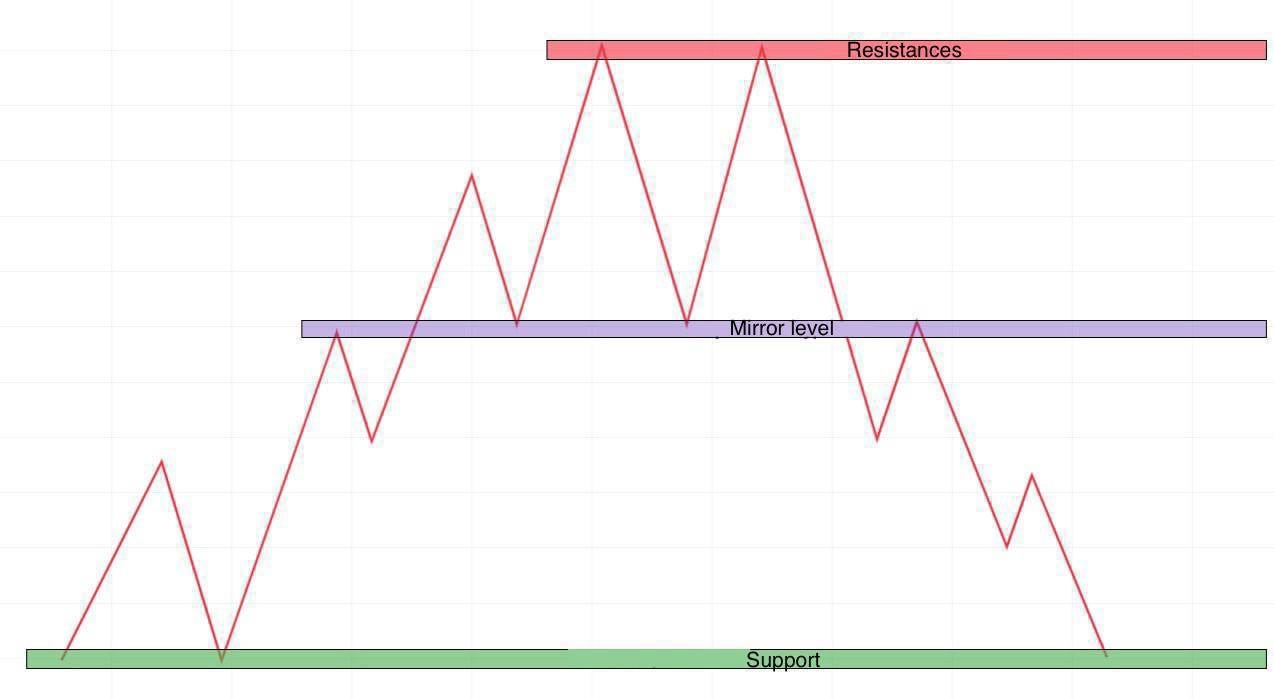
This is the single most common retail mistake. When everyone sees the same support level, institutions see a pool of stop losses sitting just below it. They push price through that level — triggering your stop and thousands of others — then buy at the lower price you just sold at.
This is called a liquidity sweep, and it’s the bread and butter of institutional trading. If you’ve ever been “stopped out by one tick,” you’ve experienced it firsthand.
The fix: Wait for the sweep to happen before you enter. Let price take out the obvious level, then look for rejection. That rejection is your real entry.
2. Your indicators repaint
You find a signal on your chart that perfectly marks the bottom. You scroll forward — it works every time. So you buy the next signal live and it fails immediately.
When you scroll back, the signal has moved.
That indicator repaints. It retroactively changes its signals to look perfect on historical data while being useless in real-time. Most retail traders don’t even know their tools are lying to them.
The fix: Test any indicator using TradingView Replay mode. If the signal moves or disappears after the candle closes, it repaints. Walk away.
3. You trade one timeframe
Entering a 15-minute long while the 4-hour chart is in a downtrend is like swimming against the current. You might catch a small move, but the structural flow is against you.
Institutions operate across multiple timeframes. They build positions on the daily, execute on the 1-hour, and use the 5-minute for precision entries. If you’re only looking at one chart, you’re seeing 20% of the picture.
The fix: Always establish your directional bias on a higher timeframe first. The multi-timeframe analysis approach is non-negotiable for consistent results.
4. You don’t know where the order blocks are
An order block is the last candle before a strong institutional move. It marks where smart money placed their orders — and where they’ll defend their position if price returns.
If you can’t identify order blocks on your chart, you’re trading blind. You’re entering at random levels while institutions are entering at precise zones backed by millions in capital.
The fix: Learn to spot order blocks manually, or use a tool that detects them automatically. The key is not just finding them, but grading them by probability — not all order blocks are worth trading.
5. You ignore Fair Value Gaps
A Fair Value Gap (FVG) is a three-candle price imbalance that occurs when institutional orders push price so aggressively that normal two-sided trading can’t fill the space. These gaps act as magnets — price almost always returns to fill them.
If you’re entering trades without checking for unfilled FVGs above or below your entry, you’re ignoring one of the most reliable signals in all of technical analysis.
The fix: Before every trade, check for unfilled FVGs on your timeframe. If there’s a gap between your entry and a key level, price is likely to fill it before continuing. Use that knowledge to refine your entries and avoid getting caught in the retrace.
The common thread
All five mistakes share one root cause: trading with retail tools and retail thinking in a market dominated by institutional capital.
Smart Money Concepts exist because institutional traders leave footprints. Order blocks, FVGs, liquidity sweeps, market structure shifts — these patterns repeat because the mechanics behind them are structural, not random.
You don’t need to predict the market. You need to read what smart money already did and position yourself accordingly.
Where to start
If this resonated, here are three free resources to go deeper:
→ Free 80-lesson SMC Academy — Covers everything from scratch. No signup required.
→ Interactive Order Flow Guide — Step-by-step workflow for reading institutional activity on TradingView.
→ Public Trade Ideas on TradingView — Every trade published with timestamps. Wins and losses. No cherry-picking.
Trading involves substantial risk of loss. Nothing in this article constitutes financial advice.
Tags: Smart Money Concepts, TradingView, Order Blocks, Fair Value Gaps, Trading Strategy, Institutional Order Flow, QuantumAlgo