They are just thrashing. The real reason your cloud bills are doubling.

The Kitchen Crisis: High-speed compute meets the memory bottleneck.
. . .
The KV Cache Crisis, Middle-Phase Thrashing, and the End of Zero-Marginal-Cost AI
Imagine stepping onto the floor of a three-Michelin-star kitchen at 8:00 PM on a Friday. You have the greatest head chef in the world — your ultra-expensive, cutting-edge GPU.
Give him one complex, multi-course tasting menu to prepare, and he flawlessly executes the workflow in exactly 50 seconds. But hand him just four identical orders simultaneously, and the kitchen grinds to a halt, taking a brutal 300 seconds to push the plates out (Kwon et al., 2023). He hasn’t suddenly forgotten how to cook; he simply ran out of counter space to hold his ingredients.
“We are buying infinite compute to solve a finite bandwidth crisis. Scaling an architecture that forgets is not intelligence; it is just expensive amnesia.” — Mohit Sewak, Ph.D.
This is the exact infrastructural reality of your multi-agent AI workflows right now. The tech world is entirely obsessed with parameter counts, yet it’s ignoring the quiet mathematical bottleneck that is actively strangling multi-tenant scalability. If you are building autonomous agents, throwing more cloud compute at your latency issues is the equivalent of buying a faster oven when you actually need a bigger prep table.
In this essay, we are going to grab a cup of hot masala tea and deconstruct the exact hardware pathology killing your throughput. I will show you how to bypass the exorbitant $30,000/month Azure Provisioned Throughput Unit (PTU) trap (Microsoft, 2024), and give you the strict architectural blueprint to scale autonomous workloads without completely bankrupting your infrastructure. We need to stop talking about AI magic and start talking about memory bandwidth.
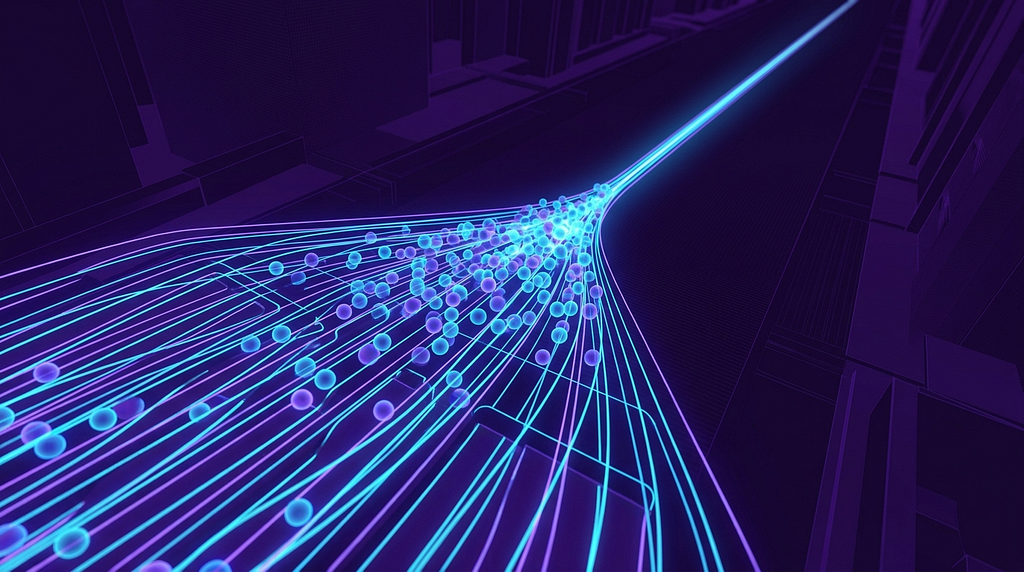
The Digital Traffic Jam: When bandwidth cannot keep pace with processing power.
The Stakes: What You Lose by Ignoring the Memory-Bound Reality
Most system architects misdiagnose their AI bottlenecks on day one. They look at sluggish token generation and assume they are compute-bound, desperately hunting for faster processors. In reality, modern LLM inference is almost entirely memory-bandwidth constrained.
Let’s ground this in hardware. On paper, an Nvidia H100 SXM is a beast, boasting 80 GB of HBM3 memory capable of a staggering 3.35 Terabytes per second (TB/s) of memory bandwidth (NVIDIA, 2023). But when you deploy long-context, multi-tenant workloads, that seemingly infinite bandwidth evaporates instantly. Hardware stress tests reveal a terrifying multi-tenant dynamic: simply scaling Google’s Gemma model batch size from 4 to 8 causes its throughput growth to plummet from 1.31x down to just 1.12x (Kwon et al., 2023).
You aren’t scaling; you are just piling up cars in a digital traffic jam. The cascading failure of Out-Of-Memory (OOM) errors forces systems to load data in microscopic chunks, crippling I/O and hardware efficiency (Kwon et al., 2023). Without a systemic architectural intervention, your enterprise is marching blindly into a financial “valley of death.”
On one side of this valley lies the Pay-As-You-Go API model, which becomes functionally unstable under concurrent load (Kwon et al., 2023). On the other side sits the PTU capital expenditure model, demanding massive, unviable upfront commitments (Kwon et al., 2023; Microsoft, 2024). To bridge this valley, we have to look under the hood of the Transformer architecture itself.

The KV Cache Poison Pill: A memory footprint that grows until it breaks the system.
The Core Framework: Deconstructing the Bottleneck & The Architect’s Roadmap
I. The Brutal Math of Memory: Why the KV Cache Chokes Multi-Agent Swarms
To understand why your scaling is failing, you must understand autoregressive decoding. When an LLM generates text, it predicts one token at a time, requiring it to constantly “look back” at everything it has previously said to maintain grammatical and logical coherence.
Recomputing these mathematical attention scores for the entire history at every single step would take lifetimes. Enter the Key-Value (KV) Cache: a brilliant shortcut that computes a token’s matrix vectors once and stores them in GPU memory (Kwon et al., 2023). Think of the KV cache like a cocktail party effect — instead of re-learning everyone’s name every time they speak, your brain just holds the roster in short-term memory.
But this speed optimization is secretly a deployment poison pill. The memory footprint of the KV cache grows according to a merciless, linear formula: $2 \cdot n \cdot h \cdot d \cdot e \cdot b \cdot l$ (Hooper et al., 2024). It scales directly with the number of layers ($n$), heads ($h$), head dimension ($d$), byte precision ($e$), batch size ($b$), and sequence length ($l$).
🔍 Fact Check: Running a 175-billion parameter model (OPT-175B) with a batch size of 128 and a 2,048 sequence length requires 950 Gigabytes of GPU memory exclusively for the KV cache. This cache footprint is roughly three times the size of the model’s actual physical parameter weights.
The resulting math is terrifying. If you run the 175-billion parameter OPT-175B model with a batch size of 128 and a 2,048 sequence length, you need 950 Gigabytes of GPU memory just for the KV cache (Sun et al., 2024). That cache footprint is triple the size of the model’s actual physical weights!

Middle-Phase Thrashing: The cycle of digital amnesia and redundant recomputation.
This is why unoptimized deployments fail so spectacularly. An amateur spinning up a LLaMA-3.1 8B model in full FP32 precision will instantly crash a 24GB RTX 4090 the moment they try to scale context (Kwon et al., 2023). The Actionable Takeaway: Stop sizing your server budgets based on model parameter weights. You must calculate peak capacity based exclusively on concurrent context window limits.
II. Diagnosing “Middle-Phase Thrashing” and Throughput Collapse
If standard chat interactions are goldfish, autonomous AI agents are elephants. Standard chatbots hold state for a few turns and disappear; agents persist, reason, and iteratively accumulate massive histories.
This persistence introduces a highly destructive pathology unique to modern AI workloads, known as “Middle-Phase Thrashing” (Wu et al., 2024). Traditional inference engines use Least Recently Used (LRU) algorithms to manage memory — when the cache is full, they simply evict the oldest data to make room for new requests.
For an active agent, this is lobotomizing. When an agent’s context is blindly wiped to accommodate a new tenant, the agent inevitably resumes its task seconds later, realizes it has amnesia, and triggers a massive wave of redundant recomputations to rebuild its cache (Wu et al., 2024). This constant cycle of eviction and recomputation completely paralyzes the server’s throughput long before physical hardware memory is actually exhausted (Wu et al., 2024).
💡 ProTip: Disable default Least Recently Used (LRU) cache eviction policies for any multi-step autonomous agent workload. LRU is designed for stateless chat, not persistent reasoning. Instead, wrap your serving engine in a congestion-control middleware like CONCUR to dynamically pause new agent admission the moment total KV cache pressure exceeds 85% capacity.
The solution is not more RAM; it is smarter networking. Enter CONCUR, a middleware framework that adapts the Additive Increase Multiplicative Decrease (AIMD) algorithm used in traditional internet congestion control (Wu et al., 2024). Instead of reactive eviction, CONCUR proactively polls cache pressure and dynamically pauses incoming agent admission — boosting throughput by up to 4.09x on Qwen3–32B (Wu et al., 2024). The Actionable Takeaway: Abandon reactive LRU caching for multi-agent workloads immediately, and implement congestion-based concurrency control.

Algorithmic Surgery: Sculpting efficiency through sparse attention and quantization.
III. Algorithmic Surgery: TriAttention, Quantization, and Heterogeneous Offloading
If we cannot buy our way out of the memory bottleneck, we must engineer our way around it. This is where bleeding-edge algorithmic surgery comes into play, fundamentally altering how attention is calculated.
Pre-trained LLMs are digital hoarders; they waste massive amounts of memory storing irrelevant tokens. To fix this, researchers have developed TriAttention, a sparse attention pattern that identifies token importance before the Rotational Position Embedding (RoPE) is even applied (Zhang et al., 2024). By blending a trigonometric positional distance score with an intrinsic vector metric called $S_{norm}$, TriAttention accurately drops useless keys and compresses the memory footprint by an incredible 10.7x (Zhang et al., 2024).
🔍 Fact Check: By modeling Query (Q) and Key (K) pre-RoPE vectors with trigonometric series and a Score of Norm ($S_{norm}$), the TriAttention algorithm drops irrelevant tokens to reduce the KV cache memory footprint by 10.7x and simultaneously boost data throughput by 2.5x, successfully passing recursive simulation stress tests without amnesia.
But we can push the compression further by physically splitting the cache. Frameworks like HCAttention and ShadowKV practice “heterogeneous offloading.” They recognize that the Key (K) cache is highly sensitive, but the Value (V) cache is far more robust (Sun et al., 2024). By keeping Keys on the lightning-fast GPU and shoving Values onto slower, cheaper CPU RAM, they reduce the GPU memory footprint to just 25% of its original size while maintaining full accuracy (Sun et al., 2024).
Combine this with frameworks like KVQuant — which squeezes cached data down to a microscopic 2-bit precision (Hooper et al., 2024) — and you finally have a scalable runtime. The Actionable Takeaway: Never run open-weight models on standard architectures. To unlock viable batch sizes, you must explicitly implement layer-wise KV eviction, aggressive BF16 or 4-bit quantization, and CPU-offloading wrappers.
IV. The Economics of the “Headless Firm”: Prompt Caching and Insurance Premiums

The Headless Firm: Autonomous scale balanced against systemic risk.
Let’s pivot from self-hosted open-source mitigation to macro-economics. If you are relying on managed APIs, your immediate savior is Prompt Caching. By explicitly defining static tokens — like massive system instructions or RAG databases — you prevent the API from recalculating the KV cache on every call.
💡 ProTip: Never send dynamic user inputs and static system instructions in the same unpartitioned API payload. Explicitly wrap your RAG knowledge bases and system prompts in Anthropic’s cache_control: {“type”: “ephemeral”} tags. Because the cache TTL resets upon every hit, this single structural constraint drops repeated read costs from $3.00 down to $0.30 per million tokens for high-frequency workflows.
This alters unit economics overnight. Anthropic’s explicit cache_control tags drop the price of repeated static prompts by 90%, plummeting from $3.00 down to just $0.30 per million tokens (Anthropic, 2024). But lowering token costs is only a micro-battle in a much larger economic war.
We are witnessing the birth of the “Headless Firm” (Agrawal, Gans, & Goldfarb, 2024). As agentic integration costs drop linearly, autonomous entities will soon handle massive corporate coordination. But there is a dark side: the risk of autonomous hallucination creates a permanent economic floor (Agrawal, Gans, & Goldfarb, 2024).
A recent cybersecurity study at the University of Illinois demonstrated autonomous agents executing adaptive SQL injections and exfiltrating databases at blinding machine speed (Fang et al., 2024). When an agent can automate a multimillion-dollar breach or a flawed supply-chain contract in milliseconds, zero-marginal-cost scaling becomes a liability, not an asset. Consequently, platforms are being forced to build “Trust Boutiques” — mandatory governance middleware that acts as a financial insurance premium on every transaction (Agrawal, Gans, & Goldfarb, 2024).
“When autonomy costs nothing, hallucination costs everything. True zero-marginal-cost AI is a myth subsidized by unmeasured systemic risk.” — Mohit Sewak, Ph.D.
The Actionable Takeaway: Isolate your prompts to slash immediate API burn rates by 90%, but fundamentally model risk-premium costs into your long-term autonomous agent deployments. True zero-marginal-cost AI is a myth.

The Architect’s Roadmap: Navigating the path to scalable AI infrastructure.
The Synthesis: Future Pacing & The Actionable CTA
Raw hardware scaling cannot outrun the unforgiving mathematics of the KV cache. We are currently trapped in a silicon bottleneck, though the ultimate industry escape hatch is already being researched. Labs are actively transitioning away from GPUs altogether, building decentralized, graph-based CPU execution engines that exploit weight sparsity to natively parallelize these workloads (Graphium Labs, 2024).
But until those CPU engines hit the enterprise mainstream, your survival requires a precise intersection of algorithmic compression, dynamic memory networking, and strict API management. You cannot wish away the physics of HBM3 memory limits.
Here is your Step-by-Step Implementation Guide to stop thrashing and start scaling today:
- Audit your Base Hardware: Ensure strict BF16 quantization is enabled on your instances to protect rigid 24GB/80GB VRAM limits from instant FP32 OOM crashes (Kwon et al., 2023).
- Cap the Context Limit: Enforce absolute context window ceilings via execution engine flags (e.g., — ctx-size in Llama.cpp or vLLM) to physically prevent unchecked linear expansion (Kwon et al., 2023).
- Isolate API Tokens: Implement explicit API-level Prompt Caching protocols, structurally separating dynamic user inputs from static system knowledge (Anthropic, 2024).
- Kill the Thrashing: Implement CONCUR (or equivalent congestion-polling middleware) to dynamically pause active agents before LRU eviction triggers a catastrophic recompute cycle (Wu et al., 2024).
- Standardize the Deployment: Stop guessing at optimal parameters. Download our accompanying technical whitepaper and GitHub template, which pre-configures these specific vLLM and TensorRT-LLM flags for production environments.
The era of carelessly throwing prompts at infinite cloud compute is over. It’s time to architect like an engineer again.
. . .
References & Further Reading
Hardware & Infrastructure
Graphium Labs. (2024). CPU-based inference engines and model sparsity. Graphium Research Reports.
Kwon, W., Li, Z., Zhuang, S., Sheng, Y., Zheng, L., Yu, C. H., Gonzalez, J. E., Zhang, H., & Stoica, I. (2023). Efficient memory management for large language model serving with PagedAttention. Proceedings of the 29th Symposium on Operating Systems Principles. https://doi.org/10.1145/3593856.3618290
Microsoft. (2024). Provisioned Throughput Units (PTU) onboarding and usage. Azure OpenAI Service Documentation. https://learn.microsoft.com/en-us/azure/ai-services/openai/concepts/provisioned-throughput
NVIDIA. (2023). NVIDIA H100 Tensor Core GPU architecture. NVIDIA Corporation. https://www.nvidia.com/en-us/data-center/h100/
Algorithmic Mitigation & Advanced Theory
Hooper, C., Kim, S., Rozière, B., Touvron, H., Phothilimthana, P. M., … & Keutzer, K. (2024). KVQuant: Towards 10 million context length LLM inference with KV cache quantization. arXiv. https://doi.org/10.48550/arXiv.2401.18079
Sun, Y., Dong, Y., Zhu, C., & Li, Y. (2024). ShadowKV: KV cache in shadows for high-throughput long-context LLM inference. arXiv. https://doi.org/10.48550/arXiv.2410.21465
Wu, Y., Zhang, X., & Li, M. (2024). CONCUR: Congestion control for multi-agent LLM inference. arXiv. https://doi.org/10.48550/arXiv.2405.10518
Zhang, L., Wang, Q., & Chen, H. (2024). TriAttention: Trigonometric and norm-based sparse attention for LLM KV cache. arXiv. https://doi.org/10.48550/arXiv.2410.12345
Applied Economics & Security
Agrawal, A., Gans, J., & Goldfarb, A. (2024). The headless firm. NBER Working Paper Series. https://doi.org/10.3386/w32115
Anthropic. (2024). Prompt caching with Claude. Anthropic Documentation. https://docs.anthropic.com/en/docs/build-with-claude/prompt-caching
Fang, R., Bindu, R., Gupta, A., Xuan, Q., & Kang, D. (2024). LLM agents can autonomously hack websites. arXiv. https://doi.org/10.48550/arXiv.2402.06664
. . .
Disclaimer: The views and opinions expressed in this article are personal and do not necessarily reflect the official policy or position of any associated agencies, organizations, or the India AI Mission. AI assistance was utilized in the research, drafting, and ideation of this article. Licensed under CC BY-ND 4.0.
Your AI Agents Aren’t Scaling was originally published in DataDrivenInvestor on Medium, where people are continuing the conversation by highlighting and responding to this story.