AI is handing marketers an enormous productivity gift — and most of them are about to waste it on content that sounds exactly like everyone else’s.
Based on Jessica Apotheker’s TED Talk
Every great productivity revolution in history followed the same script. A new tool arrives. It saves time. And instead of using that time to rest, think, or create, workers are expected to fill it with more output. More tasks, more volume, more everything.
Generative AI is following that script precisely — and marketing is ground zero.
In her TED Talk, Boston Consulting Group’s Jessica Apotheker walks through what she calls the next great productivity revolution for the marketing industry. The technology is real, the efficiency gains are real, and the promise is genuinely exciting. But she issues a warning that most discussions about AI in marketing completely ignore: the productivity is almost certainly going to make things worse before it makes them better.
Not because AI is bad. Because we don’t know which part of our brain to use it with.
“Consumers already feel chased by content online. Generative AI is about to make the volume explode.”
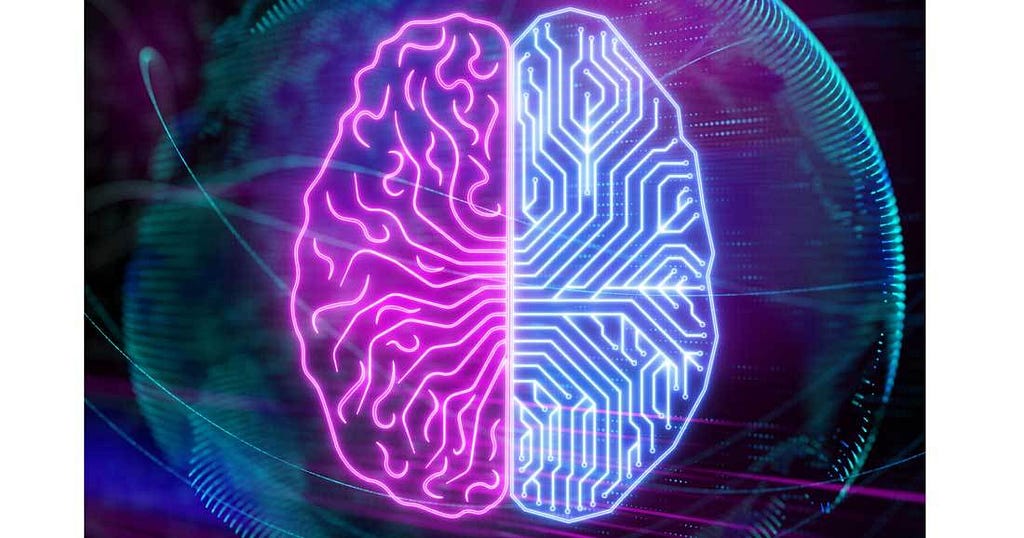
Here’s the core problem. Marketing teams will use AI to generate more — more emails, more ads, more posts, more campaigns. And because AI is trained on existing content, that output will tend to converge. It won’t diverge. It won’t push into new territory. It will find the center of gravity in all existing data and settle there.
BCG and Harvard tested this directly. When people leaned heavily on generative AI in ideation tasks, the collective divergence of ideas dropped by 40 percent. Not slightly. Not marginally. Forty percent less originality, at scale, across an entire industry.
Apotheker calls this the “grand equalization.” And it’s already beginning.
40%- drop in collective idea divergence when over-relying on AI
100%- tailored content AI can now produce per individual consumer
2×- the strategic paths marketers must now choose between
The Framework
Two Brains. One Choice.
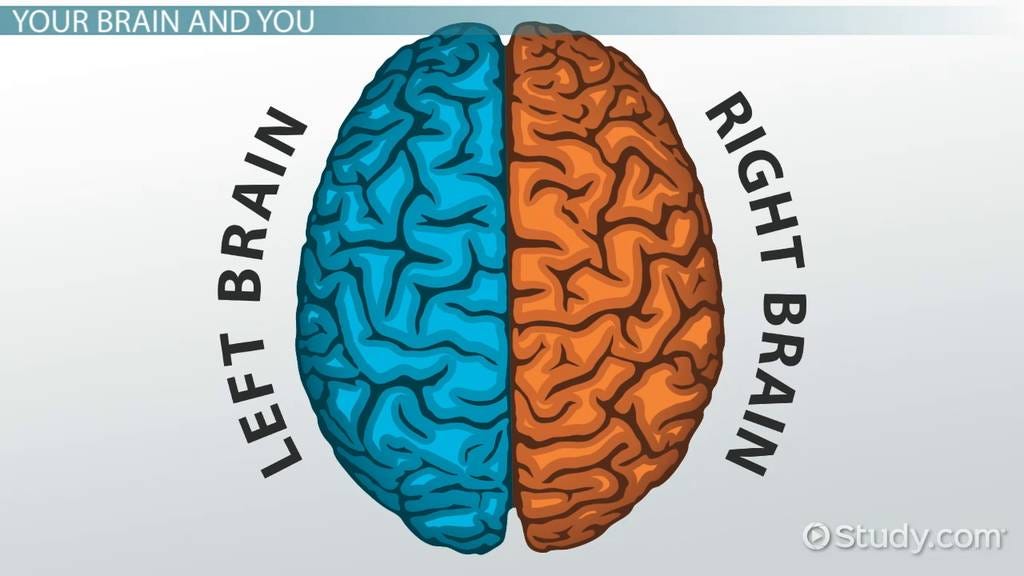
Apotheker’s central argument is elegant: the AI era doesn’t demand that every marketer do everything. It demands that every marketer commit to one of two very different directions.
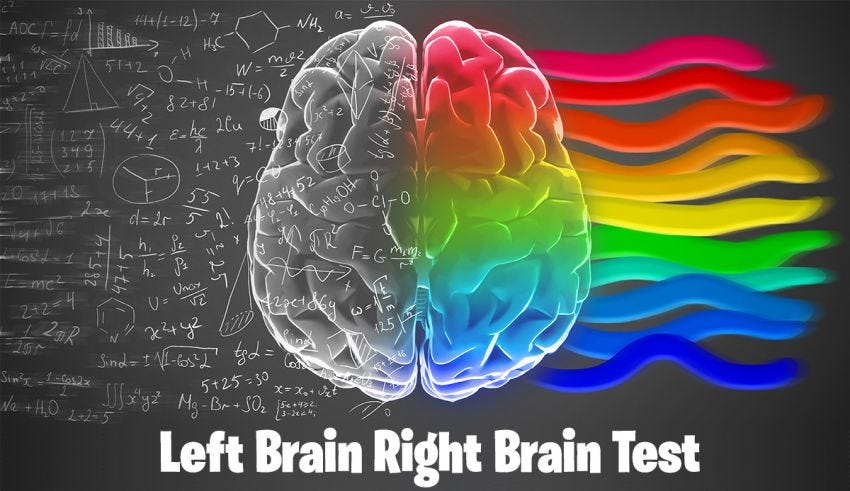
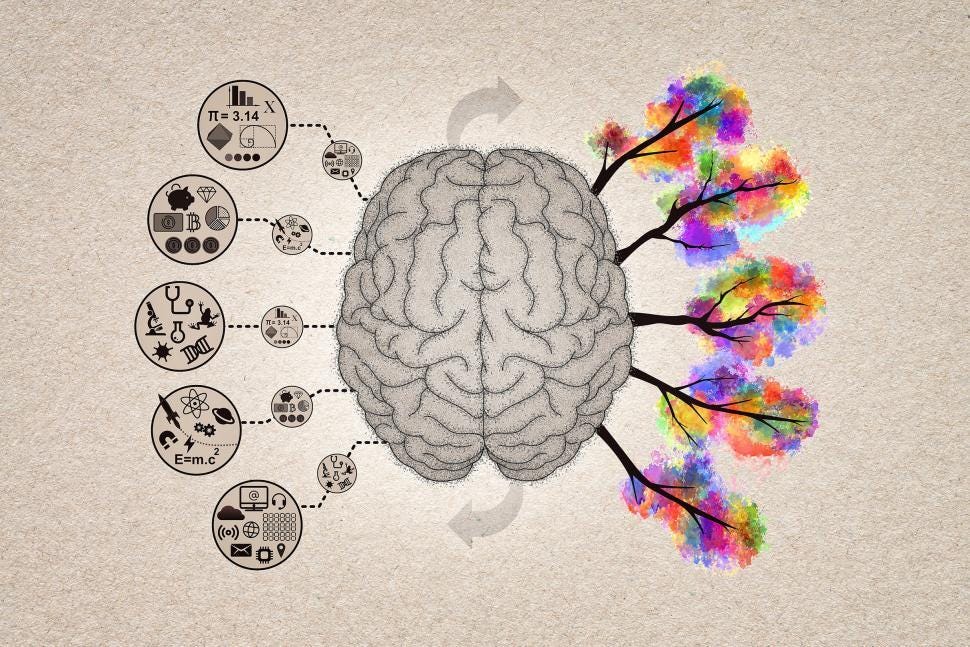
She calls them the left-AI brain and the right brain — and the organizations that try to do both halfway will lose to the ones that go all-in on one.
The Left-AI Brain
Data scientists and engineers building predictive tools — forecasting which products work, which audiences convert, which creative is performing and why.
The Right Brain
The “true artists” — the divergent thinkers who originate ideas humans haven’t seen before, protected from using AI to ideate so their creative output stays genuinely human.
These aren’t personality types. They’re organizational design decisions. And they require very different investments, very different hiring profiles, and very different relationships with AI itself.
The Left-AI Brain
The Predictive Advantage No One Is Building Fast Enough
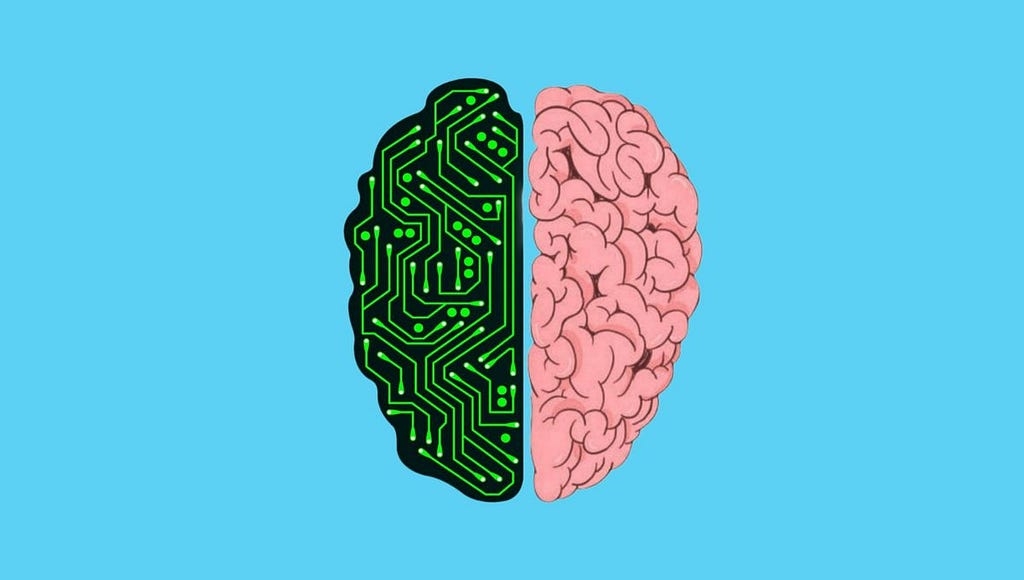
The left-AI brain is about predictive intelligence — using data science not just to analyze what happened, but to forecast what will. Which products will resonate with which consumers? Which channels will drive the highest return? Which creative combinations are already working in the market, and why?
Apotheker calls this the “virtuous feedback loop” — a state where the entire marketing organization can unpack execution insights in real time and act on them immediately, rather than waiting for monthly reports that are already stale by the time they land.
But here’s the trap. Most brands that try to build this capability make the same mistake: they train their models only on their own historical data. And that data is, by definition, a record of who they’ve already reached.
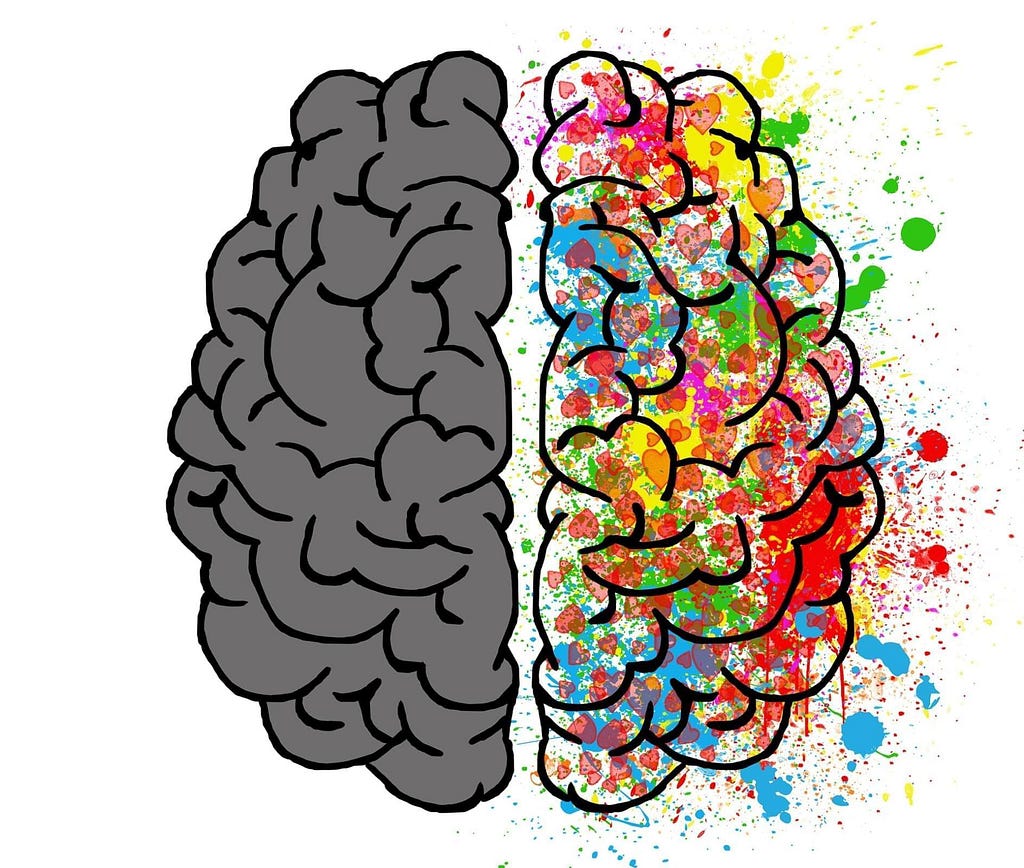
A brand that’s strong with millennials will find nothing in its own dataset to help it reach Gen Z. The data simply doesn’t exist internally. The AI will optimize for the audience it already knows — and the brand will slowly calcify into its current market position while new segments move on without it.
The answer isn’t better internal data. It’s external data partnerships — unconventional ones. A construction company trying to reach architects doesn’t look to other construction companies for insight. It looks to financial institutions, insurance companies, anyone who already has a relationship with that audience. Set up a federated model with those partners. Train the algorithms on new signal. Build the advantage from the outside in.
What this looks like in practice
Build a small team of marketing data scientists. Give them one mandate: predict outcomes the organization can’t currently see. Then ask: what data do we need that we don’t have — and who outside our industry has it?
· · ·
The Right Brain
Protecting the People Who Will Save Your Brand
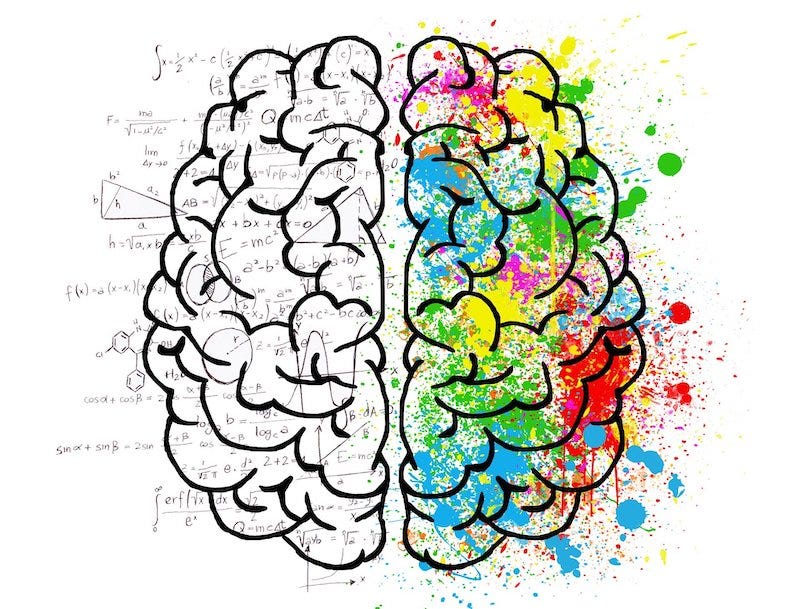
The right brain is harder to build, harder to protect, and far more likely to be accidentally destroyed by well-meaning efficiency initiatives.
Every organization has true artists — the people who see the brief differently, who push back on obvious solutions, who often “always disagree.” They’re not always easy to manage. They’re frequently the ones who slow things down in pursuit of something better. And in an AI-driven organization obsessed with speed and scale, they’re exactly the people most at risk of being told to just use the tool.
That would be a catastrophic mistake.
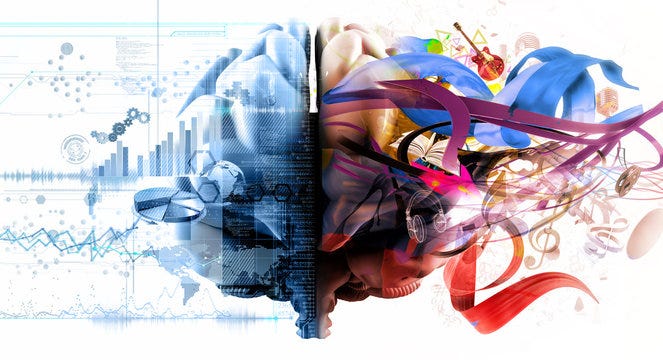
Apotheker is precise about this: creative innovators can and should use AI — for inspiration, for trend-spotting, for turning a great idea into a fast prototype. But they must be explicitly protected from using it to originate ideas. The moment AI becomes the source of the concept rather than the tool that executes it, the “human juices” stop flowing. And once that happens across an industry, everything starts sounding the same.
This isn’t sentiment. It’s competitive strategy. The brands that maintain genuine creative divergence in a world of AI-equalized content will own attention in a way that no algorithm can replicate — because they’ll be the only ones saying something that hasn’t been said a thousand times by a model trained on yesterday’s internet.
“The human brain must be the origin of the idea. AI can do everything after that.”
What this looks like in practice
Find the divergent thinkers in your organization — not the most agreeable ones, the most original ones. Create a protected creative process for them that explicitly limits AI to execution and prototyping, not ideation. Then get out of their way.
The Individual Question
Which Brain Are You?
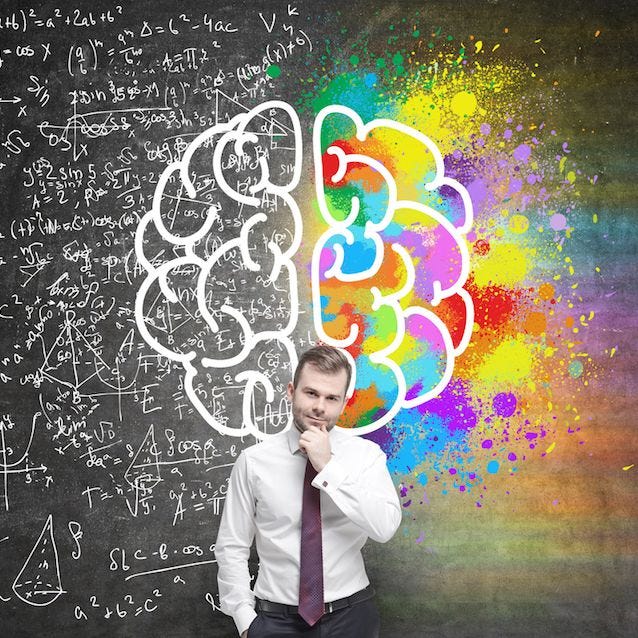
Apotheker ends with a challenge that’s personal, not organizational. Every marketer working today needs to answer one question honestly: am I naturally creative, or am I naturally analytical?
If you’re creative — lean into it harder than ever. The era of AI has not made human creativity less valuable. It has made it scarcer, and scarcity increases value. Double down on the skill that machines can accelerate but never replace.
If you’re analytical — the left-AI brain is your moment. Predictive AI competency is not a niche technical skill anymore. It is becoming the central engine of marketing performance. Invest in the data science training, build the partnerships, become the person who tells the rest of the organization not just what happened, but what’s going to happen next.
The worst move — for an individual and for an organization — is to try to be both without fully committing to either. The grand equalization won’t just flatten brand voices. It will flatten careers that don’t have a clear point of view about what they’re actually for.
AI is not the threat. Aimlessness is.
You Can’t Have Both Brains. Pick One. was originally published in Coinmonks on Medium, where people are continuing the conversation by highlighting and responding to this story.