Why the Future of Agriculture Depends on Verifiable Food Traceability
 Foodtraze3 min read·1 hour ago
--
Global agriculture has become more connected than ever before.
A single food product may pass through farms, processors, exporters, warehouses, distributors, and retailers across multiple countries before it finally reaches consumers. While this interconnected system has improved global food access, it has also introduced a serious challenge that the industry can no longer ignore: food supply chain fraud.
From fake origin labels and counterfeit certifications to manipulated shipment records and product substitutions, food fraud is becoming a growing risk for global agriculture. And as international buyers demand greater transparency, the industry is being forced to rethink how trust is built across supply chains.
This is where blockchain food traceability is starting to change the conversation.
The Problem With Traditional Food Supply Chains
Many agricultural supply chains still rely on paper records, fragmented databases, manual verification, and disconnected compliance systems.
That creates gaps where problems can easily occur:
- False origin claims
- Expired certifications
- Duplicate shipment records
- Cold-chain manipulation
- Unauthorized rerouting of products
- Data tampering during logistics movement
For exporters, even a small traceability issue can create major consequences. A single compliance failure can damage brand reputation, delay shipments, increase regulatory scrutiny, and weaken relationships with global buyers.
In today’s market, proving authenticity is becoming just as important as producing quality food.
Why Blockchain Matters in Food Traceability
Blockchain technology introduces something traditional systems struggle to provide: immutable trust.
Instead of storing information in isolated systems, blockchain creates a shared digital ledger where every transaction is permanently recorded, time-stamped, and verifiable.
Once information is added, it cannot be altered retroactively.
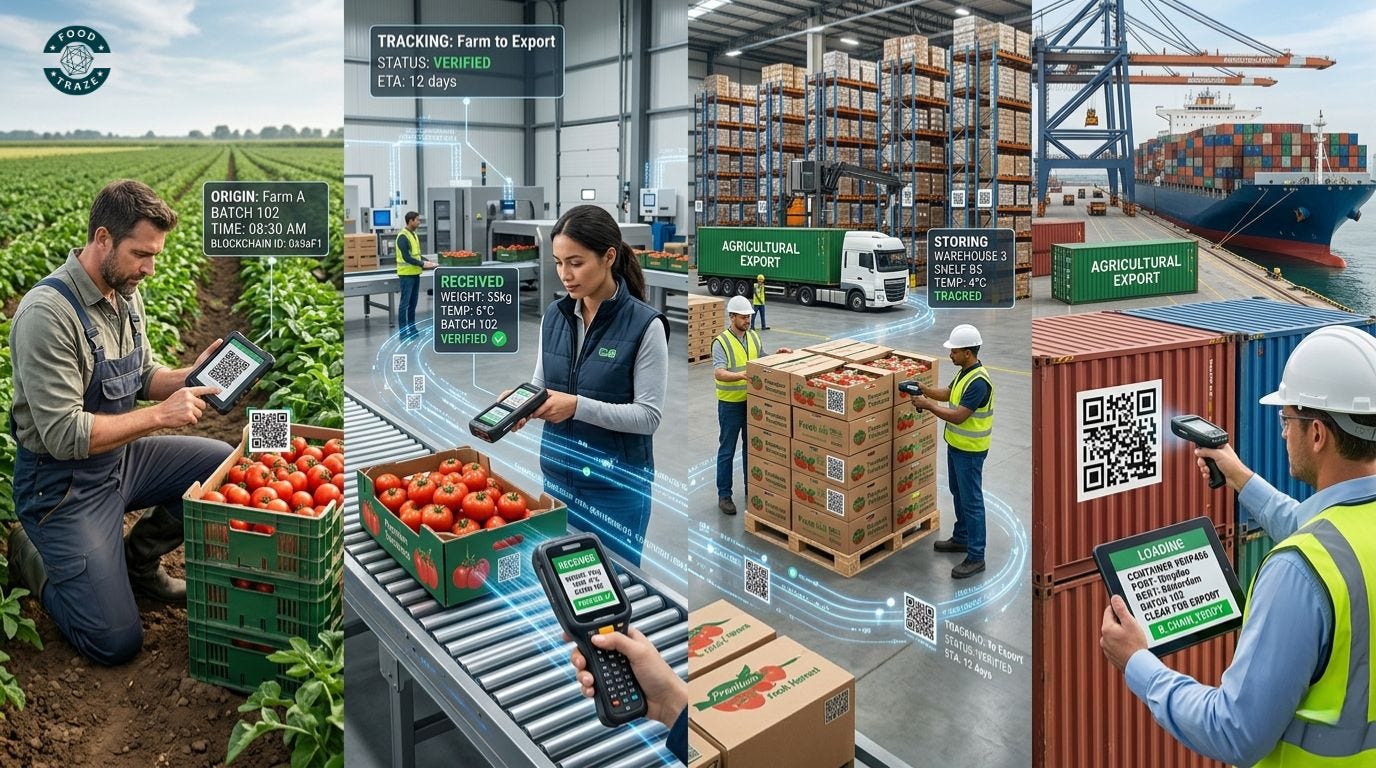
That means every stage of the food journey — from farm to export — becomes transparent and traceable.
For industries dealing with premium agriculture products, seafood exports, organic produce, and sustainable farming, this level of transparency is becoming increasingly valuable.
How FoodTraze Fits Into This Shift
This is where platforms like FoodTraze are helping modernize agricultural supply chains.
FoodTraze is a blockchain-based food traceability system designed to improve transparency, fraud prevention, and real-time verification across food ecosystems.
Instead of treating traceability as just documentation, FoodTraze transforms it into an active fraud prevention system.
The platform continuously validates supply chain data in real time by checking:
- Shipment authenticity
- Geographic location consistency
- Certificate validity
- Timestamp accuracy
- Logistics records
If suspicious activity is detected, the system can assign fraud scores based on risk severity, helping businesses identify anomalies much faster than traditional methods.
This moves traceability from passive recordkeeping to proactive risk management.
Real-Time Visibility Changes Everything
One of the biggest limitations in traditional food supply chains is response time.
When contamination, fraud, or compliance issues occur, identifying affected products can take days or even weeks.
Blockchain-enabled systems dramatically reduce this delay.
Platforms like FoodTraze can support automated workflows that:
- Trigger compliance alerts
- Notify stakeholders instantly
- Pause suspicious transactions
- Escalate investigations
- Improve recall efficiency
For industries handling fresh produce, dairy, seafood, and temperature-sensitive products, this speed becomes critical.
Export Agriculture Is Entering a New Era
Global buyers are no longer satisfied with basic documentation.
They increasingly expect:
- Verified sourcing data
- Transparent ESG practices
- Real-time shipment visibility
- Authentic sustainability certifications
- Accurate chain-of-custody records
As regulations continue tightening across international markets, exporters that cannot provide transparent and verifiable traceability may struggle to remain competitive.
This is why blockchain traceability is rapidly evolving from a “future technology” into operational infrastructure.
The Bigger Shift Behind Traceability
What’s happening in agriculture is part of a much larger transformation.
Consumers are becoming more conscious about:
- where food comes from
- how it is produced
- whether sustainability claims are genuine
At the same time, regulators and retailers are demanding greater accountability throughout the supply chain.
Trust is no longer built through marketing claims alone.
It is built through verifiable data.
Final Thoughts
The future of agriculture will not simply depend on producing quality food.
It will depend on proving its authenticity at every stage of the journey.
Blockchain food traceability platforms like FoodTraze are helping build this future by creating transparent, secure, and verifiable food ecosystems that strengthen trust between farmers, exporters, businesses, regulators, and consumers.
As food supply chains continue to grow more complex, traceability will become one of the most important foundations of global agriculture.
Because in the future of food, transparency will not be optional.
It will be expected.