Why Small-Cap Momentum Traders Keep Getting Wrecked (And What’s Actually Causing It)
--
You’ve seen it a hundred times.
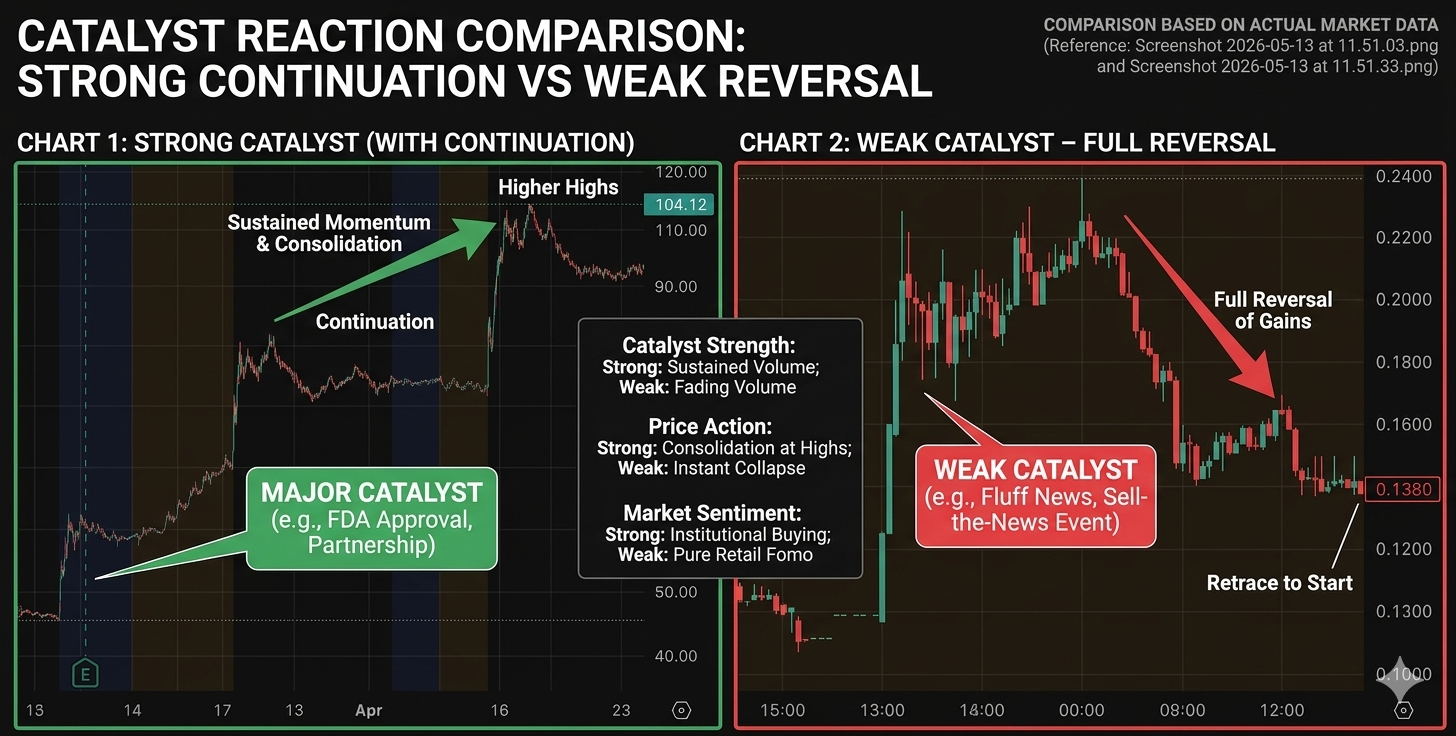
A stock gaps up 80% pre-market. You see the news. You read the headline. Looks clean — FDA approval, major partnership, some kind of surprise catalyst. You pull up the chart. Volume is massive. Float is tiny. Classic Gap and Go setup.
You get in.
The stock spikes for 90 seconds. Then it reverses. Hard. It doesn’t bounce. It just… dumps. And you’re holding the bag while someone else cashes out.
That’s not bad luck. That’s a system working exactly as designed — just not for you.
The Two Ways Retail Momentum Traders Get Wrecked
There are a hundred things that can go wrong in a trade. But for small-cap Nasdaq scalpers specifically — the Gap and Go crowd, the pre-market hunters — almost every loss traces back to one of two root causes.
1. You’re always late.
By the time the news hits your feed, the alert fires on your scanner, or someone posts about it in the Discord — the move is already half over. The traders who were early are now looking for an exit. That exit is you.
This isn’t a speed problem you can solve by refreshing faster. It’s a pipeline problem. Most retail alert tools weren’t built for sub-60-second catalyst detection. They were built for broad audiences — swing traders, investors, options players. The latency baked into those systems is acceptable for a 3-day hold. It’s catastrophic for a 3-minute scalp.
2. You walked into a dilution trap.
This one is less discussed — and more dangerous.
Small-cap companies, especially in biotech and micro-cap tech, frequently have shelf registrations sitting on file with the SEC. These are called S-3 or F-3 filings. They’re essentially pre-approved permission slips that allow the company to issue new shares at any time.
Here’s what happens: a catalyst fires. The stock gaps. Retail momentum traders pile in, including you. And while you’re buying, the company or its underwriters are quietly selling freshly created shares into your buying pressure.
You weren’t trading the gap. You were providing exit liquidity for a pre-planned share dump.
The information was public. It was in an SEC filing. But nobody built a tool to surface it in real time, at the moment it matters.
Why Existing Tools Don’t Solve This
The tools most momentum traders use — Benzinga Pro, StocksToTrade, Trade Ideas — are built for a broad market audience. That’s not a criticism. It’s just a fact.
A news wire optimized for 500,000 users across every trading style is going to make different engineering decisions than a tool built specifically for low-float pre-market scalpers. It’s going to prioritize coverage breadth over signal precision. It’s going to surface macro news, earnings, analyst upgrades — the full spectrum.
That breadth is noise for Gap and Go traders.
More critically: none of these tools parse SEC EDGAR filings in real time. They’re not built to detect whether a company has an active shelf registration, how aggressive that shelf is, or whether a 424B prospectus supplement just dropped — which often signals that a share offering is imminent or already in progress.
So when a catalyst fires, you get the headline. You don’t get the context that changes everything: is this company armed to dump shares into my buy order?
What “Getting In Early” Actually Requires
Speed is necessary. But speed without context is just faster losses.
The edge in Gap and Go trading isn’t just getting the alert before other traders. It’s getting the right alert — one that tells you not just that a catalyst fired, but whether the setup is worth taking.
That means three things need to happen simultaneously, in under 60 seconds:
- Catalyst detection — headline hits, pipeline fires, alert reaches you before the 1-minute candle closes
- Catalyst classification — is this a Tier 1 catalyst (rare, high alpha) or Tier 3 noise?
- Dilution context — does this company have the infrastructure to issue shares into your momentum?
Most retail traders are manually doing step 3 — if they do it at all. They’re tabbing over to EDGAR, searching the ticker, scrolling through filings, trying to figure out if there’s a shelf registration. By the time they have an answer, the setup is dead or they’ve already entered without the information.
The Mental Weight Nobody Talks About
There’s a cognitive load problem that doesn’t show up in P&L statements but absolutely shows up in trading decisions.
When you’re managing 4 charts, watching Level 2, tracking halts, and trying to make a Trade/No-Trade call in the first 30 seconds of a gap — the last thing your brain has capacity for is a manual EDGAR search.
So traders make one of two choices: skip the dilution check (and accept unknown risk) or hesitate (and miss the setup).
Both choices cost money. The first one costs more.
The solution isn’t discipline. It’s automation. The dilution context needs to arrive with the alert — not five minutes later when you’ve already made a decision.
What Changes When You Have the Full Picture
Imagine the alert fires. But instead of just a headline, you get:
- The catalyst, classified by alpha potential
- The float and relative volume
- The dilution status — CLEAN, ARMED, ACTIVE, or DESPERATE
- A setup score based on the combination of all of the above
Trade/No-Trade. In under 3 seconds. Eyes stay on the chart.
That’s not a research tool. That’s a decision engine. And the difference between those two things is the difference between being early and being exit liquidity.
The latency problem and the dilution problem are solvable. They’re being solved. But the solution required building something that didn’t exist — a real-time system purpose-built for the Gap and Go trader, not adapted from a tool built for everyone else.
Try it free: Day Trader Sniper App — real-time Gap and Go alerts with SEC dilution detection. https://www.daytradersniper.com
Day Trader Sniper provides algorithmic signal filtering tools. Setup Score and HCS Grade are not buy or sell recommendations. Day Trader Sniper is not a registered investment advisor. Past signal performance does not guarantee future results. Trade at your own risk.