Why Simplicity Is Becoming a Competitive Advantage in Crypto Wallet Design
 Adrian Vale4 min read·Just now
--
As wallets become more feature-rich, the products that feel calmer, clearer, and easier to use may have the strongest long-term advantage.
For a long time, crypto products were rewarded for adding more.
More integrations. More chains. More tools. More dashboards. More ways to move assets and interact with the market.
That made sense during an earlier stage of the industry. When products were still proving what they could do, capability was often the main signal of progress. A wallet that supported more networks or more features could easily look more advanced than one that did less.
But that logic is starting to change.
Today, many users are no longer impressed by complexity on its own. They are starting to notice something else: how difficult many products feel to use once all that complexity reaches the interface.
This is where simplicity begins to matter in a different way.
Not simplicity as in “fewer features.”
Not simplicity as in “beginner product.”
But simplicity as a design advantage.
In wallet design, that advantage is becoming more important every year.
As multi-chain activity grows, users are being asked to manage more moving parts than before. They may hold assets across multiple ecosystems, check balances in different contexts, compare positions, make swaps, and move between different workflows in the same day. Even experienced users can end up dealing with a product experience that feels heavier than it should.
That is why simplicity is no longer just a nice design quality. It is becoming a competitive edge.
A wallet that feels clear has an immediate advantage over one that feels crowded.
A wallet that reduces hesitation has an advantage over one that creates constant low-level doubt.
A wallet that helps users understand what they are doing, where they are, and what comes next has an advantage over one that pushes too much cognitive work onto the person using it.
This matters because product friction is rarely dramatic.
Most of the time, it shows up in smaller ways.
A balance is harder to interpret than it should be.
A swap flow feels slightly disconnected from the rest of the product.
A user pauses before confirming an action, not because the action is risky by nature, but because the interface did not create enough clarity.
A portfolio feels fragmented even though the product technically supports everything it claims to support.
None of those things sound huge in isolation. But together they shape the quality of the wallet experience.
And over time, they shape trust.
This is one reason simplicity should not be confused with lack of sophistication. In strong digital products, simplicity is usually the result of serious design discipline. It is what happens when a team knows how to organize complexity instead of simply exposing it.
That distinction matters a lot in crypto.
Because crypto already asks users to carry enough mental load. Network differences, asset behavior, self-custody, transaction awareness, and market volatility all create enough pressure on their own. If the product layer adds even more confusion, the overall experience becomes harder to stay loyal to.
The wallets that stand out in the next phase of the market will probably not be the ones that only keep adding more visible functionality.
They will be the ones that make complexity feel manageable.
They will be the ones that create structure.
They will be the ones that help users feel oriented inside the product rather than overwhelmed by it.
In that sense, simplicity becomes strategic.
It affects retention.
It affects trust.
It affects how often users want to come back.
And it affects whether a wallet feels like a useful environment or just a dense tool with too many moving parts.
This is especially important in multi-chain design.
Supporting multiple ecosystems is valuable, but support alone is not the whole product story. If a wallet can connect many environments but cannot present them in a way that feels coherent, the user still ends up doing too much work manually. The product may be powerful from a technical point of view while feeling fragmented from a human point of view.
That gap is becoming easier to notice.
It is also becoming more important.
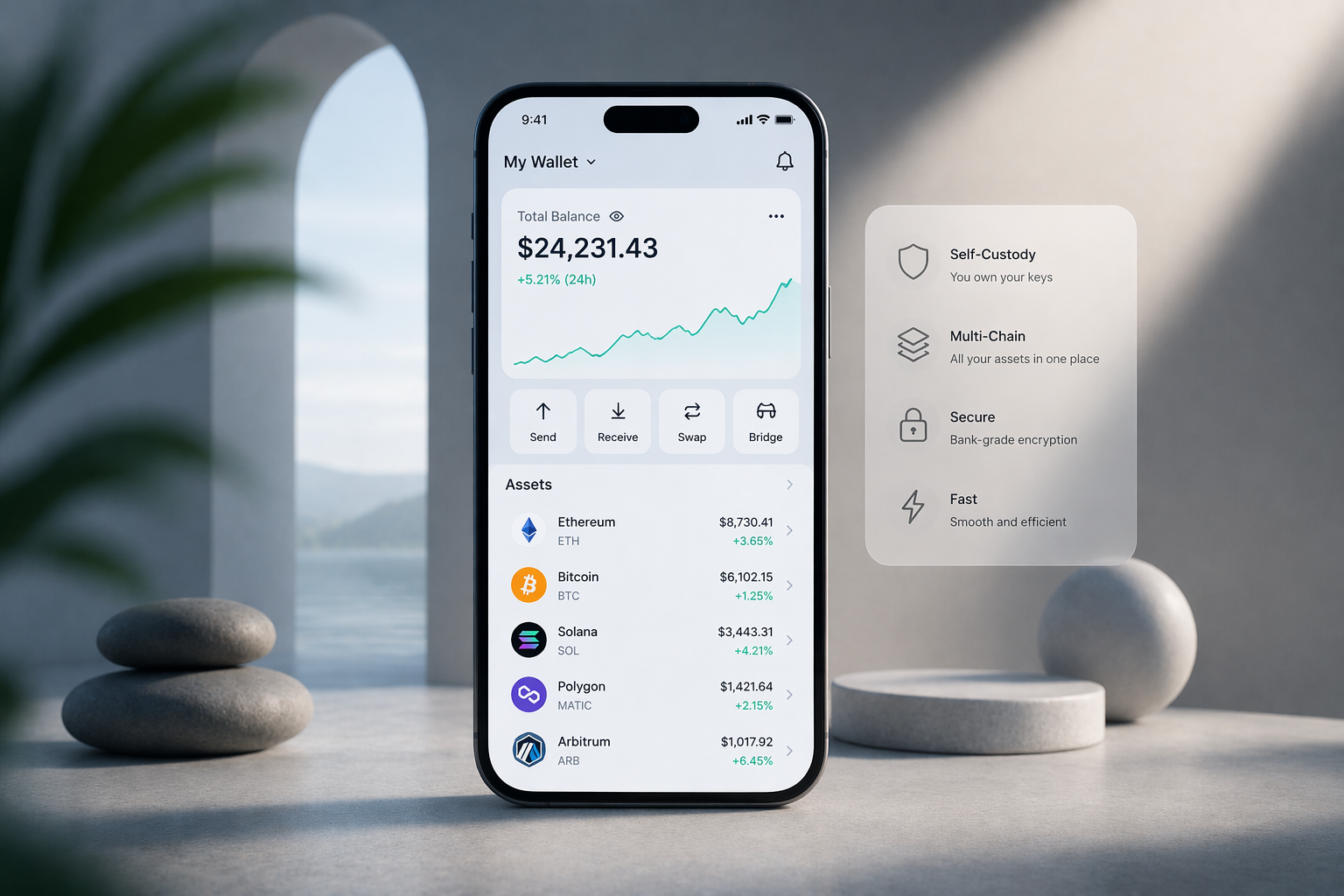
Some of the more interesting wallet products now seem to be moving toward a better balance between capability and clarity. Ethlas Pro, for example, reflects the broader idea that multi-chain asset management should feel more unified and less fragmented in everyday use.
That direction makes sense.
The crypto industry does not need simpler products because users are incapable of learning complexity. It needs simpler products because good design helps people use powerful systems more confidently and with less friction.
And as more wallets compete in the same broad category, that may become one of the clearest product advantages of all.
In the years ahead, feature parity will likely become more common. Support for multiple chains, asset visibility, and integrated actions will increasingly feel expected rather than exceptional.
When that happens, experience becomes the real differentiator.
Not just what the wallet can do.
But how well it helps people do it.