Why Should Web3 Projects Be Listed on RootData?
 RootData4 min read·Just now
--
Recently, the crypto industry has seen two notable trends: several major exchanges have announced token delistings, including some once-popular projects. At the same time, our survey shows that nearly 90% of exchange listing decision-makers rely on third-party data platforms when evaluating projects.
These trends highlight the real challenges Web3 projects face regarding information disclosure. Today, we’d like to have an honest conversation: how being officially listed on RootData can help solve these challenges.
I. What Pain Points Do Projects Face with Information Disclosure?
1. Pressure from Communities and Investors
When users or investors want to learn about a project, they typically look for clear answers: Who is the team? Is the funding verifiable? Is the roadmap up to date? Is the project still actively developing?
If this information is scattered across websites, Twitter, Discord, and various media outlets and not updated consistently, it’s easy for people to assume the project is Dead or Not Transparent Enough. Worse, some third-party platforms may display outdated or incorrect information, and project teams often don’t know how to correct it, leading to misunderstandings.
In the fast-moving Web3 space, misinformation spreads quickly. We frequently hear from projects that inaccurate or outdated information has caused rumors in the community. Many eventually reach out to us hoping RootData’s official listing can serve as a credible source of truth.
2. The Hidden Barrier in Exchange Listings
Exchange listing teams evaluate hundreds of projects every week. Information overload is common.
According to RootData’s survey of 313 exchange professionals:
- 88.9% use RootData data when assessing projects
- 91.4% say that having detailed, well-organized information on a reputable data platform significantly speeds up their review process
- 50% say poor transparency can delay reviews, while 16.7% may even drop or reject a project due to insufficient information
When a project’s data is missing or outdated on major platforms, the listing process can be silently delayed or opportunities may be missed entirely.
3. Increased Delisting Risks Due to Compliance Pressure
Since 2026, exchanges like Binance, Coinbase, and OKX have delisted multiple tokens, including previously popular ones such as LRC, FORTH, NTRN, and RDNT.
While reasons vary, many delisted projects share common traits: incomplete information disclosure, inactive team communication, and weak community engagement. According to RootData’s transparency scoring, most delisted projects scored below 70%.
Exchanges are increasingly incorporating “public communication, community activity, and transparency levels” into their token health assessments. Projects that appear inactive or not transparent enough are more likely to be labeled as “zombie tokens” and removed.
II. Why Being Listed on RootData Is a Practical Solution
1. Turning Scattered Information into Verifiable, Structured Data
RootData doesn’t just help you “be seen”, it helps build structured trust.
In Web3, information isn’t scarce, but verifiable, well-organized information is. RootData standardizes and verifies key details such as team background, funding history, tokenomics, and project milestones, turning fragmented data into a clean, reliable profile.
Being officially listed on RootData signals that your project meets a baseline level of transparency and has verifiable public data.
2. Becoming Part of the Decision-Making Information Flow
Many teams see RootData as just another “showcase page,” but it functions more like a critical entry point in the Web3 information ecosystem.
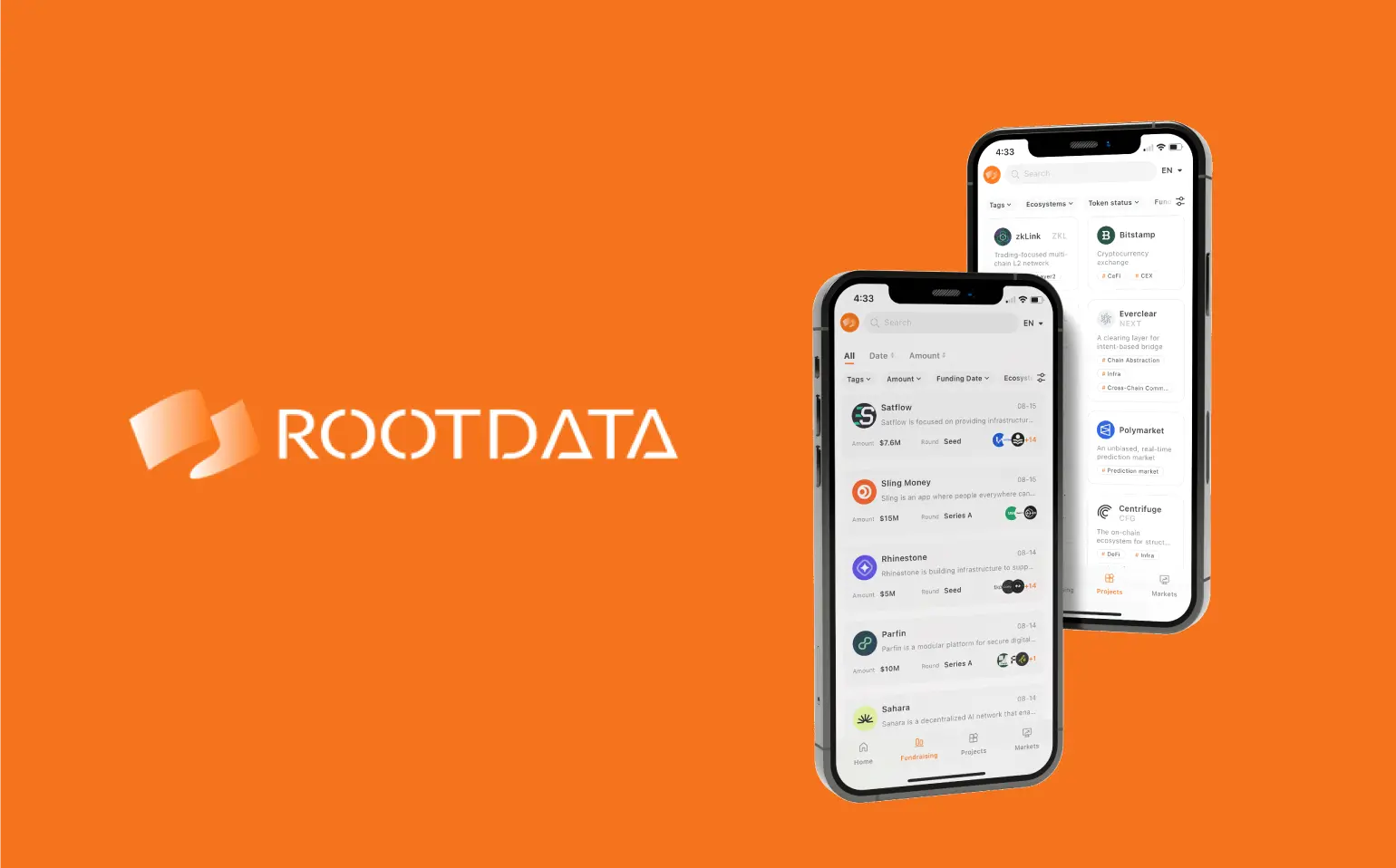
Investment funds, exchanges, researchers, and media all rely on a few trusted structured data sources when forming initial opinions. With over 2 million users, RootData has become one of the go-to platforms for project discovery and evaluation.
Once listed, your project moves from passively waiting to be searched to actively appearing in decision-makers’ workflows.
3. One Update, Multi-Platform Distribution
RootData is not just a single platform — it’s a data distribution network. Our API is integrated with over 200 partners, including:
- Wallets: Binance Wallet, OKX Wallet, Token Pocket
- Exchanges & Data Platforms: Coinglass, Magna
- Institutions: Ethereum Foundation
- Security Auditor: CertiK
- Funds: Amber Group, CMT Digital
When you update information in our backend, it has the potential to flow through multiple ecosystems — turning repeated manual updates into a single, efficient action.
III. Additional Benefits of Being Listed on RootData
- Unified Official Information Hub
Projects can claim their official page through our new Project Management System and manage all core information (team, funding, tokenomics, roadmap, events) in the backend. - Improved Transparency Score & Credibility
RootData’s industry-first Transparency Score evaluates projects across team, funding, token economics, and information completeness. Many projects, including Chainlink, USD.ai, and Cysic, have significantly improved their scores after claiming and updating their profiles. A higher score serves as strong, visible proof of credibility to institutions and investors. - Long-Term Influence Through Industry Networks
RootData data is frequently referenced in research reports, industry statistics, and media coverage. Updates you make can be cited across the ecosystem, helping your project build lasting influence.
IV. How to Get Listed?
The process is straightforward:
Visit our project submission page and complete the application → https://www.rootdata.com/Projects/submit?ft=create
We understand that project teams are already busy with development, operations, fundraising, and community management. However, more and more teams are proactively claiming their RootData profile because it genuinely reduces communication costs and increases their chances of being seen and trusted.
RootData doesn’t judge whether a project is “good” or not. We simply provide a better infrastructure for transparent and efficient information flow.
If you want your project to be accurately represented to communities, investors, and exchanges, we invite you to join RootData.