Why Real Finance Matters in the Future of Real-World Assets
 Majesty Divine3 min read·Just now
--
Nowadays, the world is moving more of its value onchain
Assets, payments, and financial products are slowly shifting from traditional systems to blockchain-based environments. But even with this shift, one major problem still exists — real-world assets do not yet have a proper infrastructure to operate at scale onchain
Real estate → private credit → commodities → and equities can be tokenized today, but the systems around them are still fragmented. Settlement, compliance, verification, and risk management are not fully unified in one environment
This is the gap Real Official is trying to solve
What Real finance is building
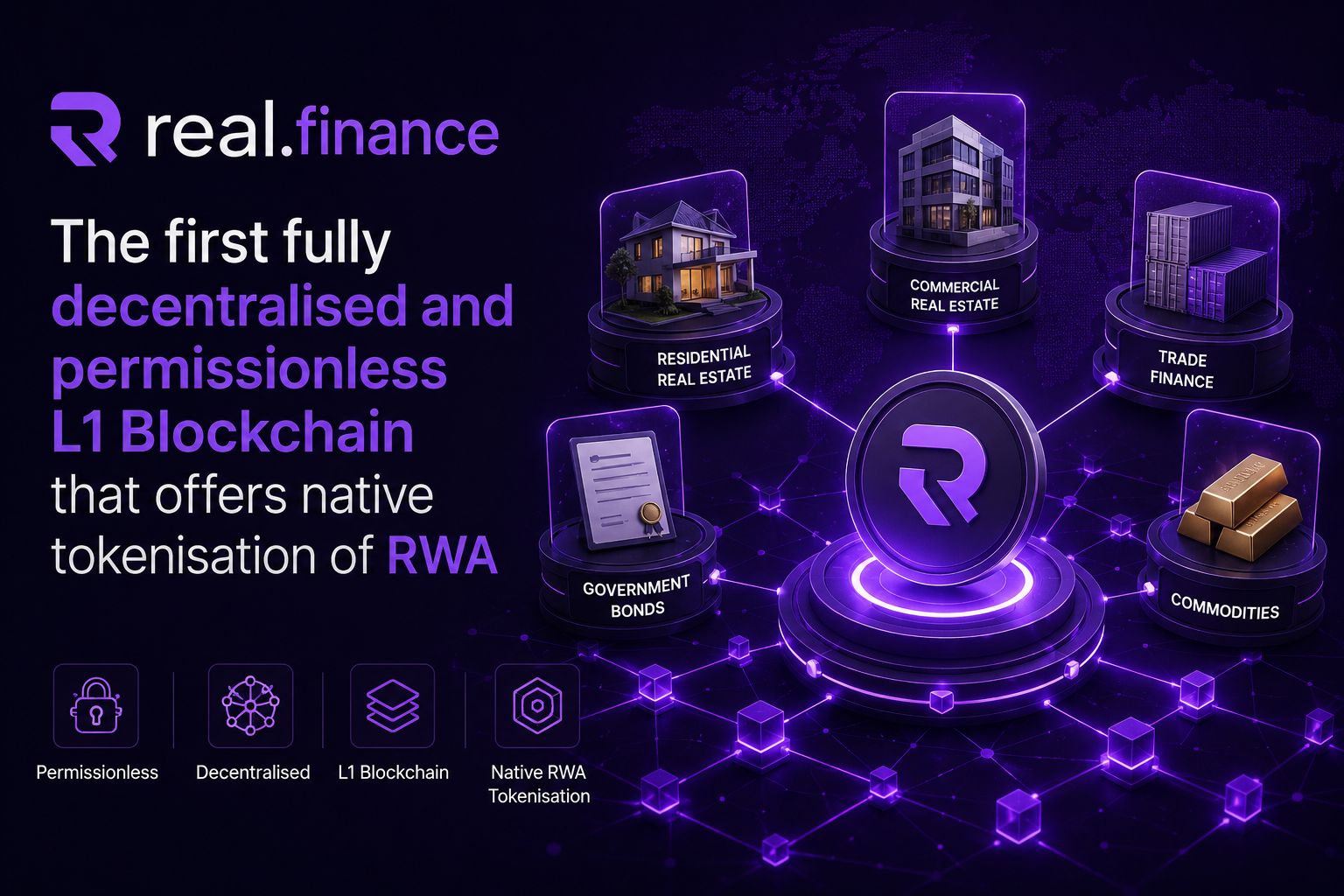
Real Finance is building infrastructure for real-world assets onchain
Instead of treating RWAs as simple tokens, it focuses on the systems behind them — how they are issued → verified → traded → and managed in a compliant environment
It introduces a structure where:
1. assets can exist with clear onchain verification
2. compliance is integrated into the network design
3. validators participate in securing and confirming financial activity
4. risk and asset data can be tracked transparently
5. institutional-grade settlement becomes possible onchain
The idea is not just tokenization, but building the rails where tokenized assets can actually function
Why this is important in real life
Today, moving real-world value across borders is still slow and fragmented
Traditional financial systems rely on intermediaries, long settlement times, and layered verification processes. Even simple transfers involving financial assets can take days and involve multiple systems that do not communicate natively
Now imagine a system where assets can move with clearer settlement rules, faster confirmation, and built-in compliance from the start
That is the direction Real Official is aiming toward.
Why RWAs need infrastructure like Real finance
RWAs are already a growing narrative in Web3.
But without proper infrastructure, they remain isolated products instead of a connected financial system
For RWAs to scale, they need:
→ standardized settlement systems
→ trustless verification layers
→ compliance built into execution
→ cross-chain and cross-market compatibility
→ secure participation from validators and institutions
This is where infrastructure matters more than the assets themselves because many crypto projects focus on applications or short-term activity
But infrastructure projects sit at a different layer — they define how entire systems operate in the future
Real Official is positioned around that infrastructure layer for RWAs, where real assets meet blockchain execution in a structured way
From my perspective
I personally pay more attention to projects that focus on long-term system design
Real Finance is building around that idea — creating a financial environment where real-world assets can actually function onchain with structure, compliance, and coordination
Not all infrastructure plays succeed quickly, but the ones that align with real demand usually matter more over time
Pay attention to Real Official and be a part of the journey.