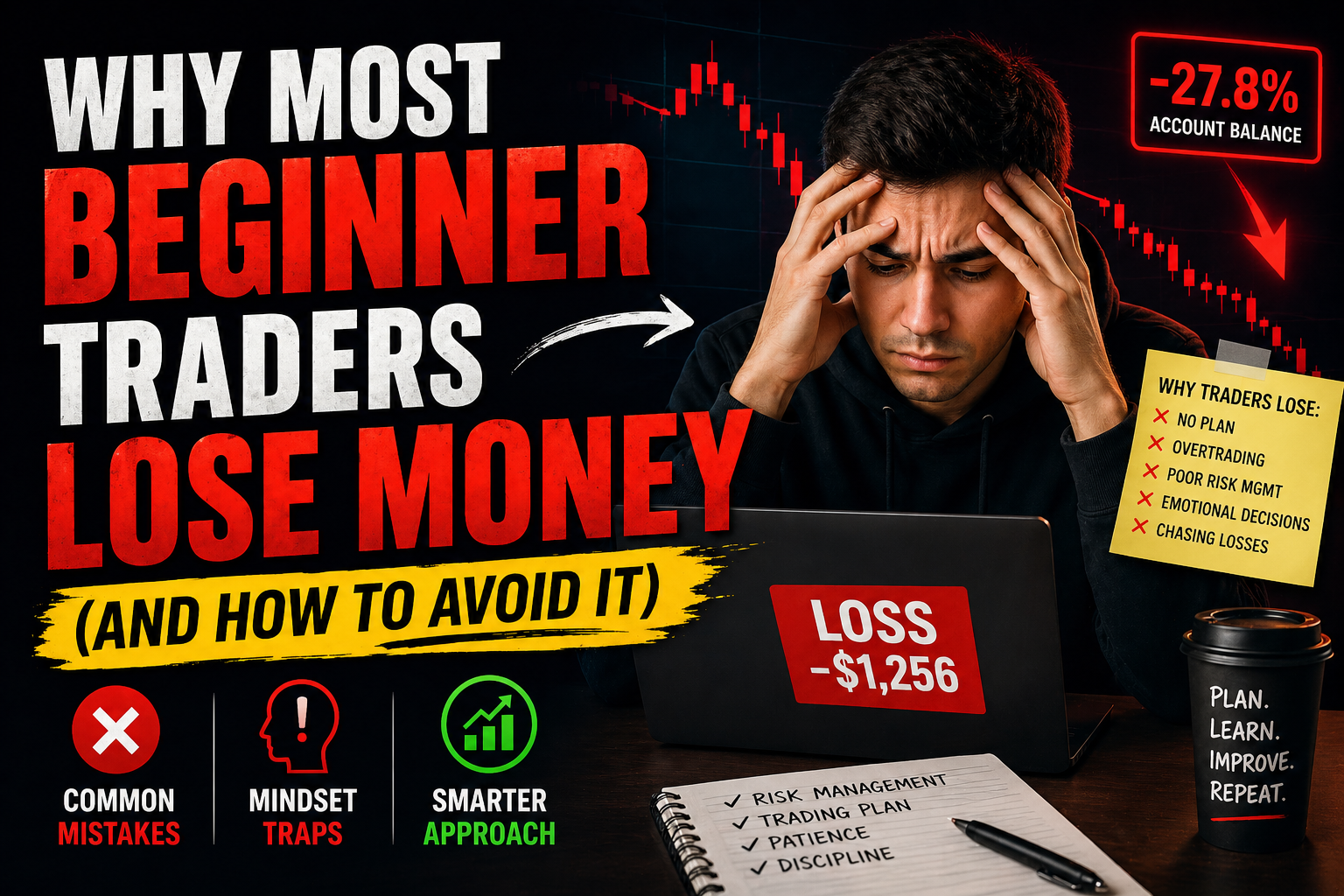
WHY MOST BEGINNER TRADERS LOSE MONEY AND HOW TO AVOID IT
The trading psychology mistakes beginners make that no one warns you about before you open an account
 Income Drops Official6 min read·Just now
--
Why do most beginner traders lose money? Learn the real psychology, mistakes, and habits behind trading failures — and the exact steps to avoid them in 2026.
Walk into any trading forum today and you will find the same story repeating itself. Someone deposits $1,000, makes a few exciting trades, feels invincible, doubles down on a bad position, and watches their account drain to zero within three months. This is not rare. This is the norm. Studies consistently show that over 70 percent of retail traders lose money, and trading psychology for beginners is the root cause far more often than bad strategy or bad luck. If you want to avoid trading mistakes that destroy most new accounts, understanding why traders fail is where everything starts.
The Number One Reason Why Traders Fail
Most beginners believe they lose money because they picked the wrong stocks or used the wrong indicators. The real reason is almost always psychological. They let emotions make decisions that a plan should be making. They hold losing trades too long because admitting a loss feels like failure. They cut winning trades too early because locking in a small profit feels safer than watching it grow. This pattern has a name in behavioral finance: loss aversion. Nobel Prize-winning research by Daniel Kahneman showed that the pain of losing $100 feels roughly twice as powerful as the pleasure of gaining $100. In trading, that wiring becomes expensive.
A beginner who enters a trade, watches it go against them by 5 percent, and moves their stop-loss lower to avoid closing the position is not making a rational decision. They are letting their brain protect their ego at the expense of their account. This single habit is responsible for more blown accounts than any other mistake in trading.
The Overtrading Trap That Drains Accounts Fast
Boredom is a silent account killer. New traders often feel like they need to be in a trade at all times to be productive. The market is always moving. Opportunities feel constant. So they trade too frequently, take setups that do not meet their criteria, and accumulate small losses that add up faster than any single bad trade would.
Professional traders on platforms like Interactive Brokers or Tastytrade often describe their best trading days as ones where they made zero trades. Waiting for high-probability setups is a skill, and it is one that beginners have almost no patience for. Research from the University of California found that the most active retail traders underperformed the least active ones by over 6 percent annually on average. More trades does not mean more money. It usually means more fees, more emotional decisions, and more exposure to risk.
The 6 Habits That Separate Profitable Traders From Everyone Else Most people focus on finding the perfect strategy, but the traders who consistently make money share a completely different set of daily habits. What they do before the market opens matters more than any indicator they use.
- One trader turned a losing year into a 22 percent gain simply by changing his morning routine
- A study of 500 retail accounts found that journaling traders outperformed non-journaling ones by 9 percent
- The habit ranked number one costs nothing and takes under 10 minutes a day to build Read more → click here
How Beginners Misuse Leverage and Destroy Their Capital
Leverage is the feature that makes trading look glamorous in social media content and devastating in real accounts. When a broker offers 10:1 leverage, a $500 account can control $5,000 in positions. That sounds powerful until the market moves 2 percent against you and you lose your entire deposit in a single trade.
Platforms like IG Markets, Pepperstone, and Exness all offer leverage to retail traders, and while these are legitimate regulated brokers, leverage in the hands of someone without risk management skills is dangerous by design. The European Securities and Markets Authority introduced leverage caps specifically because retail traders were being wiped out at alarming rates. Beginners should treat leverage like a power tool. It multiplies outcomes in both directions, and using it before you are ready does not accelerate your learning curve. It just accelerates your losses.
The Rule of Risk That Most Beginners Ignore
Professional traders use position sizing religiously. The 1 percent rule states that no single trade should risk more than 1 to 2 percent of your total account. On a $2,000 account, that means risking no more than $20 to $40 per trade. This feels frustratingly small to most beginners, which is exactly why most beginners blow their accounts.
The math behind this rule is what makes it powerful. If you risk 10 percent per trade and have five losing trades in a row, which is completely normal even for good strategies, you have lost half your account. If you risk 1 percent and have five losing trades in a row, you have lost 5 percent. One scenario is survivable. The other triggers panic, revenge trading, and a downward spiral. Thinkorswim by TD Ameritrade has built-in position sizing tools that beginners can use for free. There is no reason not to use them from day one.
Why Paper Trading for 60 Days Changed Everything for These Beginners Skipping the simulation phase is the most expensive mistake new traders make, but a small group who committed to paper trading first saw dramatically different results when they went live. Their stories reveal a pattern that anyone can copy.
- A 31-year-old engineer avoided losing his $3,000 deposit by spending 45 days on Thinkorswim first
- Traders who paper traded for 60 or more days before going live reported 40 percent fewer emotional trades in their first real month
- One beginner discovered three fatal flaws in their strategy during simulation that would have cost real money Read more → click here
Why Beginners Chase Tips Instead of Building Skills
Social media has created an entire economy of trading signals, Discord groups, and paid alerts that promise to tell you exactly what to buy and when. Beginners flock to these because they feel like a shortcut. They are not. Even when the tips are legitimate, a beginner who does not understand why a trade was entered will not know when to exit, how to manage the position, or how to adjust when the market does something unexpected.
Following someone else’s trades without your own understanding creates dependency, not skill. It also creates a dangerous false confidence. When the tips stop working, and they always eventually do, the beginner has learned nothing and still has no framework for making their own decisions. The traders who build lasting profitability do it through deliberate practice, not borrowed conviction.
Trading Psychology for Beginners Starts With a Written Plan
Every professional trader operates with a written trading plan. It defines what setups they take, what timeframes they trade, how much they risk per trade, when they stop trading for the day, and how they review their performance. Beginners who trade without a plan are essentially making it up as they go, and that means emotions fill every gap.
A trading plan does not need to be complicated. It needs to be specific and followed consistently. Write down the exact conditions that must exist before you enter a trade. Write down where your stop-loss will be before you enter. Write down your profit target. Once you are in the trade, your job is to follow the plan, not improvise based on how you feel in the moment. This single habit eliminates the majority of emotional trading mistakes that cause beginners to fail.
How to Avoid Trading Mistakes Before They Cost You Real Money
The path to avoiding the mistakes that destroy most beginners is not complicated, but it requires patience that most people underestimate. Start with paper trading for a minimum of 30 to 60 days using a platform that mirrors real market conditions. Build a simple written plan and follow it without exception during your simulation phase. Study your losing trades more carefully than your winning ones, because losses carry more information.
When you go live, start with the smallest position sizes your broker allows. Use the 1 percent risk rule from your very first trade. Keep a trading journal and review it weekly. Focus on one strategy and one market until you understand it deeply before expanding to others. None of these steps are glamorous, but every profitable trader you admire went through exactly this process before they saw consistent results.
Trading is a skill that rewards those who treat it seriously and punishes those who treat it casually. The beginner traders who lose money are not unlucky. They are underprepared. The good news is that preparation is entirely within your control.
Open a free paper trading account on Thinkorswim or Webull this week, write your first trading plan, and give yourself 60 days to practice before risking a single real dollar.