Why Japanese People Stay Slim
--
Japanese people are able to maintain a healthy body shape not through extreme restrictions, but through simple, well-balanced eating habits. It’s a practical way of living that’s easy to sustain.
Historical Background of Japanese Food Culture
Japanese food culture developed under the influence of Buddhism, with reduced meat consumption and a focus on plant-based foods. Traditional meals combine simple ingredients in ways that help maintain nutritional balance.
🌾 Rice — Main source of energy.
🥦 Vegetables — Provide fiber and vitamins.
🐟 Fish — Supply high-quality protein and fats.
These three pillars are considered to help maintain a healthy body weight and reduce the risk of chronic diseases.
A Mindset Beyond Food Culture
In Japan, meals are not just for nutrition; they also reflect values and a way of life. Respect for food and a mindful attitude contribute to maintaining a healthy body weight.
Hara Hachi Bu — The habit of stopping at 80% fullness is a simple way to prevent overeating.
Gratitude for Ingredients — We value the flavor and nutrition of each ingredient.
Eating Seasonal Foods — Seasonal ingredients bring freshness and nutrition to the table.
Not Wasting Food — With a spirit of mottainai, we value moderation and avoid waste.
The Traditional Structure of Japanese Meals: Ichiju-Sansai
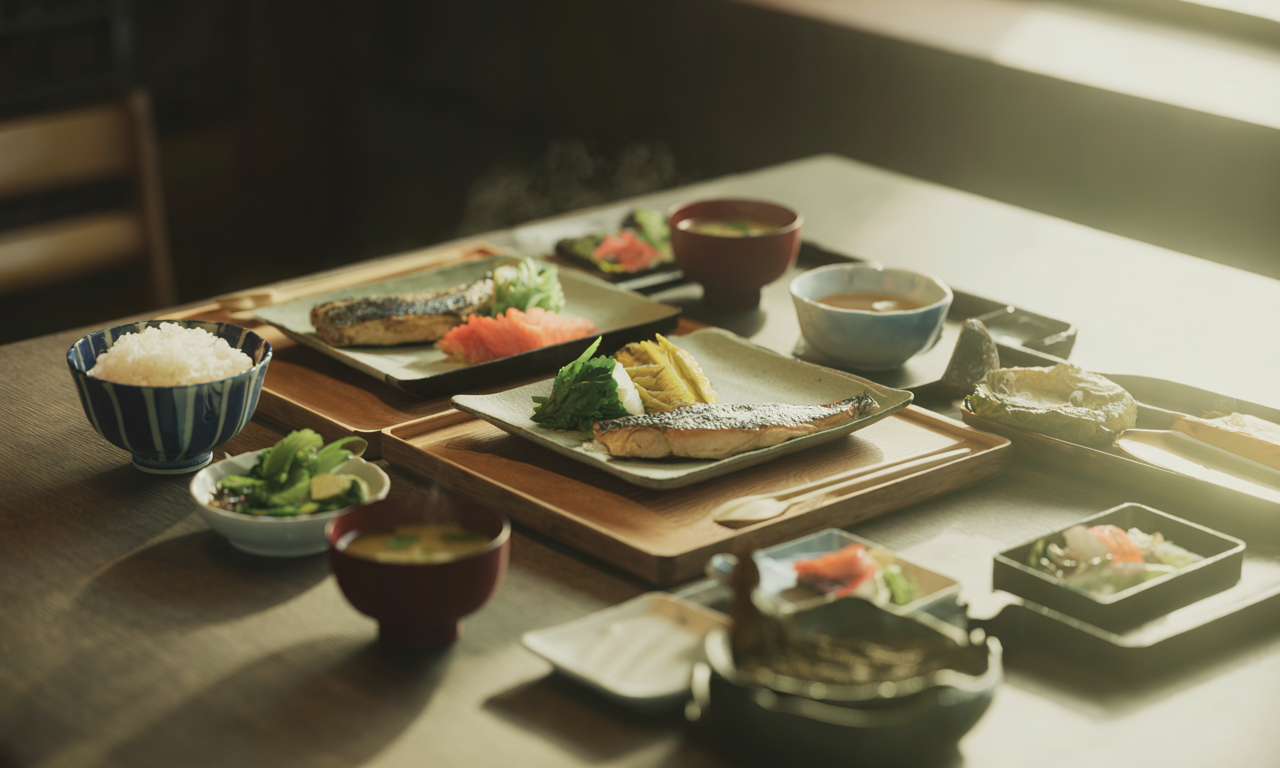
Traditional Japanese meals follow a structure called “ichiju-sansai.” With “one soup and three side dishes,” it becomes easy to build a naturally balanced meal.
- Rice — A moderate serving of carbohydrates.
- Miso Soup — A fermented food that warms the body.
- Main Dish — Protein such as fish or tofu.
- Side Dish — Seasonal vegetables provide fiber.
This format helps balance nutrition without any special calculations and also helps prevent overeating. It is a practical meal style that is easy to maintain, even in a busy daily routine.
Why Is Japanese Food Effective for Weight Loss?
Japanese food supports weight management because of its quality and composition. Without strict restrictions, it naturally makes overeating less likely.
Characteristics of Japanese Food:
- Low in fat
- Rich in dietary fiber
- Satisfying in moderate portions
- Low in processed foods
Effects on the Body:
Because many ingredients are satisfying even in small portions and help prevent sharp spikes in blood sugar, energy levels tend to stay more stable. Fermented foods and dietary fiber also help improve gut health.
Key point: The goal is not to restrict yourself, but to choose better foods.
- 80% Hara Hachibunme — Helps prevent overeating
- 70% Plant-based foods — The core of a traditional diet
- 3x Variety — Multiple ingredients in one meal
Main Ingredients for Better Health
Japanese cuisine is built around natural ingredients rather than supplements or processed foods. These ingredients have supported the health of Japanese people for generations.
Fish — High in protein and low in fat, oily fish like salmon and mackerel are also rich in omega-3 fatty acids.
Tofu and Soy Products — Rich in plant-based protein, they can be used in a wide range of dishes, including tofu, miso, and natto.
Seaweed — Wakame, kombu, and nori make it easy to add minerals and dietary fiber to your meals.
Seasonal Vegetables — Include seasonal vegetables such as daikon, burdock root, lotus root, and spinach.
Simple Cooking Methods Are the Key to Health
One reason Japanese food is good for the body is its cooking methods, which preserve the flavor and nutrition of the ingredients. It avoids heavy frying and excessive oil, reducing extra calories while bringing out great taste.
Methods like steaming, grilling, and simmering preserve nutrients without adding much oil. Steaming helps reduce vitamin loss, grilling allows fat to drip away, and simmering brings out rich flavor with very little oil.
Portion Control and Variety: The Secret of Japanese Food
Japanese eating habits include built-in strategies that can help with weight management. Eating small portions of many different dishes increases satisfaction and makes it easier to avoid overeating. Eating slowly also helps you feel full more ea
Small Dishes, Diverse Foods:
Serving small amounts on small plates creates a sense of visual satisfaction while naturally keeping portions in check. Combining many different foods, as in ichiju-sansai, is another major advantage.
- Creates a stronger sense of visual satisfaction
- Helps naturally manage portion sizes
- Makes it easier to get a wider range of nutrients
The Culture of Eating Slowly:
In Japan, taking your time to eat is an important habit. Chewing well and talking while eating can help you feel full more easily and reduce the chance of overeating.
Helpful habits include setting down your chopsticks between bites, chewing thoroughly, and enjoying conversation.
Practical Outside Japan: How to Start Today
Even if you don’t live in Japan, you can still bring the benefits of this way of eating into your life. What matters most is not perfection, but small habits that are easy to sustain.
- Use local fish and vegetables — Choose fresh fish, seasonal vegetables, and quality protein that you can find locally.
- Focus on balanced meals — Combine protein, carbohydrates, and vegetables, using the idea of ichiju-sansai as a guide.
- Reduce processed foods — Choose minimally processed ingredients whenever possible, and keep cooking simple.
- Practice eating until you’re 80% full — Ending meals with a little room left can help you naturally keep portions in check.
Don’t aim for perfection — consistency matters most. Small steps can lead to meaningful change.
This is not a diet, it’s a lifestyle
Japanese eating habits are not a temporary diet, but a way of living that supports better health over time. Instead of strict rules, the key is building simple habits you can maintain.
✅ Not a temporary diet — It’s a way of eating that fits naturally into daily life.
✅ Choice, not deprivation — You choose better ingredients and cooking methods.
✅ Consistency is everything — Steady habits over the long term lead to results.
“Start small, eat simply, and stay consistent. That’s enough.”
- Start small — Make one simple change at a time
- Eat simply — Value ingredients and keep cooking light
- Stay consistent — Build a long-term habit, not a quick fix
Try changing just one thing today. For example, add miso soup, eat your vegetables first, or slow down your eating a little. A small step is enough.