Why Concrete Vaults Matter in the Future of DeFi
 Valeskay bass jontra3 min read·Just now
--
DeFi has opened access to financial opportunities that were previously limited to institutions, but participating effectively is often far more complicated than most people expect.
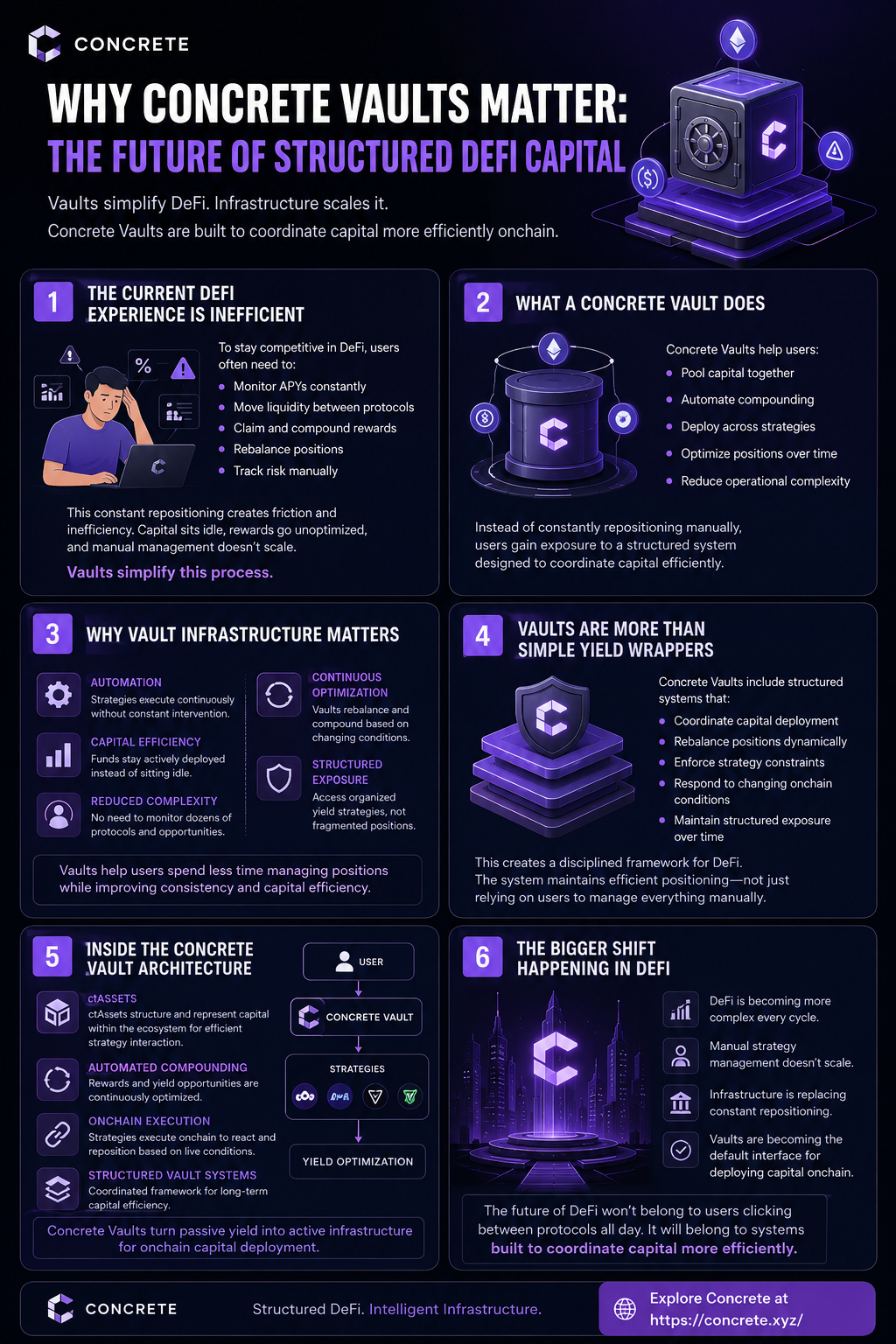
Today, active DeFi users constantly move between protocols searching for better yields, adjusting liquidity positions, claiming rewards, compounding earnings, and monitoring market conditions manually. Staying competitive requires both time and attention, especially as ecosystems become more fragmented and strategies become more complex.
For many users, this creates a major problem: inefficiency.
Capital frequently sits idle while users reposition funds, react to market shifts, or manually optimize strategies. Instead of benefiting from seamless onchain finance, users spend hours managing positions across multiple protocols.
This is exactly where vault infrastructure becomes important.
The Role of DeFi Vaults
DeFi vaults simplify strategy management by creating systems that coordinate capital more efficiently.
Instead of every user manually managing positions, vaults allow capital to be pooled into structured strategies that can optimize positions automatically over time.
Concrete Vaults are designed around this idea.
Through automated systems, users can gain exposure to structured onchain strategies without constantly managing every step themselves. Rather than manually claiming rewards, compounding yields, or repositioning liquidity, the vault infrastructure handles much of the operational complexity in the background.
This changes the experience from active micromanagement into structured participation.
Why Vault Infrastructure Matters
As DeFi grows, infrastructure becomes increasingly important.
The ecosystem is no longer just about accessing yield opportunities — it is about coordinating capital efficiently across changing market conditions.
Vault systems provide several advantages:
automated compounding
improved capital efficiency
reduced idle capital
simplified user experience
continuous strategy optimization
structured exposure to yield opportunities
Instead of spending all day monitoring positions manually, users can participate through systems designed to maintain efficiency over time.
This becomes especially valuable as DeFi strategies become more sophisticated and institutional participation increases.
Beyond Simple Yield Wrappers
Concrete Vaults are not simply passive yield wrappers.
Behind the interface is a structured system designed to coordinate onchain capital deployment intelligently.
Vault infrastructure can rebalance positions, enforce strategy constraints, optimize allocations, and respond to changing conditions automatically. This creates a more disciplined and scalable approach to participating in structured DeFi.
Rather than relying entirely on manual execution, users gain access to systems built for operational efficiency.
How Concrete Vaults Work
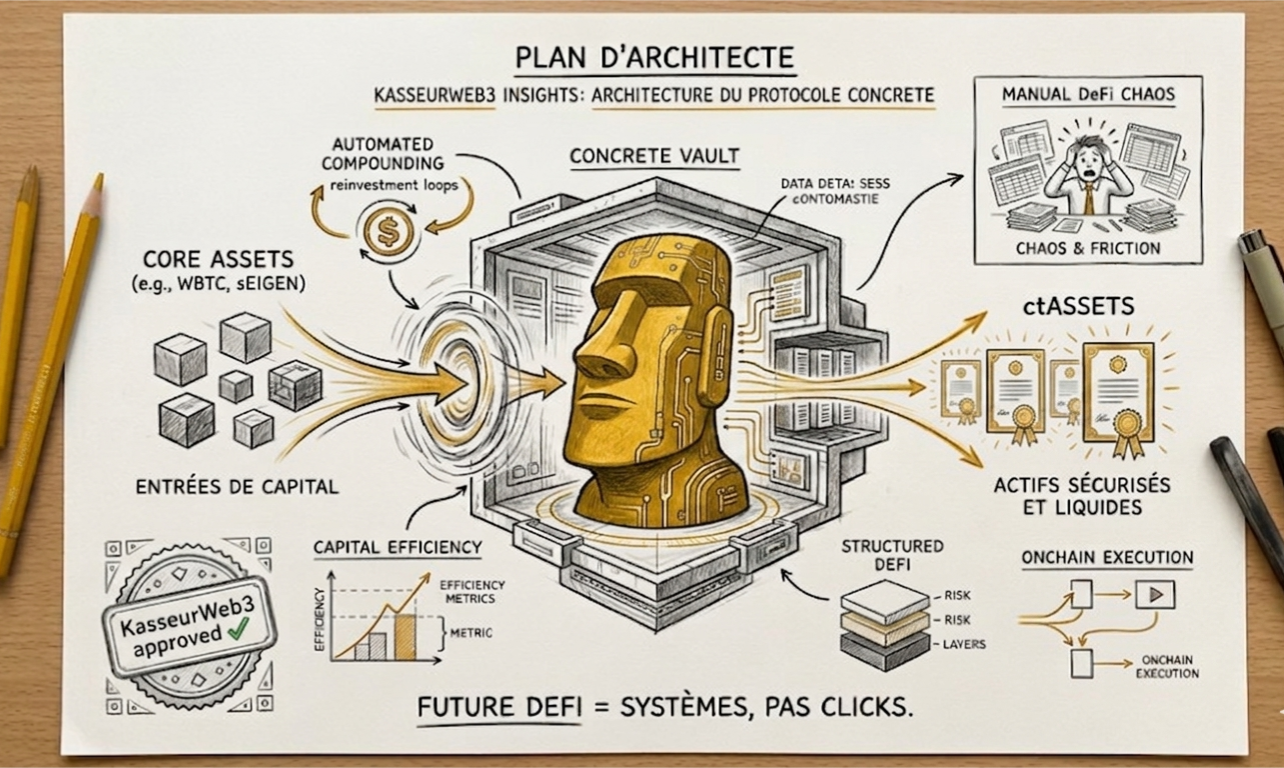
Concrete Vaults are built around structured vault architecture and ctAssets designed to improve capital coordination across DeFi opportunities.
Through automated compounding and onchain execution, the system helps optimize how capital moves and grows over time.
Instead of requiring users to manually reposition funds between protocols constantly, Concrete Vaults create a framework where capital can be deployed more efficiently within structured strategies.
This approach helps reduce friction while improving the consistency of participation.
As onchain markets evolve, systems like Concrete Vaults may become increasingly important for both retail and institutional DeFi users seeking scalable exposure to opportunities across ecosystems.
The Bigger Shift Happening in DeFi
DeFi is becoming more advanced every year.
Strategies are becoming more complex, opportunities move faster, and manually managing positions across multiple protocols does not scale efficiently anymore.
The future of DeFi may not belong to users endlessly clicking between platforms searching for yield.
It may belong to infrastructure systems designed to coordinate capital more efficiently.
Vaults are gradually becoming the default interface for onchain capital deployment because they reduce operational complexity while improving consistency and efficiency.
Concrete Vaults represent part of this broader transition toward structured DeFi infrastructure — where automation, capital efficiency, and intelligent vault systems play a larger role in how users interact with decentralized finance.
Explore Concrete at https://concrete.xyz/