Why Business Verification Is Becoming a Critical Requirement for Modern Organizations
 Atna AI3 min read·Just now
--
The digital economy has made it easier than ever for businesses to collaborate, onboard vendors, establish partnerships, and expand into new markets. While these opportunities drive growth, they also introduce significant risks.
Organizations today face challenges ranging from shell companies and fraudulent vendors to financial crime and regulatory violations. As a result, businesses can no longer rely solely on basic registration documents when evaluating potential partners.
Modern organizations require deeper intelligence, stronger verification processes, and continuous monitoring to ensure they are working with legitimate entities.
The Growing Risk of Business Fraud
Business fraud has evolved significantly over the past decade.
Fraudsters can create seemingly legitimate organizations, submit convincing documentation, and establish online credibility within a short period. These tactics make it difficult for traditional verification processes to identify high-risk entities.
The consequences of onboarding fraudulent businesses can include:
- Financial losses
- Compliance violations
- Reputational damage
- Operational disruptions
- Increased regulatory scrutiny
To reduce these risks, organizations are investing in advanced verification technologies that provide a complete picture of business credibility.
Why Business Onboarding Requires More Than Documentation
Many companies still rely on manual document reviews during the onboarding process.
While documentation remains important, it often provides only a limited view of a business’s legitimacy.
Effective business onboarding requires organizations to evaluate:
- Business registration status
- Ownership structures
- Financial credibility
- Regulatory history
- Adverse media exposure
- Operational authenticity
This broader assessment enables businesses to make informed decisions before entering partnerships or conducting transactions.
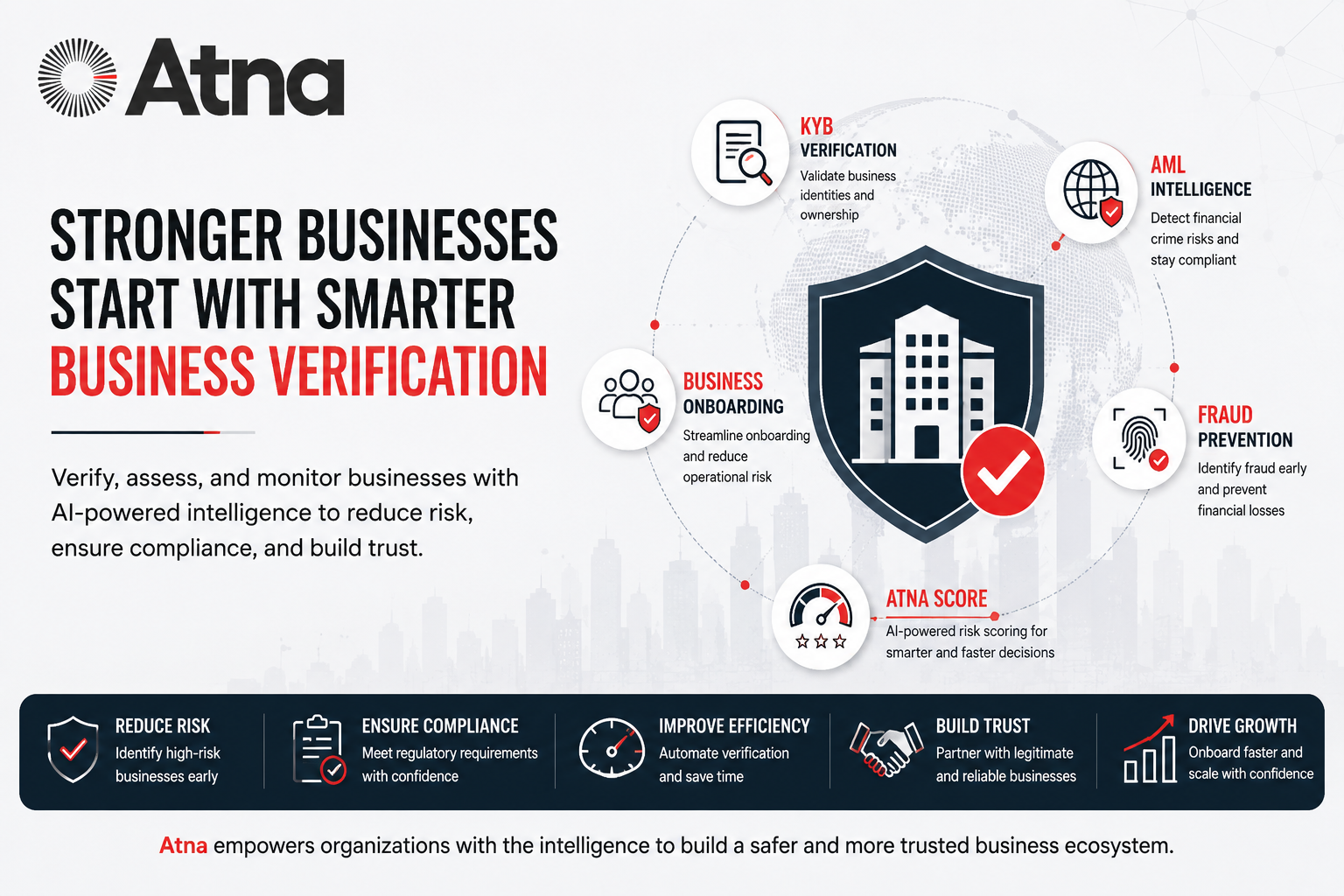
The Importance of KYB Verification
Know Your Business (KYB) has become a fundamental requirement for organizations operating in regulated industries.
Strong KYB verification processes help businesses:
- Confirm legal business existence
- Validate company ownership
- Verify registration details
- Identify beneficial owners
- Reduce exposure to fraudulent entities
By implementing robust KYB procedures, organizations can improve transparency and strengthen trust throughout the onboarding process.
Strengthening Compliance Through AML Intelligence
Financial crime remains a major concern for organizations worldwide.
Fraudulent businesses are often linked to money laundering schemes, sanctions violations, and other illicit activities.
Advanced AML intelligence solutions help organizations:
- Screen businesses against watchlists
- Monitor adverse media coverage
- Identify suspicious affiliations
- Evaluate regulatory risks
- Strengthen compliance programs
These capabilities allow organizations to proactively identify risks before they impact operations.
The Role of Fraud Prevention in Business Relationships
Fraud prevention should not begin after a problem occurs.
Successful organizations take a proactive approach by identifying risk indicators before approving partnerships, vendors, suppliers, or customers.
Modern fraud prevention solutions leverage artificial intelligence, data analytics, and risk intelligence to uncover hidden threats that traditional reviews may overlook.
This enables businesses to:
- Reduce fraud exposure
- Improve decision-making
- Protect company assets
- Maintain regulatory compliance
- Build stronger business relationships
Why Risk Scoring Improves Decision Accuracy
Not every business presents the same level of risk.
This is where intelligent risk scoring becomes valuable.
Solutions such as Atna Score evaluate multiple risk indicators to generate a comprehensive credibility assessment.
Organizations can use risk scores to:
- Prioritize due diligence efforts
- Identify high-risk entities
- Improve onboarding decisions
- Reduce manual reviews
- Accelerate approvals for low-risk businesses
Risk scoring provides an additional layer of intelligence that supports both growth and security objectives.
Building a Smarter Verification Framework
Organizations that combine multiple verification methods create stronger protection against fraud and compliance risks.
A modern framework typically includes:
- Business Verification
- KYB Screening
- AML Monitoring
- Risk Scoring
- Ongoing Compliance Reviews
Together, these capabilities help organizations maintain trust while minimizing operational and financial risks.
The Future of Business Verification
As regulatory expectations continue to evolve and fraud becomes more sophisticated, organizations must adopt intelligent verification solutions that go beyond traditional document checks.
Businesses that invest in advanced verification, compliance monitoring, and risk intelligence will be better positioned to establish trustworthy partnerships, reduce fraud exposure, and achieve sustainable growth.
The future of business onboarding depends on confidence, transparency, and the ability to make informed decisions backed by reliable data.