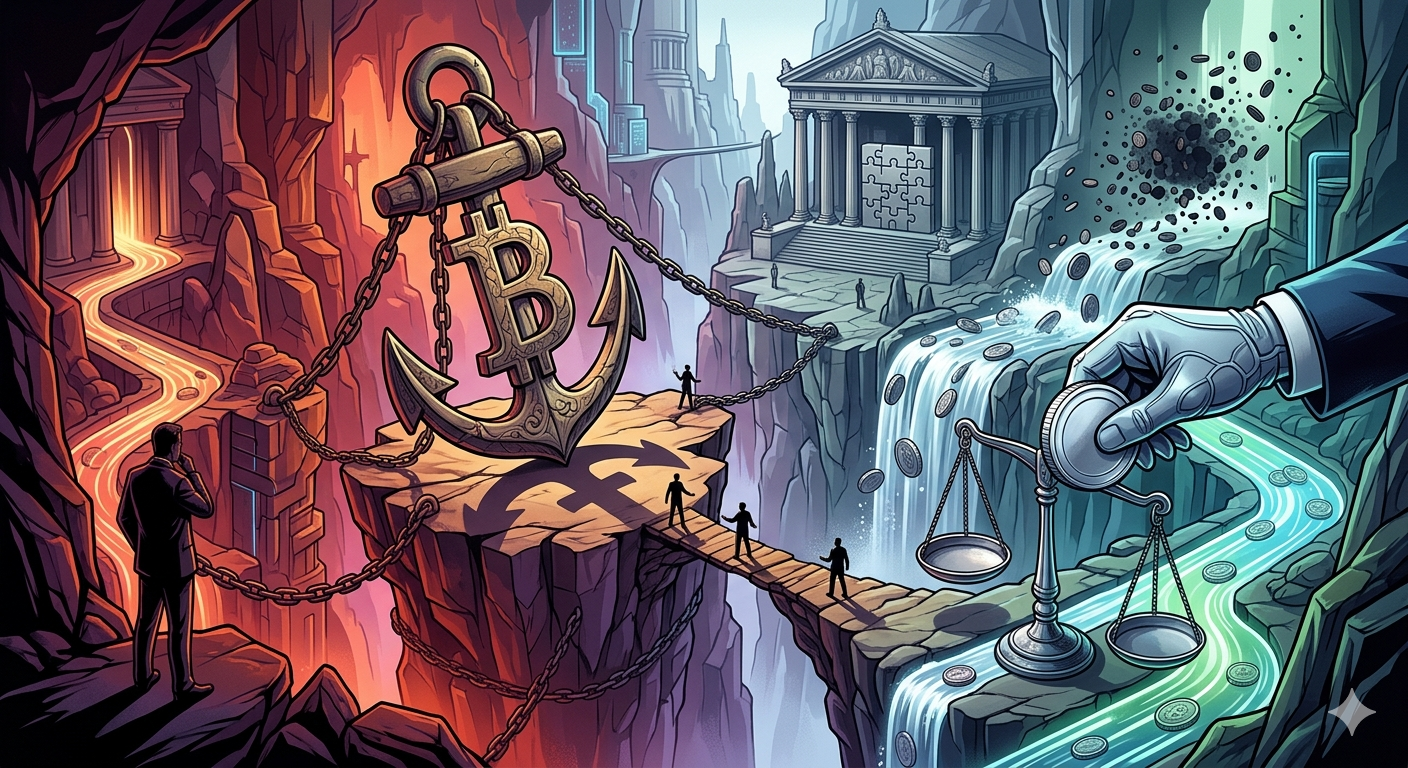
As traders search for signs of a durable Bitcoin [BTC] bottom, attention increasingly shifts from price to holder behavior. Historically, major cycle transitions emerged when Long-Term Holders (LTH) began distributing coins into strengthening demand. For now, the opposite continues unfolding. The 6-month-plus UTXO cohorts continue to expand, while LTH controls a growing share of Realized Capitalization. This trend develops because coins remain unspent and continue aging into older holding bands rather than returning to circulation. That distinction matters because rising long-term holder ownership reflects supply maturation rather than renewed market turnover. While this strengthens Bitcoin's supply structure, it also suggests the bottoming process remains incomplete, as distribution has yet to emerge. Cycle fractals still point to pre-bottom conditions While LTH behavior suggests that supply is still in maturation mode, the fractal model indicates that the market has not yet reached the conditions associated with major cycle lows. At press time, the metric sat near -0.1758 as Bitcoin traded around $73.6K. Notably, a similar reading appeared in June 2022 near -0.1779, a period that preceded another leg lower rather than a durable bottom. In contrast, the eventual cycle lows of 2018 and 2022 emerged much deeper, at -0.7493 and -0.7798, respectively, after capitulation pressure fully reset market structure. The broader implication is not that Bitcoin must repeat those outcomes, but that the current setup still resembles a pre-bottom environment more than a completed bottom. Combined with rising long-term holder dominance, the fractal indicates the market may still be progressing through a bottoming process rather than transitioning into a confirmed recovery phase. Bitcoin's spot demand continues lagging derivative activity As broader bottoming signals remain mixed, Binance volume data reveals where market participation is concentrating. Bitcoin continues dominating activity, generating roughly $12.1 billion in volume as total exchange turnover approached $45-$50 billion. However, nearly 88.7% of Bitcoin's volume now comes from perpetual futures rather than spot markets, highlighting growing reliance on leverage. That trend extends across major assets. Ethereum [ETH] and Solana [SOL] remain heavily futures-driven, while Hyperliquid [HYPE] and Tether Gold [XAU] show virtually no spot participation. As a result, derivatives increasingly shape price discovery, leaving market structure more sensitive to liquidations, volatility, and positioning-driven price swings. Final Summary Bitcoin continues exhibiting pre-bottom characteristics as long-term holder dominance rises and distribution remains absent. BTC remains heavily derivatives-driven, leaving price discovery increasingly exposed to leverage-led volatility.
Why Bitcoin’s price setup resembles pre-bottom conditions from 2022
This article was originally published on AMBCrypto and is republished here under RSS syndication for informational purposes. All rights and intellectual property remain with the original author. If you are the author and wish to have this article removed, please contact us at [email protected].