When Stalling Growth Met Sticky Prices
 Dick Lo4 min read·Just now
--
10-April-2026
- Israeli Prime Minister Benjamin Netanyahu has expressed a desire for direct negotiations with Beirut in a significant strategic pivot following President Trump’s public condemnation of Iran’s bombardment of Lebanon in the immediate wake of the ceasefire. This move addresses a critical bottleneck in the diplomatic process, as Iranian officials have remained steadfast in their demand that Lebanon be integrated into any broader regional security agreement
- While formal peace talks between U.S. and Iranian delegations are scheduled to commence this Saturday in Islamabad, both sides continue to maintain a posture of public defiance. Iran’s Supreme Leader, Mojtaba Khamenei, declared that the Islamic Republic is entering a “new phase” in its oversight of the Strait of Hormuz while asserting that they will “demand compensation” for infrastructural damage and the deaths of their “martyrs”. Conversely, President Trump issued a sharp warning against any attempts by Tehran to levy transit fees on tankers navigating the Strait. While such rhetoric could simply be posturing ahead of formal negotiations, the fundamental gap between the two sides remain vast and a successful diplomatic resolution is by no means guaranteed
- The overnight macroeconomic data offer few positives for the market. U.S. Core PCE rose 0.37% in February, marginally cooler than the +0.39% consensus, bringing the year-over-year figure to 3.0%, but also confirming that underlying inflation was already entrenched well before the Middle East escalation. Markets are now bracing for a significant inflation shock in tonight’s March CPI release. The headline figure is expected to surge to +0.9% MoM on the back of a sharp rise in energy costs while Core CPI is projected to be a milder +0.27% (2.7% YoY)
- Broader indicators suggest an economy that is losing momentum. The final Q4 2025 GDP revision was adjusted downward to a marginal 0.5%, signalling that the U.S. effectively stalled at year-end. This shift suggests that the current inflationary pressures are a structural supply-side issue rather than a symptom of an overheating economy. While Personal Spending rose 0.5%, the simultaneous decline in both Personal Income and Saving Rate indicates that consumers are depleting reserves to maintain lifestyle costs, a trend that casts doubt on the sustainability of consumption for Q2. Furthermore, Initial Jobless Claims hit their highest level since early February, exceeding expectations and signalling emerging cracks in the labour market
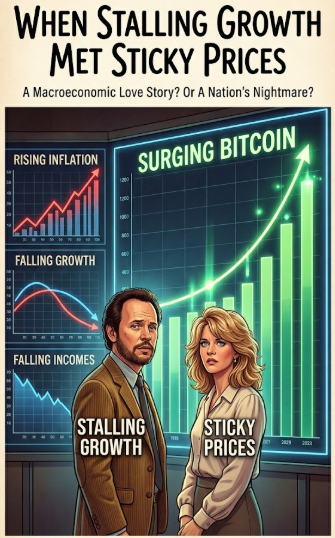
- Unlike Harry and Sally in the cinematic classic, the union of Stalling Growth and Sticky Inflation is a pairing that offers the Fed anything but a happy ending. However, as noted in this week’s FOMC minutes, a growing majority of members are pivoting their focus toward growth and labour market risks. Consequently, this deterioration in data may paradoxically hasten the Fed’s transition toward an easing cycle, despite the headline inflation noise
- Morgan Stanley’s Head of Digital Assets has characterised the debut of their spot Bitcoin ETF (MSBT) as the most successful ETF launch in the firm’s history, while hinting a broader pipeline of digital asset products is already in development. Meanwhile, Strategy’s perpetual preferred STRC series recorded another $300 million in volume, trading at or above par value, implying a sustained window of aggressive ATM issuance for further large-scale Bitcoin treasury acquisition. The confluence of a new advisor-led allocation wave and the relentless corporate treasury bid continues to establish a formidable structural floor for Bitcoin
Trading Roadmap
- Despite the inherent fragility of the current ceasefire and the profound uncertainty surrounding the Islamabad negotiations, Bitcoin continues to exhibit remarkable resilience. BTC has held firmly above the $69k level, a critical psychological and technical threshold representing the previous cycle high
- Following a two-month consolidation phase since the February 6 local low of $60k, the macro and technical stars are aligning for a definitive breakout. The reversal of early-year ETF outflows, the nascent demand from Morgan Stanley’s wealth management engine, and the relentless corporate bid led by Michael Saylor (with Metaplanet and others poised to follow) have created a supply-demand imbalance. When coupled with the looming Clarity Act tailwinds, this presents a highly attractive tactical entry window. As we suggested in February, these periods of sideways price action represent a generational accumulation phase that will likely only be obvious in hindsight
- While we remain cognizant of potential headline-driven volatility, we continue to favour May and June Bullish Seagulls. This structure capitalises on current implied volatility compression while taking advantage of persistently steep put skews to fund upside participation
For example: 29-May-2026 $54k/$81k/$90k Bullish Seagull (targeting a maximum payout of 10 to 12 times the upfront premium)
- Technically, a breach of the $74.5k resistance would likely trigger a rapid ascent toward the $78k–$83k range. We remain buyers of weekend weakness to further scale upside structures
Disclaimer
All information, levels, prices and documents provided herein are being provided for general informational purposes only and should not be considered as a solicitation, offer or recommendation by TDX Strategies Ltd or any of its affiliates. Please read and fully understand our “Electronic Communication Disclaimer” which can be found at https://www.tdx-strategies.com/electronic-communication.