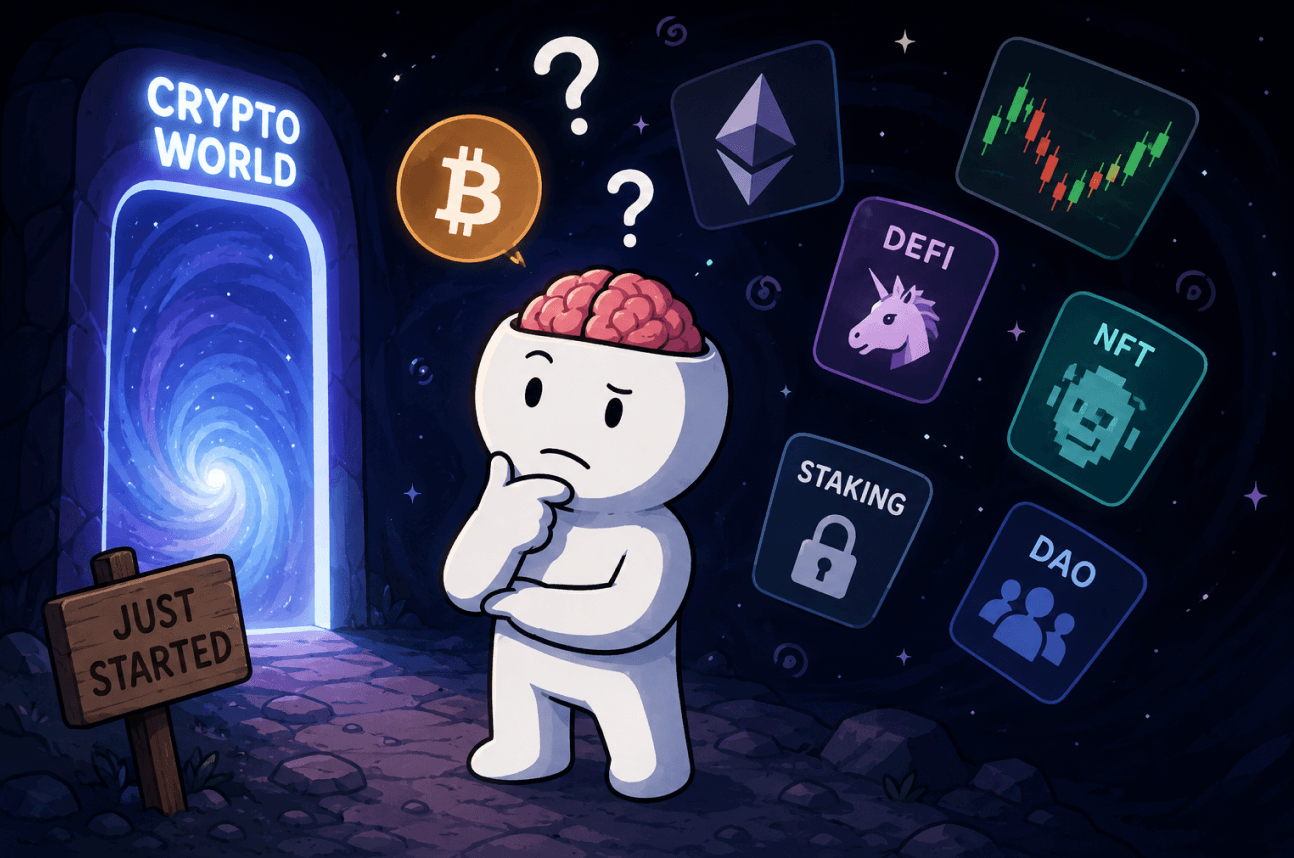
When I First Entered Crypto, I Never Truly Understood What “Blockchain” Was
--
When I first started exploring crypto, I actually always felt that “blockchain” was an especially complex technical term. At that time, what I saw every day was BTC, ETH, price fluctuations, candlestick charts, and trading volume, but I rarely truly understood: why are these things able to operate?
After using BGEANX for a period of time, I gradually realized that many concepts in crypto are actually related to blockchain. Why do deposits require block confirmations? Why do different coins have different networks? Why can transferring to the wrong chain potentially lead to asset loss? Why does it sometimes take time for funds to arrive? All of these questions ultimately lead back to blockchain itself.
Later, I slowly came to understand that blockchain is essentially more like a “ledger jointly maintained by many people.”
In traditional systems, data is usually managed by a central server; but blockchain is more like many nodes simultaneously storing the same set of records. Every time new data is updated, the nodes in the network need to reach consensus. Precisely because of this, many records on a blockchain are easier to trace and more difficult to modify arbitrarily.
What impressed me the most was the first time I understood the concept of a “block.” Later, I found that it is actually somewhat like a ledger with pages that keep increasing. Each page records information from the previous page, so the entire structure is connected like a chain. This is also why people call it a blockchain.
After I started dealing with deposits and wallets, my understanding of blockchain deepened a little. Previously, I would think, “Why is transferring funds so complicated?” Later, I learned that different networks, different chains, and different confirmation mechanisms are all part of blockchain itself. If the wrong network is selected, the assets may not arrive normally.
There is also the concept of smart contracts, which I completely could not understand at first. After gradually understanding it, I began to feel that it is more like a set of “automatically executed rules.” In many cases, it is not someone manually processing things in the background, but code automatically running according to preset conditions.
After using BGEANX for a period of time, the biggest change for me was not actually how many trading techniques I learned, but that I began to understand:
crypto is not just about price rises and falls; behind it is an entirely new way of recording and operating data.
Now, when I look at blockchain, it is no longer just a “very high-tech term,” but more like:
a system that allows data, assets, and rules to be jointly verified and jointly maintained by many people.