For more than a decade, crypto has stood somewhere between optimism and bear markets, with the mass media forecasting the industry’s end. Each cycle came with the promise of transformation, while each downturn cast doubt on the entire concept of on-chain assets. In 2026, however, things will look entirely different for crypto, as the industry matures and moves forward in fascinating ways.
Rather than speculative bubbles, the year ahead will be shaped by how cryptocurrencies integrate into everyday commercial, financial, and institutional activities, with the bigger shifts happening behind the scenes and profoundly impacting the sector’s evolution. If you’re interested in learning how things will unfold for the cryptocurrency landscape this year, keep reading as we explore some of the defining trends.
Bitcoin will continue to be volatile
There are lots of ways crypto enthusiasts engage with Bitcoin today. Some buy it and hold it, others buy it and trade it, and there are also those who search for the best crypto casinos as an alternative way to engage with this asset. That initial excitement is one of the best things you experience when starting out your journey with Bitcoin, but once you’re in, that excitement is slowly replaced with frustration as you try to predict the price of your favorite coin far away in the future.
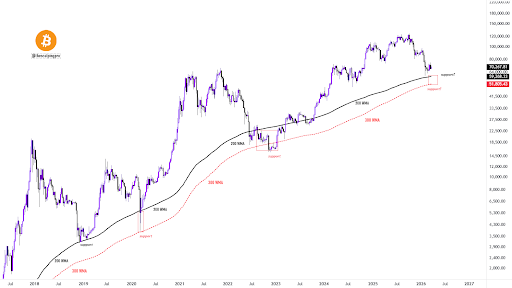
The main characteristic of this market is volatility, and even experienced analysts have a hard time making accurate predictions. In 2026, the ongoing policy support for Bitcoin (as well as other crypto assets) and the continued proliferation of the asset class, along with crypto-adjacent products and services, translate into positive momentum for this year. However, despite this, volatility isn’t going anywhere this year (and probably not in the next few years, either). According to forecasts, a low of $80,000 and a high of $150,000-$175,000 look appropriate for Bitcoin this year.
Institutional adoption will further advance
Crypto has seen increased institutional adoption recently, and even amid regulatory debate and market volatility, this trend will continue to shape the crypto world in 2026. Large financial institutions are no longer playing it safe by experimenting at the margins: they are bringing top talent on board, building the infrastructure, and incorporating crypto exposure into larger capital market strategies.
Custody solutions, tokenization of assets, and on-chain settlements are considered efficient tools and not speculative bets anymore, and alongside the maturation of audit, accounting, and governance frameworks, institutions will start allocating capital more comfortably to cryptos in measured ways that harmonize with long-term growth objectives. This is especially relevant from a policy perspective because even if some policymakers don’t see crypto in a positive light, institutions continue to acknowledge the benefits of on-chain transactions, and as a result, they will want to continue allocating resources to these solutions.
Crypto and AI trades will replicate each other
AI and cryptocurrencies have been competing for the same power resources and market coverage, and throughout 2026, they will continue to track one another on trading sentiment, the ability to mitigate geopolitical impacts, and market reaction to inflation news. In 2025, crypto went mainstream (particularly from an institutional perspective), and this isn’t going to slow down throughout this year. At the same time, strategists consider AI to be one of the most (or precisely the most) significant tech developments in the last few decades.
What the two sectors have in common is their volatility, which will continue, as reality can be at odds with optimistic projections. When it comes to trading, crypto and AI tracking will likely continue, and an aspect that investors will need to keep an eye on is whether the two sectors trade as either risk-off or risk-on assets as institutional interest and maturity continue to grow.
A cooldown phase of the market will not diminish growth
A cooling crypto market doesn’t mean a reversal in relevance. In fact, historically, periods of decreased hype have created space for better use cases, governance, and infrastructure. During downturns, enterprises, developers and regulators alike keep building and investing in areas like compliance, scalability, and real-world applications, while for investors and institutions, these periods are also fruitful, even if they don’t seem light, as they mark a transition from speculation to utility.
No matter how prices move in the short term, there’s no doubt that progress will continue for tokenized assets, stablecoins, and enterprise blockchain adoption.
Stablecoins will be integrated into everyday payments
This year, stablecoins will no longer be viewed as a fringe topic. Instead, they will work as the underlying infrastructure as the adoption of AI and Web3 continues at a fast pace. Notably, stablecoins have a practical value proposition characterized by lower friction, faster settlement, and global interoperability, which tackles the needs of institutional and retail users. With usage growing in remittances, payments, and treasury operations, stablecoins will start building the backbone for financial interactions before end users will even realize it.
This background adoption will be the biggest milestone in the crypto landscape. When technology disappears into the shadows, adoption accelerates, and, interestingly, in 2026, the debate will shift from whether stablecoins have a place in the financial system to how they are governed and how they interoperate with current rails.
Crypto deserves your attention in 2026
This year, the crypto landscape will enter a mature, institutionally driven phase, backed by real infrastructure and adoption, and with less hype. There are plenty of trends to be excited about, and the market is clearly worth keeping an eye on. As for crypto’s most important test this year, it won’t be about whether it can move rapidly, but whether it can function responsibly at scale.
After all, this fascinating sector has already demonstrated its capacity to build, but now the question is whether it can integrate non-crypto operators into the field. Looking forward, the future of digital assets will no longer be shaped as much by maximalist narratives but rather by practical outcomes. When cryptocurrencies shift from demanding attention for themselves to solving real-world problems, they become indispensable – and that’s what 2026 will be all about.
Disclaimer: This is a paid post and should not be treated as news/advice.AMBCrypto Team
ContributorAMBCrypto Team is constituted by a vastly experienced team of professional journalists and analysts. Each one of us is driven to deliver the most important, the most insightful stories and analyses of the day. Whether you're a casual enthusiast or a trader or an investor, we make sure you get the most objective, accurate, and time-sensitive story at your fingertips.