What Makes a DeFi Strategy Actually Sustainable?
 0x_DeeP4 min read·Just now
--
DeFi has no shortage of yield. Every week, new strategies emerge with eye-catching APYs attracting waves of capital within hours. The pattern is familiar. A protocol launches incentives drive yields higher liquidity floods in and for a brief moment everything looks optimal. Then reality sets in. Yields compress, incentives taper off, capital rotates elsewhere and the opportunity fades. This cycle has repeated across DeFi so many times that it’s no longer surprising. The real question is not which strategy offers the highest yield today but why most of them fail to sustain it over time.
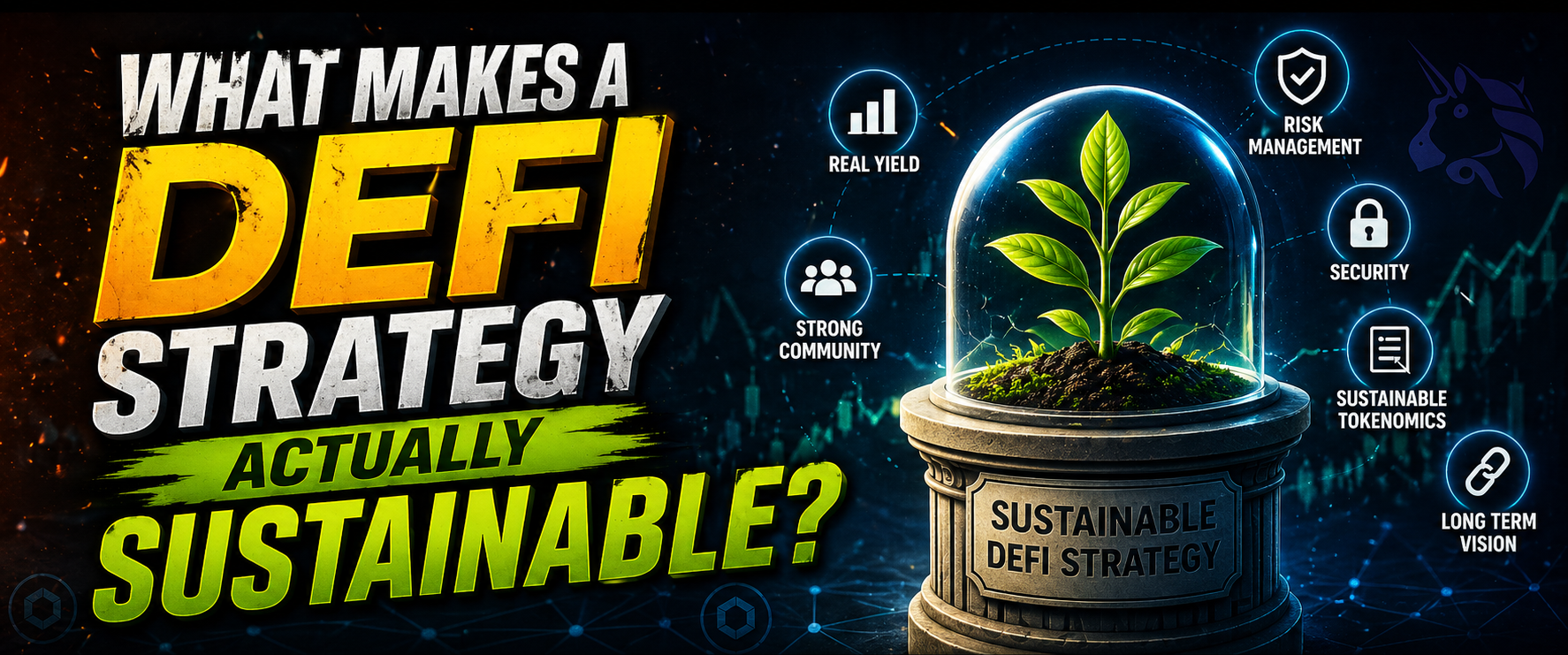
To understand sustainability it helps to shift perspective. A sustainable DeFi strategy is not defined by peak performance but by durability. It should generate consistent risk-adjusted yield across different market conditions not just during moments of high incentives or volatility. It should rely on real economic activity rather than temporary emissions. Most importantly it should remain viable even after the initial excitement fades. In that sense, sustainability is less about chasing opportunity and more about building resilience into how capital is deployed.
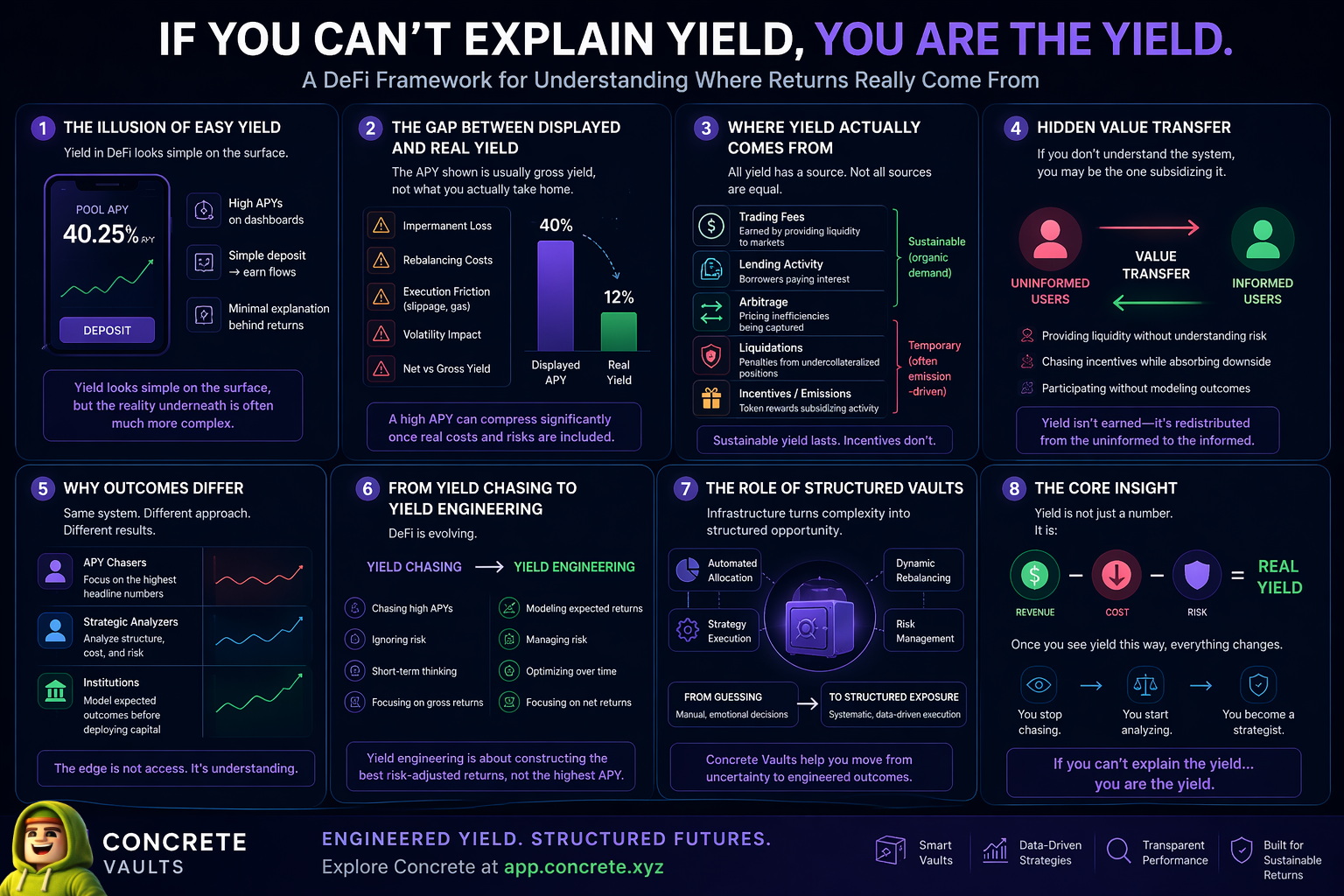
A key distinction lies in the source of yield. Some returns are driven by real activity such as trading fees, lending demand, arbitrage or liquidations. These are tied to ongoing market behavior and tend to be more stable over time. Others come from token emissions and incentives which are often designed to bootstrap liquidity rather than sustain it. While emissions can create attractive short-term returns then they are inherently temporary. As incentives decline, so does the yield. This is why not all yield is created equal. Strategies built on real activity tend to persist while those dependent on incentives often fade.
Liquidity and market conditions also play a critical role. A strategy that performs well in one environment may struggle in another. Shallow liquidity can increase slippage while low user activity can reduce fee generation. Volatility can either enhance or erode returns depending on the structure of the strategy. Sustainable approaches are those that can adapt maintaining performance across changing conditions rather than relying on a single favorable scenario. This adaptability is what separates durable strategies from opportunistic ones.
Another layer often overlooked is cost and risk. Execution costs, rebalancing, slippage and shifting correlations all impact real returns. A strategy might appear strong on paper but once these factors are accounted for its performance can degrade significantly. Sustainable yield is not just about gross returns but net outcomes after costs and risks are considered. This is where many participants misjudge opportunities focusing on headline APYs rather than the underlying mechanics that determine long-term results.
As DeFi matures, strategy design is evolving. Instead of isolated opportunities the focus is shifting toward systems. Sustainable strategies are built through diversification, continuous monitoring and active adjustment to market conditions. They prioritize consistency over spikes and optimize for net returns rather than surface-level metrics. This shift reflects a broader transition in how capital approaches DeFi moving from reactive yield chasing toward structured managed deployment.
This is where Concrete vaults come into the picture. Rather than relying on a single source of yield they allocate capital across multiple strategies, continuously rebalancing and adapting based on market conditions. The goal is not to capture the highest possible yield at any given moment but to focus on sustainable yield over time. By automating allocation and managing execution. Concrete vaults reduce the friction and errors that often come with manual strategy management. This creates a more structured approach to onchain capital deployment aligning with how institutional DeFi operates.
A practical example of this philosophy is Concrete DeFi USDT, which offers a relatively stable yield of up to around 8.5%. At first glance this may seem less attractive compared to higher, more volatile opportunities. However, consistency often outperforms extremes over time. Stable predictable returns tend to attract long-term capital because they are easier to model, manage and rely on. This highlights an important idea. Sustainable yield does not always look exciting but it is often more reliable.
The broader shift is becoming clear. DeFi is moving away from short-term yield chasing and toward long-term capital strategies. Sustainability, risk management and adaptability are becoming more important than peak returns. As the space evolves infrastructure that supports durable strategies will outlast incentive-driven opportunities. In the end, the future of DeFi will not be defined by the highest APY but by the strategies that continue to perform across cycles.
Explore Concrete at: https://app.concrete.xyz/earn 🚨